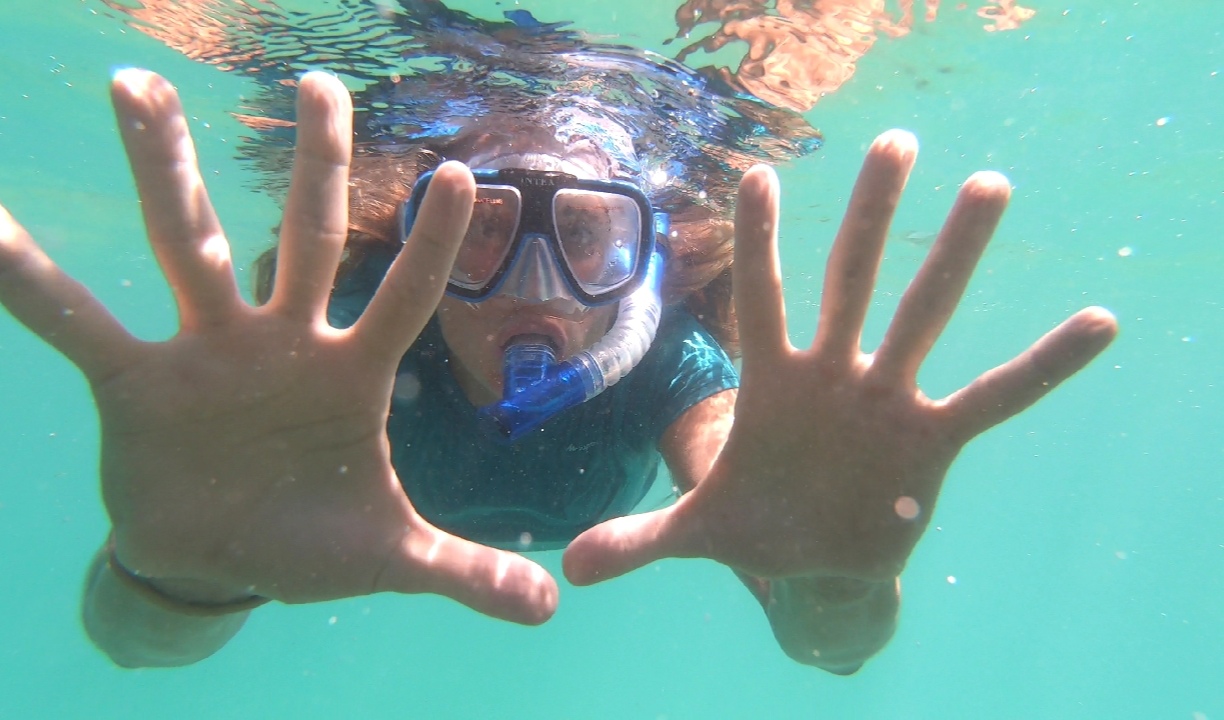
The Galapagos are beautiful, many animals to see and the weather is amazing (may I remind you: we are here in the rainy season, till now it only rained sunbeams)
However the feeling of paradise had not yet dawned upon us, till now….
—
Le Galapagos sono bellissime, con molti animali da vedere e il tempo è incredibile: (da notare: siamo qui nella stagione delle piogge, fino ad ora neanche una goccia)
Tuttavia, non ci era ancora apparso di essere in paradiso, fino ad ora ….
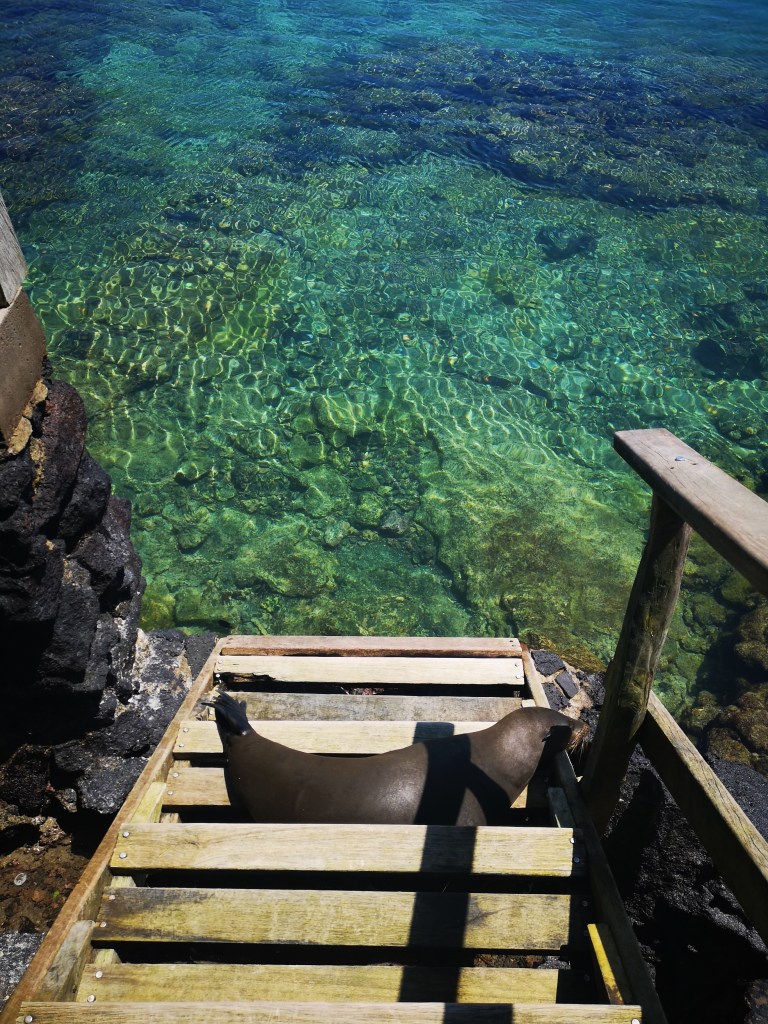
Isabela Island, with its deep and crystal clear waters, long and white beaches, endless variety of animals, and sheer abundance of nature, closely resembles our view of what paradise could look like.
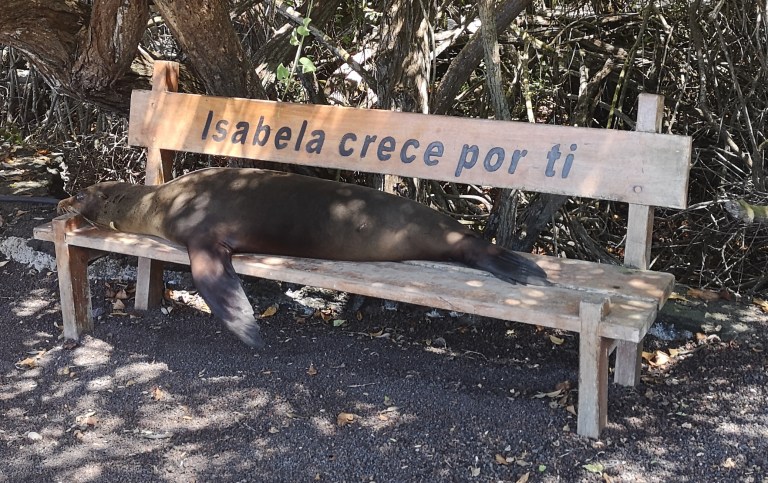
After paying the obligatory 10 USD entrance (in the grand scheme of life, paradise seems to be cheap), we find the great slogan of Isabela Island. Not sure if “ti” includes the sea lions.
—
Isabela Island, con le sue acque profonde e cristalline, le lunghe spiagge bianche, l’infinita varietà di animali e l’assoluta abbondanza di natura, ricorda molto la nostra visione di come potrebbe essere il paradiso.
Dopo aver pagato l’ingresso obbligatorio di 10 USD (nel grande schema delle cose, il paradiso sembra essere economico), troviamo lo slogan dell’Isola Isabela. Non sono sicuro che “ti” includa i leoni marini.
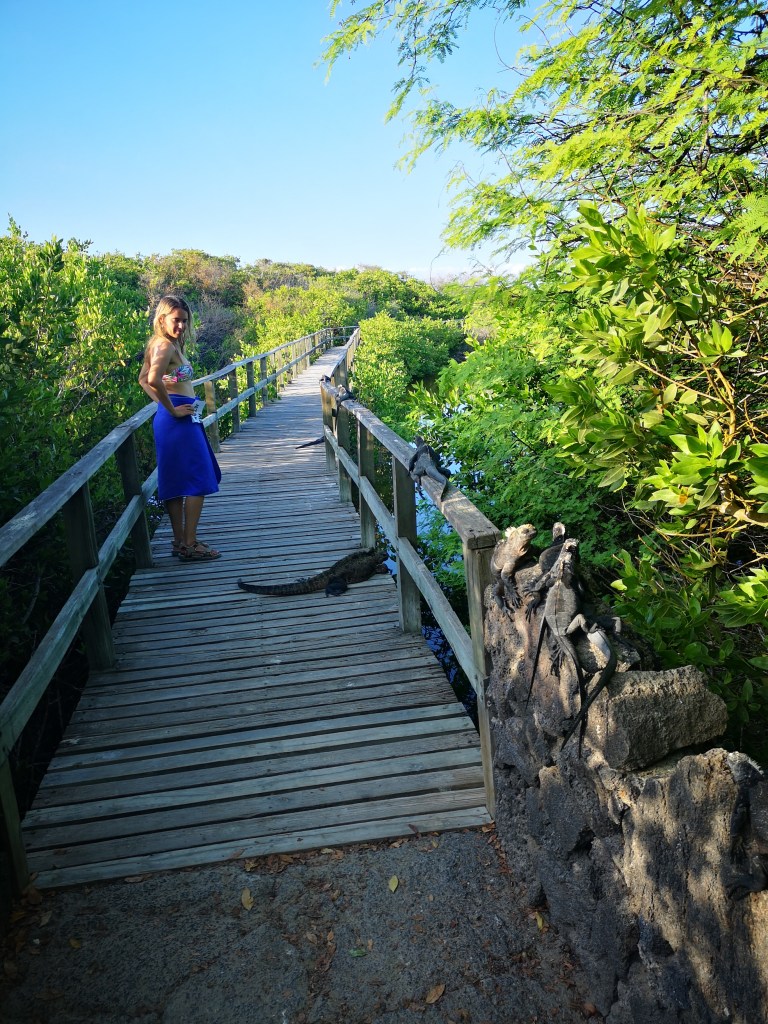
As San Cristobal had a few iguanas and many sea lions, here on Isabela it is the other way around. On below picture we counted at least 8 iguanas! Which is not an uncommon sight.
—
Mentre San Cristobal aveva alcune iguane e molti leoni marini, qui in Isabela è il contrario. Nella foto qua sotto abbiamo contato almeno 8 iguane! Che non è uno spettacolo insolito.
Remember our posts about the flamingos in the Andes? You might have noticed that they were a little pink to almost white. Here we find real pink flamingos! Not even a little white 🙂 💕
—
Ricordate i nostri post sui fenicotteri nelle Ande? Se avete guardato con attenzione, avrete notato che erano bianco-rosa chiaro. Qui troviamo veri fenicotteri rosa! Nemmeno un po’ bianchi 🙂 💕
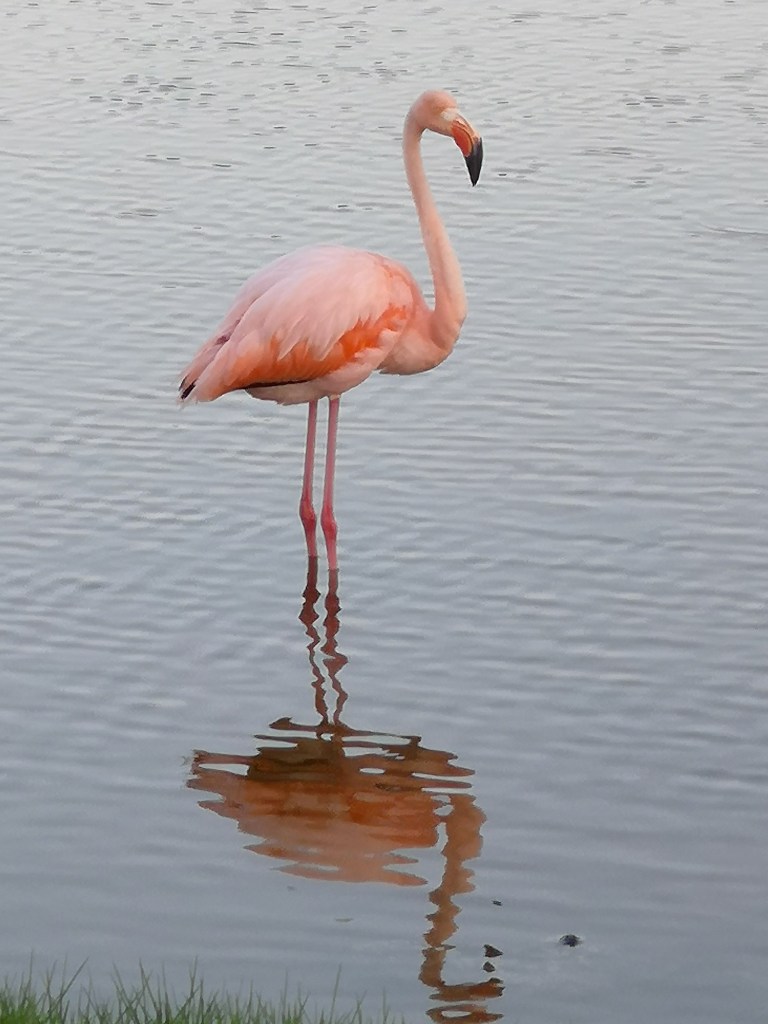
Isabela island is the biggest of the islands in the Galapagos, it is also one of the youngest island. And the last colonised.
In the beginning of the 19th century a group of Germans landed here. None of the families (and a mysterious baroness, with two lovers) were able to become friends. Needless to say that after the necessary intrigues and spontaneous disappearances, only one family remained. This family still lives on the island till the day of today.
Between 1946 and 1959 Ecuador maintained a penal colony on the island. 100eds of miles away from the mainland and the central control of Quito, the island became a scary place to be.
One of the remains of those days is still standing on the island: The wall of tears, a useless wall built by prisoners. Many prisoners died during the construction of the wall.
—
L’isola di Isabela è la più grande delle isole delle Galapagos, è anche una delle più giovani dell’isola. E l’ultima colonizzata.
All’inizio del 19° secolo un gruppo di tedeschi sbarcò qui. Nessuno degli appartenenti alle famiglie (e una misteriosa baronessa, con due amanti) riuscì a diventare amico. Inutile dire che, dopo i necessari complotti e le sparizioni spontanee, rimase una sola famiglia. Questa famiglia vive ancora oggi sull’isola.
Tra il 1946 e il 1959 l’Ecuador mantenne una colonia penale sull’isola. A centinaia di miglia di distanza dalla terraferma e dal controllo centrale di Quito, l’isola divenne un luogo spaventoso.
Uno dei resti di quei giorni è ancora presente: il muro delle lacrime, un muro inutile fatto costruire dai prigionieri. Molti prigionieri sono morti durante la costruzione del muro.
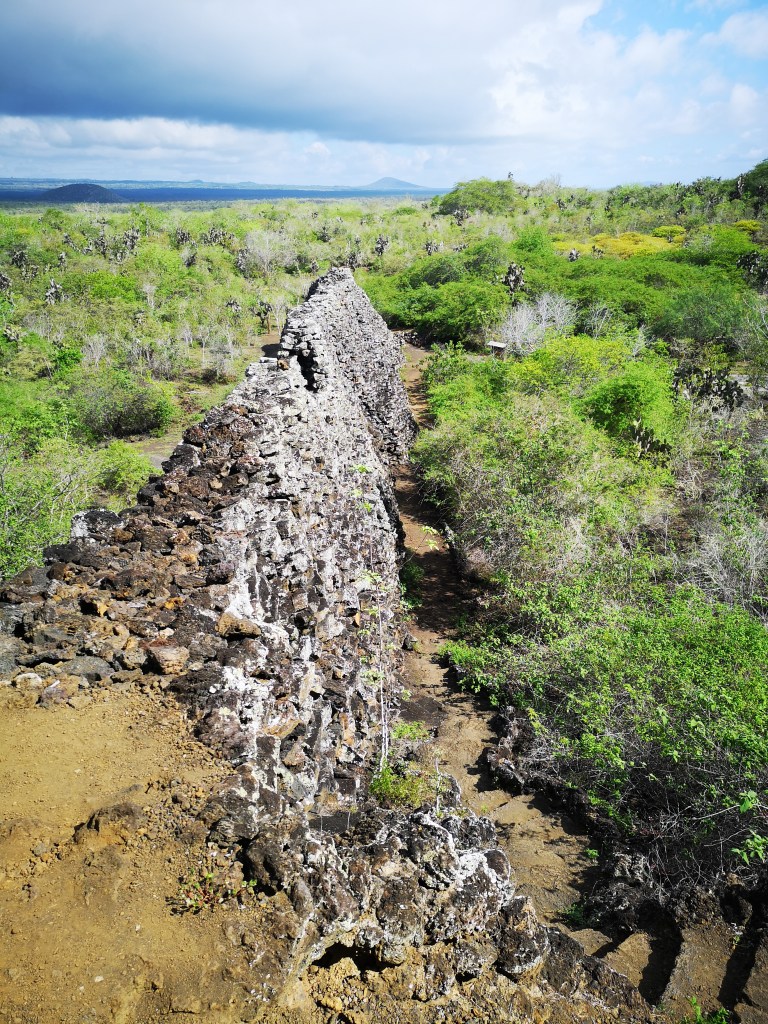
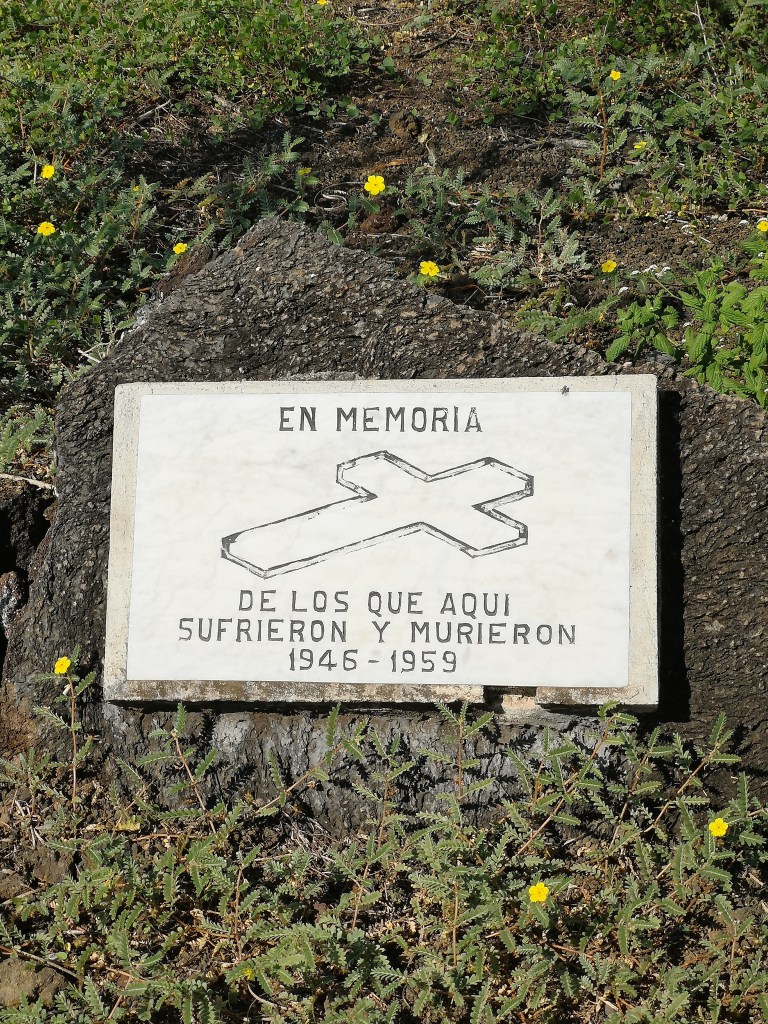
The wall is a small bike ride away from town and on the way to the wall there are many beaches to have a look around.
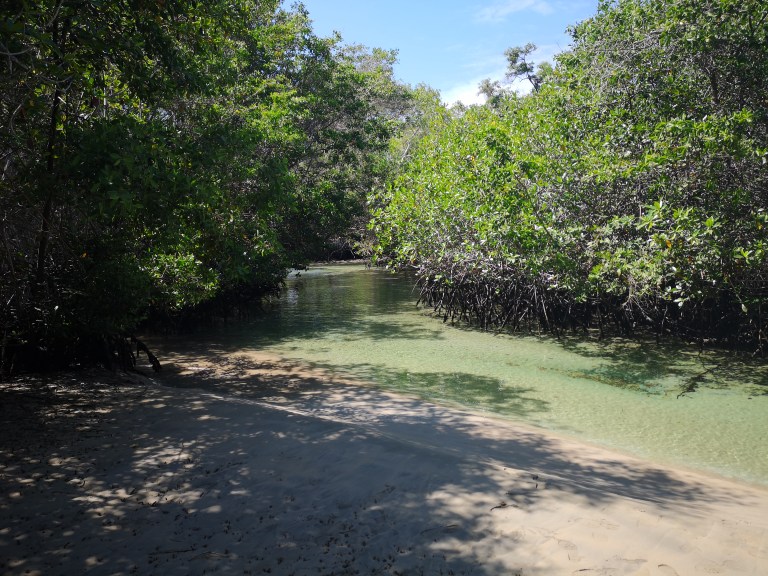
For instance El Estero with the amazing tunnels of tree roots
—
Il muro è vicino al paese (a portata di bicicletta) e sulla strada per il muro ci sono molte spiagge a cui dare un’occhiata.
Per esempio El Estero con i fantastici tunnel fatti di radici…
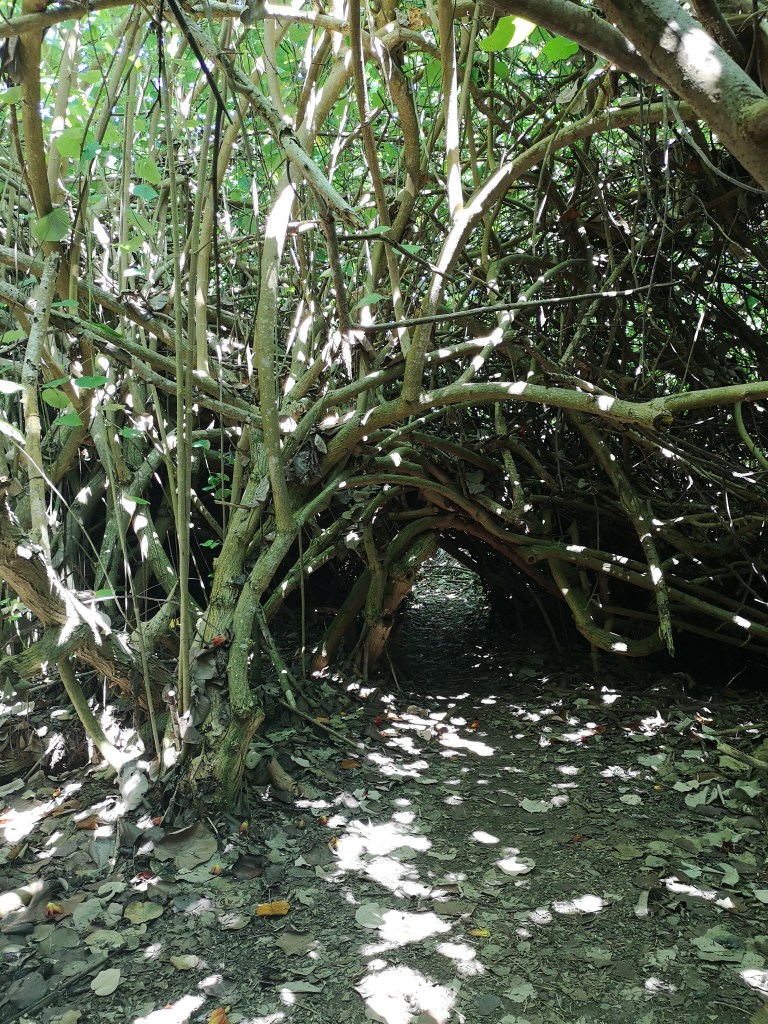
Leading to a small secluded beach between the mangrove trees:
—
…Conduce a una piccola spiaggia isolata tra gli alberi di mangrovie:
Or tuneles el Estero, this is a lava stream which met the sea water, cooled from the outside but not the inside. This way it formed a tunnel/cave. Nowadays inhabited by many crabs, so be careful where you step!
—
Vicino si trovano i tuneles el Estero, formati in seguito al raffreddamento di lava vulcanica: il flusso di lava ha incontrato l’acqua di mare, che ha raffreddato l’esterno ma non l’interno. In questo modo ha formato un tunnel / grotta. Oggi è abitato da molti granchi, quindi state attenti a dove mettete i piedi!

On the other side of town a small bay exists: “Concha de Perla”
This bay is semi closed (connected to the sea through a small reef and a tunnel).
It’s easy to swim around, but tide is of major influence here: as the difference in water level can vary by approx 1.5 meter, the visibility at high tide is much less than at low tide.. so beware!
—
Dall’altra parte della città esiste una piccola baia: “Concha de Perla”
Questa baia è semi chiusa (collegata al mare attraverso una piccola scogliera e un tunnel).
È facile nuotare, ma qui la marea influisce molto: poiché la differenza nel livello dell’acqua può variare di circa 1,5 metri, la visibilità con l’alta marea è molto inferiore a quella della bassa marea .. quindi attenzione a scegliere il momento giusto!
As this whole island is closed down for selfguided activities (except for the above described) we booked two activities:
1. Snorkeling in Los Tuneles (an area with vulcanic shaped tunnels)
2. Snorkeling/kayaking in Las Tintoreras (a small archipelago close to the Concha de Perla bay)
Going to Los Tuneles is quite an experience, we met giant rays, turtles, fishes of all sizes, sea horses, sharks and even a penguin. An amazing sight:
—
Poiché non è possibile effettuare altre attività autogestite sull’isola (eccetto per quanto sopra descritto) abbiamo prenotato due attività:
1. Snorkelling a Los Tuneles (un’area con tunnel di natura vulcanica)
2. Snorkelling / kayak a Las Tintoreras (un piccolo arcipelago vicino alla baia Concha de Perla)
Andare a Los Tuneles è una vera esperienza, abbiamo incontrato razze giganti, tartarughe, pesci di tutte le taglie, cavallucci marini, squali e persino pinguini. Uno spettacolo incredibile:
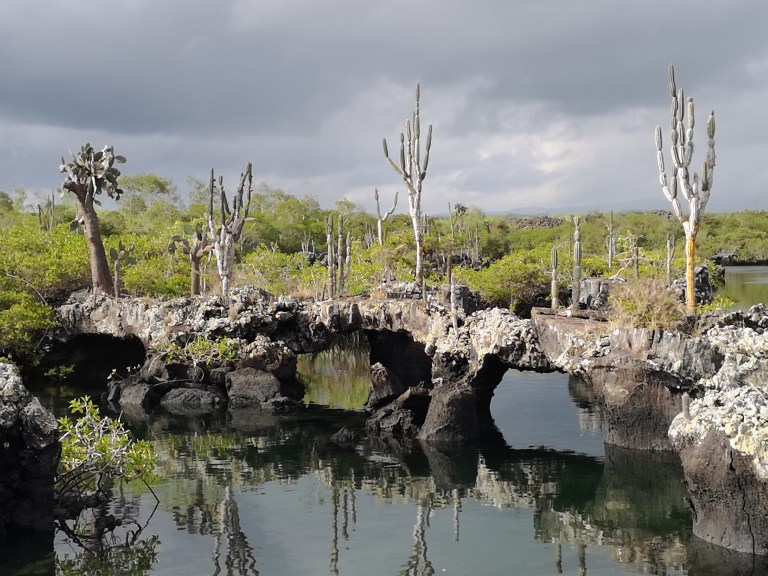
After all this snorkeling we went to the actual Los Tuneles where we could not snorkel as the tide was too high to swim through the tunnels. However the sight is not less impressive (all this is natural, nothing man made)
—
Dopo tutto questo snorkeling siamo andati nel vero Los Tuneles dove non abbiamo potuto fare snorkeling perché la marea era troppo alta per nuotare attraverso i tunnel. Tuttavia la vista non è meno impressionante (è tutto naturale!)
Returning to town we try to find something to eat that is a. affordable and b. is some normal dish (i.e. no spaghetti with aioli and sesame seeds… )
It seems that on this island everything is twice the price of the other islands… We do manage to find an “merienda” (menu for the evening) for a reasonable price.
Everything in this island is expensive because everything is imported from other islands/the continent, except probably for the platanos (tasteless green bananas that are eaten instead of potatoes)
A new day, again full of sun! Time to do our second excursion.
After a short kayak ride we strap on our snorkeling gear and dive in the water, but not before spotting some blue footed boobies and penguins:
—
Ritornando in città proviamo a trovare qualcosa da mangiare che sia a. a buon prezzo e b. un piatto normale (no spaghetti con aioli e sesamo …)
Sembra che su quest’isola tutto sia al doppio del prezzo delle altre isole … Riusciamo a trovare una “merienda” (menu per la sera) ad un prezzo ragionevole.
Tutto in questa isola è costoso perché tutto viene importato da altre isole / continente, tranne probabilmente per i platanos (banane verdi insipide che vengono mangiate al posto delle patate)
Un nuovo giorno, ancora pieno di sole! È tempo di fare la nostra seconda escursione.
Dopo un breve giro in kayak, indossiamo il nostro equipaggiamento per lo snorkeling e ci immergiamo nell’acqua, ma non prima di avvistare alcune sule dalle zampe blu e pinguini:
As we leave Isabela Island (the paradise) it starts raining (obviously)…. And it would not stop raining till we left Quito to go to…. Aruba!
—
Quando lasciamo Isabela Island (il paradiso) inizia a piovere (ovviamente) …. E non smetterà di piovere finché non avremo lasciato Quito per andare a … Aruba!
 Maria & Serge
meraviglioso !
LikeLike