
We thought of directly starting to talk about our amazing time in Galapagos but we realised you would miss out on some key information you need to have before jumping into our holiday and therefore our personal experience.
Galápagos Islands are an archipelago of 21 islands 900km off the coast of Ecuador. The islands were first discovered accidentally in 1535 by the bishop of Panama: at the time they were completely uninhabited by humans.
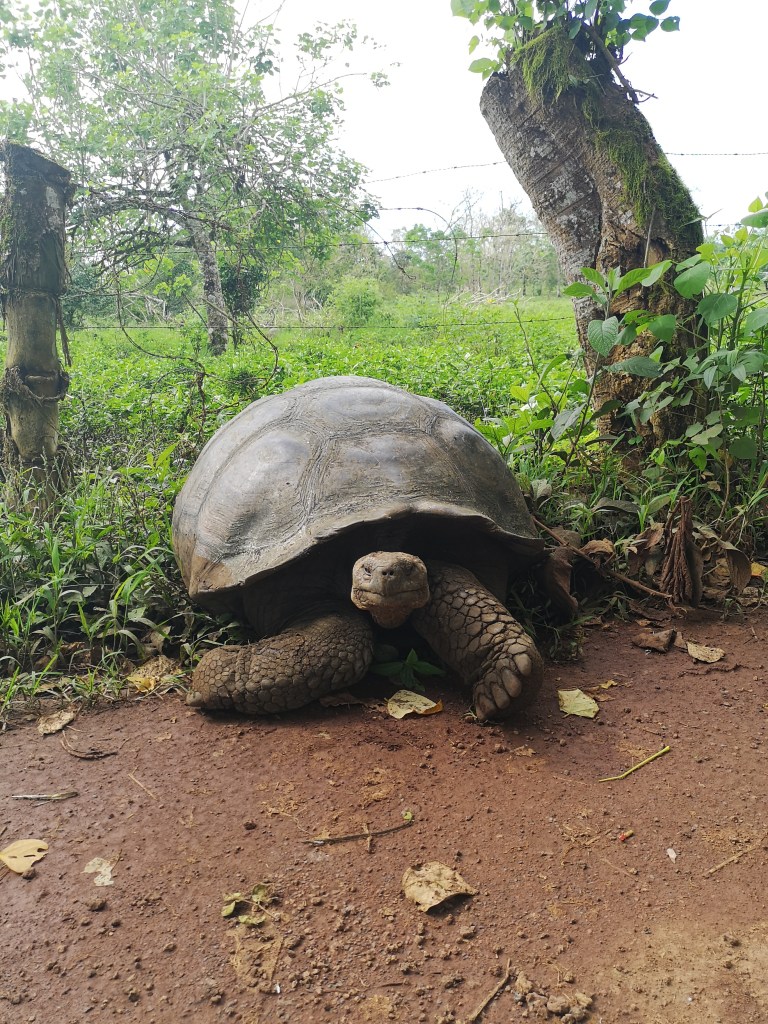
In 1570, they were given their name due to the large turtles found there. Until the early 19th century the archipelago was mostly used as a hideout by English pirates who attacked Spanish galleons carrying gold and silver from South America to Spain.
Whalers and maritime fur traders operating in the Pacific Ocean used the Galápagos as a base and killed thousands of the Galápagos tortoises to extract their fat, which was exported and used to lit up lamps. As tortoises can resist many months without eating and drinking, they were brought on board of ships to serve as a source of fresh proteins during long journeys.
At the beginning of the 1800s, the first permanent settlements started and in the 1900s there was strong migration from Europe. In 1946, a penal colony was established in Isabela Island, but it was suspended in 1959, when the islands were declared National Park.
—
Abbiamo pensato di iniziare direttamente a parlare del nostro fantastico viaggio alle Galapagos, ma ci siamo resi conto vi sareste persi alcune informazioni necessarie.
Le isole Galápagos sono un arcipelago di 21 isole 900 km al largo della costa dell’Ecuador. Le isole furono scoperte per la prima volta accidentalmente nel 1535 dal vescovo di Panama: all’epoca erano completamente disabitate da esseri umani.
Nel 1570, venne loro dato il nome Galápagos a causa delle grandi tartarughe trovate lì. Fino all’inizio del XIX secolo l’arcipelago era usato principalmente come nascondiglio dai pirati inglesi che attaccavano i galeoni spagnoli che trasportavano oro e argento dal Sud America alla Spagna.
I balenieri e commercianti di pellicce marine operanti nell’Oceano Pacifico usarono come base le Galapagos, dove uccisero migliaia di tartarughe per estrarne il grasso, che veniva esportato e utilizzato per accendere le lampade. Poiché le tartarughe possono resistere per molti mesi senza mangiare e bere, venivano anche portate a bordo delle navi come fonte di proteine fresche durante i lunghi viaggi.
All’inizio del 1800, cominciarono i primi insediamenti permanenti nell’arcipelago e nel 1900 ci fu una forte migrazione dall’Europa. Nel 1946 fu fondata una prigione sull’isola di Isabela, ma fu chiusa nel 1959, quando le isole furono dichiarate Parco nazionale.
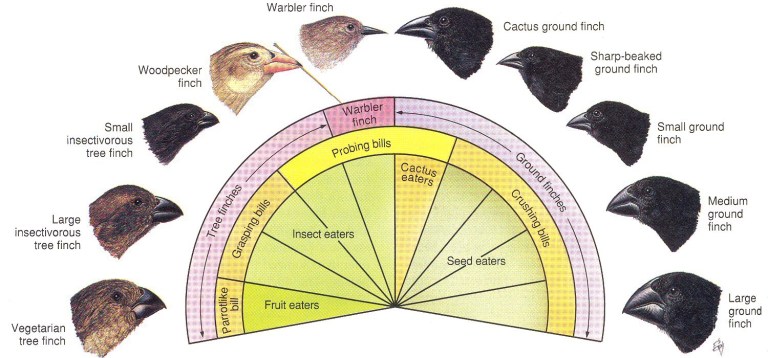
The Galápagos are known worldwide for the important role they played in Darwin’s Evolution theory; when Darwin visited the islands in 1835 (he only spent 5 weeks in total!), he saw that there were a number of varieties of animals he had not seen anywhere else. The species were somewhat familiar but the varieties were unique, as they had over time adapted and developed characteristics that made them particularly fit to the life in the Galápagos.
An example were the finches: he noted that the birds on each island were a bit different from each other and realised that the different body size and beak morphology would be due to the drought condition of the islands: deeper beaks (of bigger birds) would be needed to endure drier weathers, as seeds on dry islands are fewer and harder. This process produced more than a dozen distinct species of finches, all unique to the archipelago. Veeeeery cool, right? From our future posts, you will see some very nice (some of which unique) animals we encountered on the island.
Spoiler: Serge and I have been in the Galápagos for more than one week but we made no breakthrough discovery I am afraid.
—
Le Galapagos sono conosciute in tutto il mondo per l’importante ruolo che hanno svolto nella teoria dell’evoluzione di Darwin; quando Darwin visitò le isole nel 1835 (ci passò solo 5 settimane in totale!), vide che c’erano un certo numero di varietà di animali che non aveva visto da nessun’altra parte. Le specie erano piuttosto familiari ma le varietà erano uniche, poiché nel tempo avevano sviluppato caratteristiche che le rendevano particolarmente adatte alla vita nelle Galapagos.
Un esempio erano i fringuelli: Darwin notò che i fringuelli di ciascuna isola erano un po’ diversi tra di loro e si rese conto che le diverse dimensioni del corpo e la morfologia del becco erano dovuti alla condizione climatiche delle isole: i becchi più profondi (di fringuelli più grandi) erano necessari per sopportare i climi più secchi, poiché i semi sulle isole secche sono meno numerosi e più duri. Questo processo ha prodotto più di una dozzina di specie diverse di fringuelli, tutte presenti solo nell’arcipelago.
Interessante, no? Nei nostri post futuri, vedrete alcuni animali molto belli (alcuni dei quali unici) che abbiamo incontrato sull’isola.
Spoiler: Serge e io siamo stati nelle Galapagos per più di una settimana, ma non abbiamo fatto nessuna scoperta rivoluzionaria, ahimè.
The entrance to the islands is 100 USD, to be paid at the arrival airport. Not cheap but the money is used to maintain the National park: roads, trails, research centre, turtle breeding centres, animal initiatives (eg eradication of non-endemic parasites or predators). Import of fresh fruit/vegetables, soil or livestock to the island is prohibited for passengers.
Of the 21 islands, only 4 are inhabited. These have been marked with a cross (either yellow or red) on the map below.
On the islands there are three ways to do activities:
1. Self guided (only inhabited islands are accessible and only selected sites within these)
2. Guided day-tours (can grant access to more sites on inhabited islands and some access to uninhabited islands – day tours can be pricey, ranging from 40 to 150+ USD)
3. Guided multi-day tours (can grant access to most sites; these are the famous cruises and can be as cheap as 800 USD for 4 days booked at the very last minute, but if you want to do it right expect to splurge at least 3000 USD on a 8 day cruise)
We decided to do a mix of self guided/with a guide and leave the cruise option for some later day. There is transport among islands, but it typically goes through Santa Cruz, the central island. We landed in San Cristóbal and took off from Santa Cruz and visited Isabela as well (yellow crosses in the map below); we therefore needed to take 3 ferries. Ferries depart twice a day to/from San Cristóbal and Isabela and only once a day from Floreana.
All clear? Let’s start exploring!!! (in the next post though)…
—
L’ingresso alle isole è di 100 USD, da pagare all’aeroporto di arrivo. Non è economico, ma il denaro viene utilizzato per mantenere il parco nazionale: strade, sentieri, centro di ricerca, centri di riproduzione delle tartarughe, iniziative sugli animali (es. eradicazione di parassiti o predatori non endemici). L’importazione di frutta fresca / verdura, terra o bestiame sull’isola è vietata ai passeggeri.
Delle 21 isole, solo 4 sono abitate. Queste sono stati contrassegnate con una crocetta (gialla o rossa) sulla mappa qui sotto.
Sulle isole ci sono tre modi di fare le attività:
1. Autoguidate (solo le isole abitate sono accessibili e solo alcuni siti all’interno di queste)
2. Visite guidate giornaliere (possono concedere accesso a più siti sulle isole abitate e qualche accesso alle isole disabitate – i tour di un giorno possono essere costosi, da 40 a 150+ USD)
3. Visite guidate di più giorni (permettono l’accesso alla maggior parte dei siti, queste sono le famose crociere e possono essere “economiche” e costare 800 USD per 4 giorni se si prenotata proprio all’ultimo minuto quando già si è nell’arcipelago, ma se vuoi fare le cose fatte bene, aspettati di spendere almeno 3000 USD per una crociera di 8 giorni).
Noi abbiamo deciso di fare un mix di visite auto-guidate / ed escursioni giornaliere con guida e abbiamo rimandato l’opzione crociera. Le isole sono collegate da battelli, che congiungono le altre tre isole con Santa Cruz, l’isola centrale. Noi siamo atterrati a San Cristóbal e partiti da Santa Cruz e abbiamo anche visitato Isabela (crocette gialle nella cartina sottostante); abbiamo quindi preso 3 traghetti. I traghetti partono due volte al giorno da / per San Cristóbal e Isabela e solo una volta al giorno da / per Floreana.
Tutto chiaro? Iniziamo ad esplorare !!! (nel prossimo post però)…

…Sorry! One last piece of information! Despite being at the equator, there are two different seasons at the Galápagos: cool and dry (June – November) and warm and wet (December – June), with the warmer season being the best time to visit Galápagos for warmer, calmer seas and good underwater visibility. We are now in the warm and wet season.
—
…Scusate! Un’ultima informazione! Nonostante siano all’equatore, ci sono due stagioni diverse alle Galapagos: tempo fresco e secco (giugno – novembre) e tempo caldo e umido (dicembre – maggio); la stagione più calda è il periodo migliore per visitare le Galapagos poiché il mare è più caldo e calmo e c’è migliore visibilità sott’acqua. Ora siamo nella stagione calda e umida.
 Maria & Serge
Grazie per la preziosa condivisione di informazioni sulle Galapagos. In effetti è un luogo che mi piacerebbe visitare, anche se in fondo al cuore spero che possa restare incontaminato a lungo… e questo significa evidentemente minor turismo. Di base, ciò che sarebbe necessario è avere un “turismo ecologicamente rispettoso”, ma penso che questa sia un’utopia. Mi permetto di seguirvi, così da vivere con voi quest’esperienza… augurandovi di poterla fare con il massimo rispetto per la Natura! 🙂 claudine
LikeLike