
Our journey from Temuco to Santiago didn’t go quite as smooth as expected – we showed up at the airport way before boarding time (it felt like we were opening Temuco’s airport at 7.30), our Sky flight was delayed by more than 3 hours from 9.30am to about 1pm.
Sad to have lost almost half a day (out of the 2 days) in Santiago and knowing tomorrow would be the possibly only rainy day in Santiago in December, we decided to wash away our sorrows with some good wine. So we took a cab from the airport to the Concha y Toro vineyard.
We were curious to know what was behind the brand you can literally find everywhere in the world (it is sold in c. 150 countries).
—
Il nostro viaggio da Temuco a Santiago non è andato liscio come previsto – ci siamo presentati all’aeroporto molto prima dell’orario di imbarco (sembrava stessimo aprendo l’aeroporto di Temuco alle 7.30), il nostro volo Sky è stato ritardato di oltre 3 ore dalle 9:30 alle 13:00 circa.
Triste per aver perso quasi mezza giornata (dei 2 giorni) a Santiago e sapendo che l’indomani sarebbe stata l’unica giornata piovosa a Santiago a dicembre, abbiamo deciso di affogare le nostre sofferenze nel buon vino. Quindi abbiamo preso un taxi dall’aeroporto al vigneto Concha y Toro. Eravamo curiosi di sapere cosa ci fosse dietro il marchio che puoi trovare letteralmente ovunque nel mondo (è venduto in circa 150 paesi).

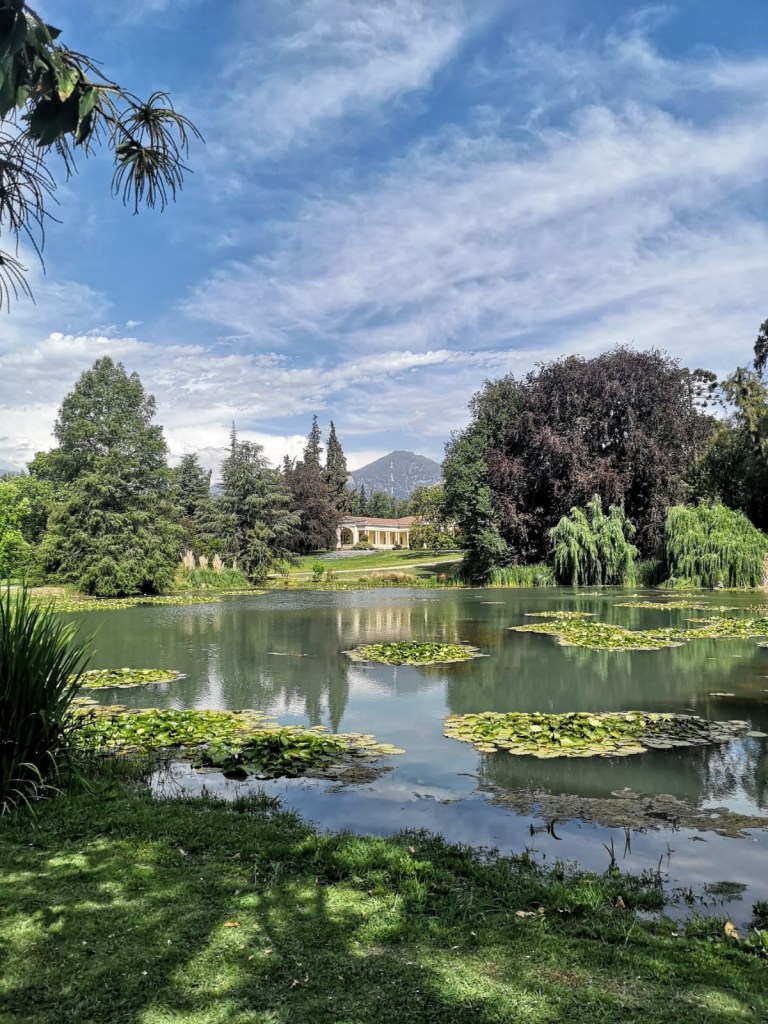
The guided tour takes place in Pirque, which is the last municipality of Santiago in the south. This was the summer residence of the first owners of the brand and the setting is lovely: very elegant, very green, very rich.
—
La visita guidata si svolge a Pirque, che è l’ultimo comune di Santiago in direzione sud. Questa era la residenza estiva dei primi proprietari dell’azienda e l’ambiente è incantevole: molto elegante, molto verde, molto ricco.
The Concha y Toro brand does not really reflect (as you often see in Italy at least) the knowledge in wine making passed down from one generation to another, but rather a successfully executed strategy by a series of talented businessmen.
The Concha y Toro vineyard was founded by Don Melchor de Santiago Concha y Toro and his wife in 1883. Don Melchor liked the wine he had tried in Bordeaux and decided to bring it over to Chile. The grapes that he brought were: Cabernet Sauvignon, Sauvignon blanc, Semillon, Merlot, and (by accident) Carmenère.
The vineyard was incorporated as a stock company in 1923; 10 years later the company was already exporting wine in the Netherlands. In 1950, the winery began to acquire more vineyards. In the 1980s, it started to incorporate more advanced technology in the wine production. In 1994, shares of Viña Concha started trading on the New York Stock Exchange. Not bad huh?
As expected after knowing what just described above, the tour was very organised and kept at a high pace. There are many tours in both English and Spanish organised daily and they need to be efficiently run. This is at the expense of the visitor who needs to run around, in order not to be left behind.
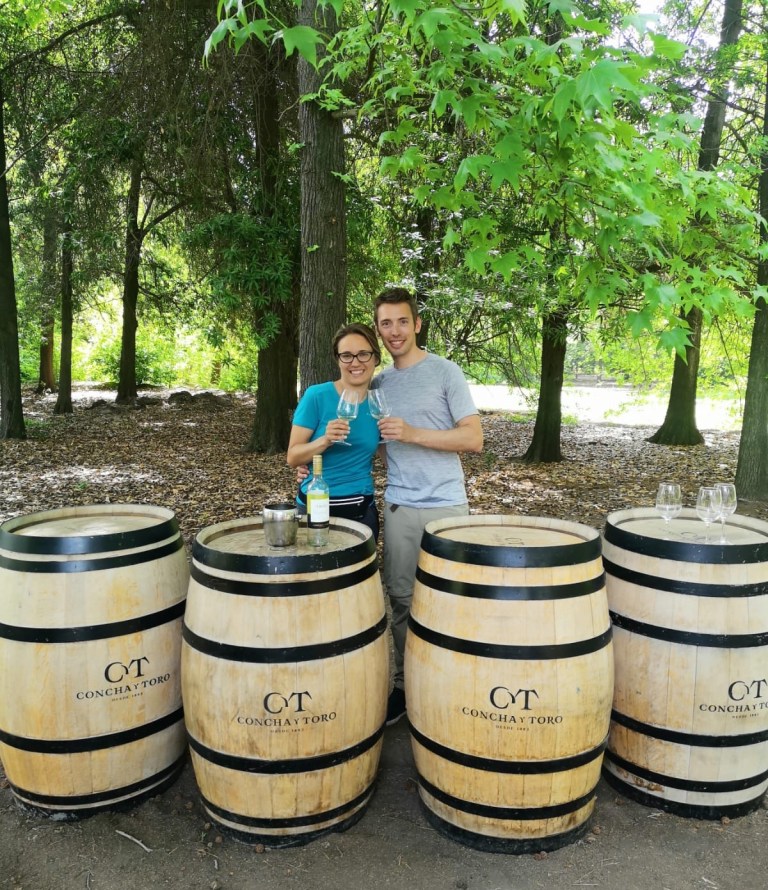
The visit includes 3 wine tastings…
—
Il marchio Concha y Toro non riflette (come invece è spesso il caso in Italia almeno) una tradizione legata alla produzione del vino tramandata da una generazione all’altra, ma piuttosto una strategia eseguita con successo da una serie di uomini d’affari.
Concha y Toro fu fondata da don Melchor de Santiago Concha y Toro e sua moglie nel 1883. Don Melchor amava il vino che aveva provato a Bordeaux e decise di portarlo in Cile. Le uve che porto’ furono: Cabernet Sauvignon, Sauvignon blanc, Semillon, Merlot e (per errore) Carmenère.
Il vigneto fu incorporato come società per azioni nel 1923; 10 anni dopo la società stava già esportando vino nei Paesi Bassi. Nel 1950, la cantina iniziò ad acquisire altri vigneti. Negli anni ’80 inizio’ a incorporare tecnologie più avanzate nella produzione. Nel 1994, le azioni di Viña Concha vennero quotate nella Borsa di New York. Non male, eh?
Detto questo, ci si può facilmente aspettare che il tour fosse molto organizzato ed a passo sostenuto. Ci sono molti tour in inglese e spagnolo organizzati ogni giorno e devono essere gestiti in modo efficiente. Questo è alle spese del turista che deve fare le cose di fretta per non rimanere indietro. La visita include 3 degustazioni…
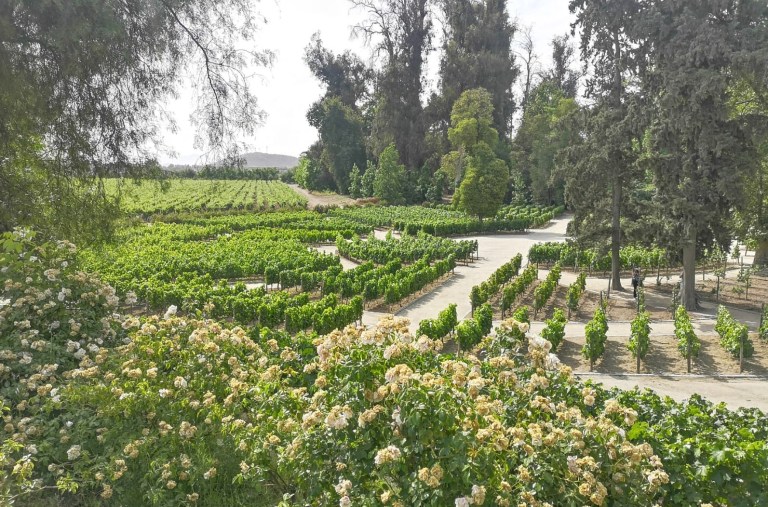
…a (quick!) tour of the Jardin de Variedades, where examples of the 26 variety of grapes, harvested by Concha y Toro throughout Chile, Argentina and the US, are displayed. Behind the “display vines”, there are also real vineyards as you can see from the picture below…
—
… un (veloce!) tour del Jardin de Variedades, dove sono presenti esempi delle 26 varietà di uve coltivate da Concha y Toro in Cile, Argentina e Stati Uniti. Dietro le “viti di esempio”, ci sono anche dei veri vigneti come puoi vedere dall’immagine qui sotto …
…as well as a visit to the wine cellar where you can see both barrels in a technology- controlled environment (humidity and temperature are kept constant by sensors and conditioners/ humidifiers) and barrels in a traditionally controlled environment (cellars are further underground and terrain is watered once a week to keep humidity above 60%)
—
… così come una visita alla cantina dove è possibile vedere sia barili in un ambiente automaticamente controllato (umidità e temperatura sono mantenute costanti dasensori e condizionatori / umidificatori) sia barili in un ambiente tradizionalmente controllato (le cantine sono più’ profonde e il terreno viene irrigato una volta alla settimana per mantenere l’umidità al di sopra del 60%)

You are also introduced to the legend linked to the Casillero (literally “box”) del Diablo. The Casillero del Diablo is one brand of the Concha y Toro; its name (Casillero) comes from the fact that Don Melchor kept its most prestigious wine in a dedicated and confined area. Nevertheless thieves were often stealing those bottles, which did not make Don Melchor happy at all. He then started to spread the word that those bottles were guarded by the devil himself, which is absolutely credible (?!) and which apparently succeeded in keeping thieves away – whatever works I guess
This visit made us forget about all plane delays and the sad things in life… As for me, I will keep on drinking my good old Italian wine! Cheers! 🍷
—
Viene anche raccontata la leggenda legata al Casillero (letteralmente “armadietto”) del Diablo. Il Casillero del Diablo è un marchio della Concha y Toro; il suo nome (Casillero) deriva dal fatto che Don Melchor conservasse il suo vino più prestigioso in un’area dedicata e ristretta. Tuttavia i ladri spesso rubavano queste bottiglie, il che non rendeva affatto felice Don Melchor. Decise allora a diffondere la voce che quelle bottiglie fossero custodite dal diavolo in persona, il che è assolutamente credibile (?!), ma che a quanto pare è riuscito a tenere lontani i ladri.
Questa visita ci ha fatto dimenticare tutti i ritardi degli aerei e le cose tristi della vita … Quanto a me, continuerò a bere il mio buon vino italiano! Salute! 🍷

 Maria & Serge
The right wine always helps 🍷🍷
LikeLike