
After saying goodbye to the lobos marinos of San Cristóbal (we will miss you!), we take a 2-hour boat ride to Santa Cruz, the “central” island of the Galapagos archipelago. Santa Cruz is where all the ferries to San Cristóbal, Isabela and Floreana leave from so if you are island hopping (rather than cruising) in the Galapagos you will always have to pass by Santa Cruz at least once. Santa Cruz is also the island where most cruises leave from, as a result it is typically busier than San Cristóbal and the main city Puerto Ayora has a larger non-touristic area.
—
Dopo aver salutato i leoni marini di San Cristóbal (ci mancherete!), prendiamo il battello per Santa Cruz, l’isola “centrale” dell’arcipelago delle Galapagos. Da Santa Cruz partono i traghetti per San Cristóbal, Isabela e Floreana, quindi se visiti le isole da solo (piuttosto che in crociera) dovrai sempre passare da Santa Cruz almeno una volta. Santa Cruz è anche l’isola da dove partono le maggior parte delle crociere, di conseguenza è più frequentata di San Cristóbal e la città principale di Puerto Ayora ha una zona non turistica più ampia.

Upon arrival at the island, we are met by an interesting show: a flock of pelicans waiting to catch some fish at the local fish pier, where the catch of the day is cleaned and sold. The pelicans are definitely too many so not great luck for them I am afraid.
On a related note, there is a street in Puerto Ayora called by locals Los Kioskos which is pedestrianised in the evening for people to enjoy fresh fish offered by the many restaurants – don’t miss it!
—
All’arrivo sull’isola, siamo accolti da uno spettacolo interessante: uno stormo di pellicani in attesa di ricevere qualche pesce al molo, dove viene ripulito e venduto il pescato del giorno. I pellicani sono decisamente troppi quindi non saranno tutti saziati.
Per restare sul tema pesce fresco, c’è una strada a Puerto Ayora chiamata dai locali Los Kioskos che è resa pedonale la sera e dove ci si può godere il pesce fresco offerto dai numerosi ristoranti – da non perdere!
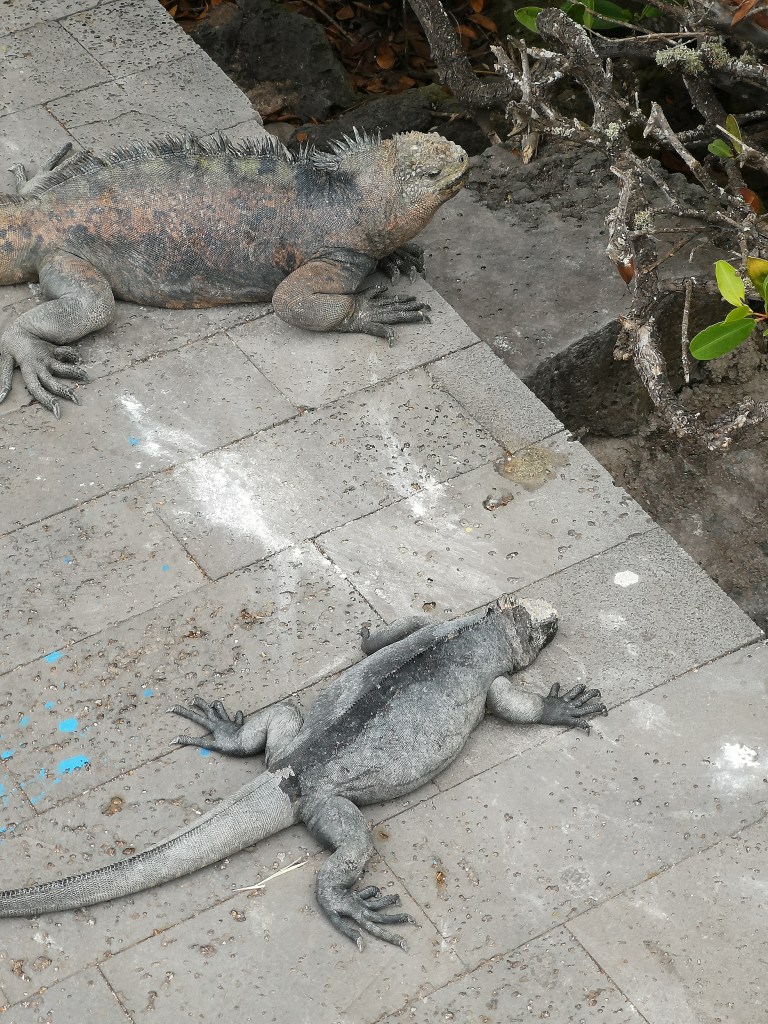
We also notice that while San Cristóbal has an impressive large population of sea lions inhabiting the island, Santa Cruz is home to hundreds and hundreds of iguanas, which (sorry guys!) look a bit less friendly than sea lions.
—
Notiamo anche che mentre San Cristóbal ha un’imponente popolazione di leoni marini, Santa Cruz ospita centinaia e centinaia di iguane, che (scusate ragazzi!) sembrano un po’ meno amichevoli dei leoni marini.
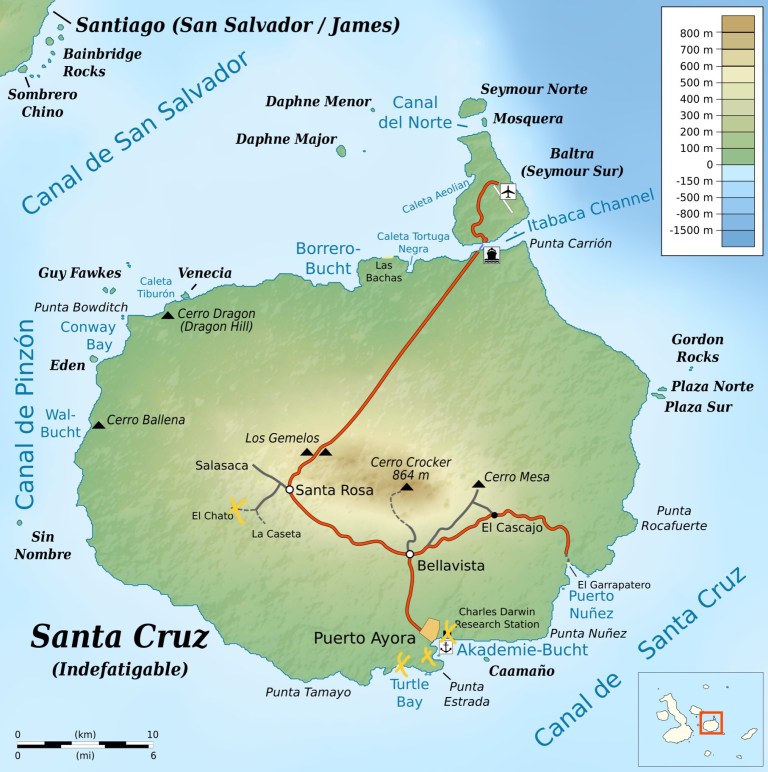
We decide not to take any guided tour in Santa Cruz because there seems enough to do on your own using public transport/your legs – also, given that guided tours typically range from 40 to 150 USD per person, we only want to take only those which are really worth it. In the map below, we have marked the sites we visited with a yellow cross.
—
Decidiamo di non fare nessun tour guidato a Santa Cruz perché sembra che ci sia abbastanza da fare da soli utilizzando i mezzi pubblici / le gambe – inoltre, dato che le escursioni con guida variano in genere da 40 a 150 USD a persona, vogliamo solo fare quelle che ne valgono davvero la pena. Nella mappa sotto, abbiamo segnato i siti che abbiamo visitato con una crocetta gialla.
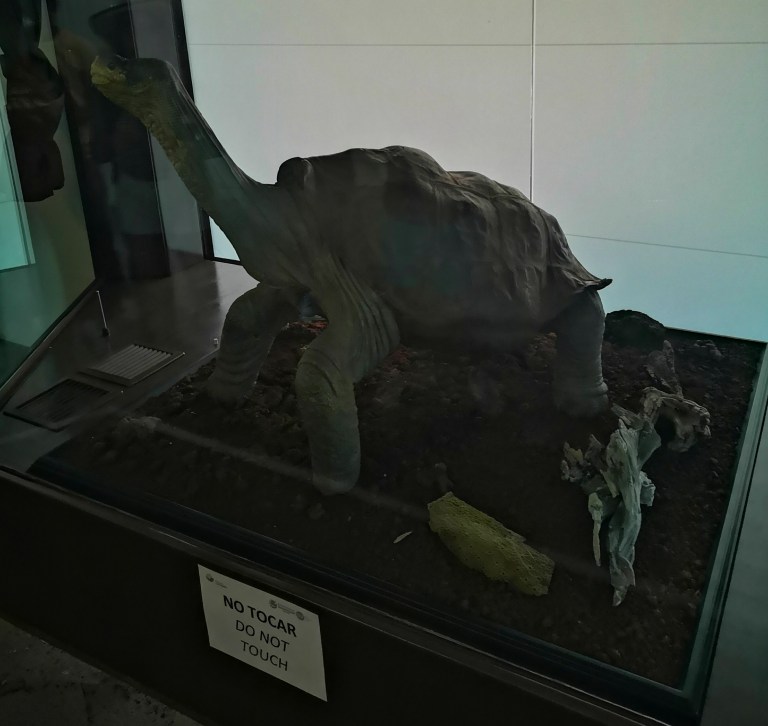
Day 1: On the first day we decide to visit the Darwin centre where tortoises are bred before being returned to their natural habitat in the various islands. With respect to the Galapaguera visited in San Cristóbal, this has less free-roaming tortoises so it is a bit less impressive. We get also to visit the room where the Lonesome George is stored: his is a sad story as after the exploitation of tortoises by colonists and pirates for their meat and fat, Lonesome George was the only one remaining of the Pinta Island species. All attempts to find him a female mate were in vain and copulation as well as artificial insemination with females from other species was also fruitless: he therefore died alone in 2013 and (possibly) his species with him. 😢
—
Giorno 1: Il primo giorno decidiamo di visitare il centro di ricerche Darwin, dove vengono allevate le tartarughe prima di ritornare al loro habitat naturale nelle varie isole. Rispetto alla Galapaguera visitata a San Cristóbal, questo centro ha meno tartarughe in libertà, quindi è un po’ meno impressionante. Andiamo anche a visitare la stanza in cui è conservato il Lonesome George: la sua è una triste storia, poiché dopo lo sfruttamento delle tartarughe da parte di coloni e pirati per la loro carne e grasso, Lonesome George rimase l’unica tartaruga della specie dell’isola di Pinta. Tutti i tentativi di trovargli una compagna sono stati vani e la copulazione così come l’inseminazione artificiale con femmine di altre specie è stata anch’essa infruttuosa: è quindi morto solo nel 2013 e (possibilmente) la sua specie con lui. 😢
We feel quite hot after the visit so we go to the nearby Playa de la Estacion (which is still in the Darwin centre area). There are a bunch of iguanas, pelicans and some fishes underwater, one of which (renamed by us the “Kiko fish” due to its funky yellow lip color) was particularly interested in our go-pro so we got a nice video of him/her.
—
Abbiamo abbastanza caldo dopo la visita, quindi andiamo nella vicina Playa de la Estacion (che è ancora nell’area del centro di Darwin). Ci sono un sacco di iguane, pellicani e alcuni pesci sott’acqua, uno dei quali (ribattezzato da noi il “pesce Kiko” per via del suo originale rossetto giallo sulle labbra) era particolarmente interessato al nostro go-pro quindi abbiamo ottenuto un bel video di lui / lei.
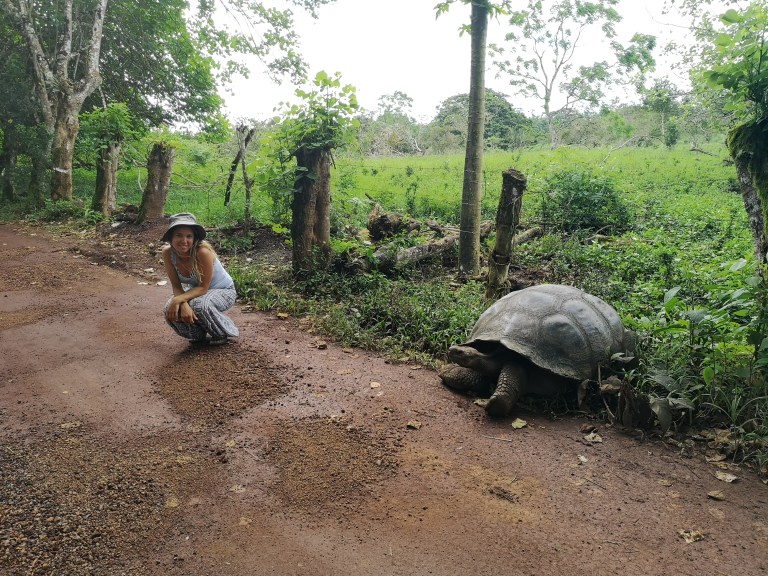
In the afternoon we set off to the El Chato ranch, which is in the area of Santa Rosa, in the highlands of Santa Cruz (c.20 km away from the center of Puerto Ayora). Most people go there by taxi and have the taxi driver wait for them while they do the tour of the ranch (might cost 30-40 USD) but there is a cheaper option for those who don’t mind an hour walk (each way) from Santa Rosa to the reception of the ranch: you can take a bus from the central market in Puerto Ayora, which costs 1 USD per person each way. The walk is a relaxing one, and particularly in the second part (from the entrance of the ranch to the reception) you get the chance to meet many turtles in the “wild”.
—
Nel pomeriggio partiamo per il ranch El Chato, che si trova nella zona di Santa Rosa, negli altopiani di Santa Cruz (a circa 20 km dal centro di Puerto Ayora). La maggior parte delle persone va in taxi e fa aspettare il tassista mentre viene fatto il giro del ranch (potrebbe costare 30-40 USD) ma c’è un’opzione più economica per chi apprezza una passeggiata di un’ora (un’ora all’andata ed un’ora al ritorno) da Santa Rosa alla reception del ranch: si può infatti prendere un autobus dal mercato centrale di Puerto Ayora, che costa 1 USD a persona a tratta. La passeggiata è rilassante, e in particolare nella seconda parte (dall’ingresso del ranch alla reception) si ha la possibilità di incontrare molte tartarughe nel loro habitat naturale.

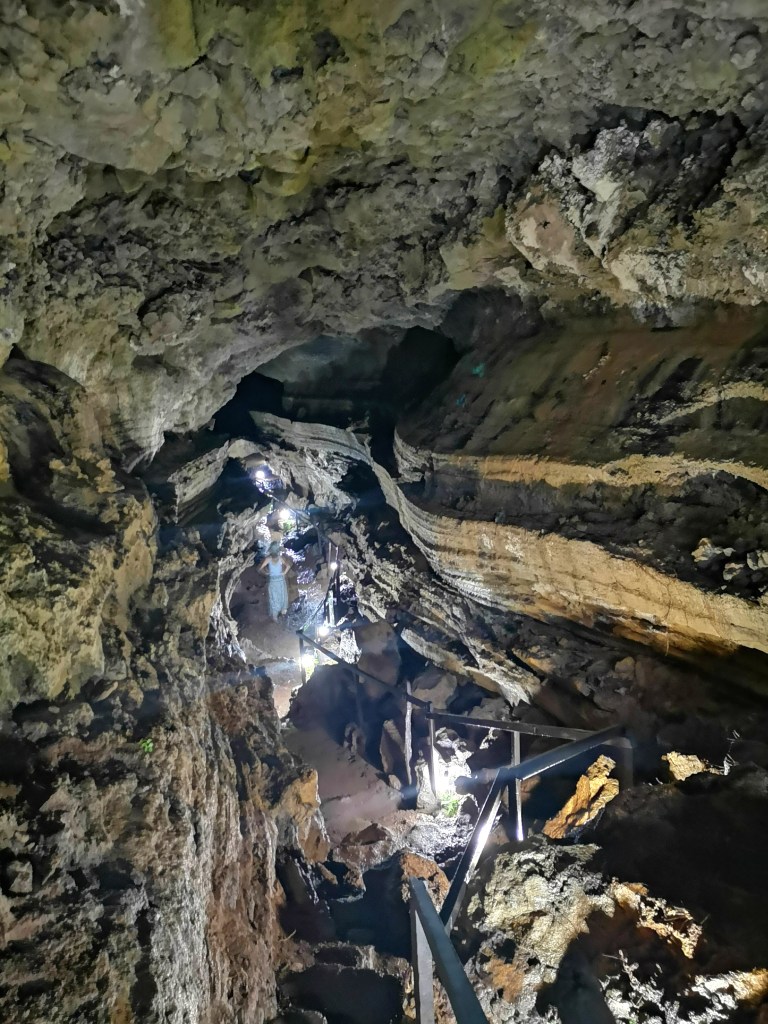
The ranch itself is worth a visit; there is an entrance charge of 5 USD which includes the tour of the ranch as well as boots in case you show up in low sneakers or flip flops (we did not really need them) and some locally produced coffee/tea. The ranch hosts many giant turtles and also has “lava tunnels” (see picture below) which are basically outside skin of a molten-lava flow solidified.
—
Il ranch merita una visita di per se’; l’ingresso costa 5 USD ed include il tour del ranch e stivali nel caso in cui avessi scarpe da ginnastica basse o infradito (noi non ne abbiamo avuto bisogno) e un po’ di tè / caffè prodotto localmente. Il ranch ospita molte tartarughe giganti e ha anche “tunnel di lava” (vedi foto sotto) che sono fondamentalmente l’esterno di un canale di lava che si è solidificato.
Day 2: On day 2 we get up quite early (as always anyways) and we head off to Las Grietas. Las Grietas are a series of volcanic crevices that were formed during the cooling of molten lava. The porous lava stone of the island allows water to filter down from the highlands into Las Grietas where it mixes with sea water filtering in from the ocean. They are located not too far from Puerto Ayora – in order to get there you need to get a water taxi from the Pier in Puerto Ayora to the other side of town (this cannot be walked as there is no trail); the ride lasts a couple of minutes and costs 80 cents per person. You then need to walk for 15-20 minutes to get to the site, past the salt pans. They say the site can be best enjoyed when nobody is there (typically before 8am); we agree with this as the swimming area is not too large so it is better to have it for yourself. Also, in the morning the sun shines through the cracks of the rocks, so the area is already in the direct sun. We got there at 7.30 am and nobody was there but we were then joined by another 3 people before we left at about 8ish. Note: since the water is not seawater, there are mosquitoes flying around so do not forget your bug spray!
—
Giorno 2: Il 2° giorno ci alziamo presto (come sempre) e partiamo per Las Grietas. Las Grietas sono una serie di crepe vulcaniche che si sono formate durante il raffreddamento della lava fusa. La pietra lavica porosa consente all’acqua di filtrare dagli altopiani verso Las Grietas dove si mescola con l’acqua di mare che filtra dall’oceano. Las Grietas non e’ troppo lontano da Puerto Ayora – per arrivarci è necessario prendere un taxi acquatico dal molo di Puerto Ayora all’altro lato della città (non si può camminare perché non c’è strada); la corsa dura un paio di minuti e costa 80 centesimi a persona. È quindi necessario camminare per 15-20 minuti per raggiungere il sito, oltre le saline. Dicono che il sito può essere apprezzato al meglio quando non c’è nessuno (di solito prima delle 8:00); siamo d’accordo, poiché l’area in cui si può nuotare non è troppo grande, è meglio averla tutta per te. Inoltre, al mattino il sole splende attraverso le fessure delle rocce, quindi l’area è già sotto il sole diretto. Siamo arrivati alle 7.30 e non c’era nessuno ma prima che ripartissimo alle 8 c’erano già altre 3 persone. Nota: poiché l’acqua non è acqua di mare, ci sono zanzare che volano in giro, quindi non dimenticare lo spray per insetti!

We then returned to town and walked our way to the Tortuga Bay, which is on the same side of town as the Las Grietas but there is no way to reach it directly from Las Grietas. The walk from the entrance of the path to the first beach of Tortuga Bay (playa Brava) is c2.5km long. Signs and red flags suggest not to bathe in this first beach due to heavy waves; as a result there are very few swimmers and some surfers, particularly at the end of the day. When we arrive (at 10.15ish) the tide is low and the beach looks like a giant mirror. In the afternoon there is no mirror and high tide.
—
Siamo poi tornati in città e abbiamo camminato fino alla Tortuga Bay, che si trova sullo stesso lato della città de Las Grietas ma non c’è modo di raggiungerla direttamente da Las Grietas. La passeggiata dall’ingresso del sentiero fino alla prima spiaggia di Tortuga Bay (playa Brava) è lunga 2,5 km. Cartelli e bandiere rosse suggeriscono di non fare il bagno in questa prima spiaggia a causa delle forti onde; di conseguenza ci sono pochissime persone nuotano ma ci sono alcuni surfisti, in particolare alla fine della giornata. Quando arriviamo (alle 10.15) la marea è bassa e la spiaggia sembra uno specchio gigante. Nel pomeriggio non c’è specchio e la marea è alta.

After walking along the beach, you pass a ranger station and you end up in the second beach (playa Mansa). There you can relax in the shade, bathe in the shallow, calm and warm water and rent a kayak (10 USD per person for an 1-1.30 hour rental): during our ride in the bay we come across plenty of sea turtles (as expected, given the the name of the bay), either alone or mating and some of them really giant, a couple of sharks, some fish (but not much), iguanas of course, and a couple of blue footed boobies (these birds are so cute!) on the nearby rocks: we only had our go-pro and not our phone camera with us, so despite the birds were really close to us, no portrait picture of the blue footed booby this time. 😢
As the bay is quite large renting a kayak is definitely advisable; you also don’t need to be swimming to see sea turtles as they come to the surface of the water to catch their breath.
Next stop: Isabela!
—
Dopo aver camminato lungo la spiaggia, si passa una stazione ranger e si finisce nella seconda spiaggia (playa Mansa). Ci si può rilassare all’ombra, fare il bagno nell’acqua bassa, calma e calda e noleggiare un kayak (10 USD a persona per un noleggio di 1-1,30 ore): durante la nostra escursione nella baia incontriamo molte tartarughe marine (come atteso, dato il nome della baia), sia da sole o in accoppiamento e alcune di loro davvero giganti, un paio di squali, alcuni pesci (ma non molti), iguane naturalmente, e un paio di sule dalle zampe blu (questi uccelli sono così carini!) sulle rocce vicine: avevamo solo il nostro go-pro e non la nostra fotocamera con noi, quindi, nonostante gli uccelli fossero davvero vicini a noi, non abbiamo nessuna foto da vicino delle sule. 😢
Poiché la baia è abbastanza grande, è consigliabile noleggiare un kayak; inoltre non è necessario nuotare per vedere le tartarughe marine poiché arrivano sulla superficie dell’acqua per riprendere fiato.
Prossima fermata: Isabela!
 Maria & Serge