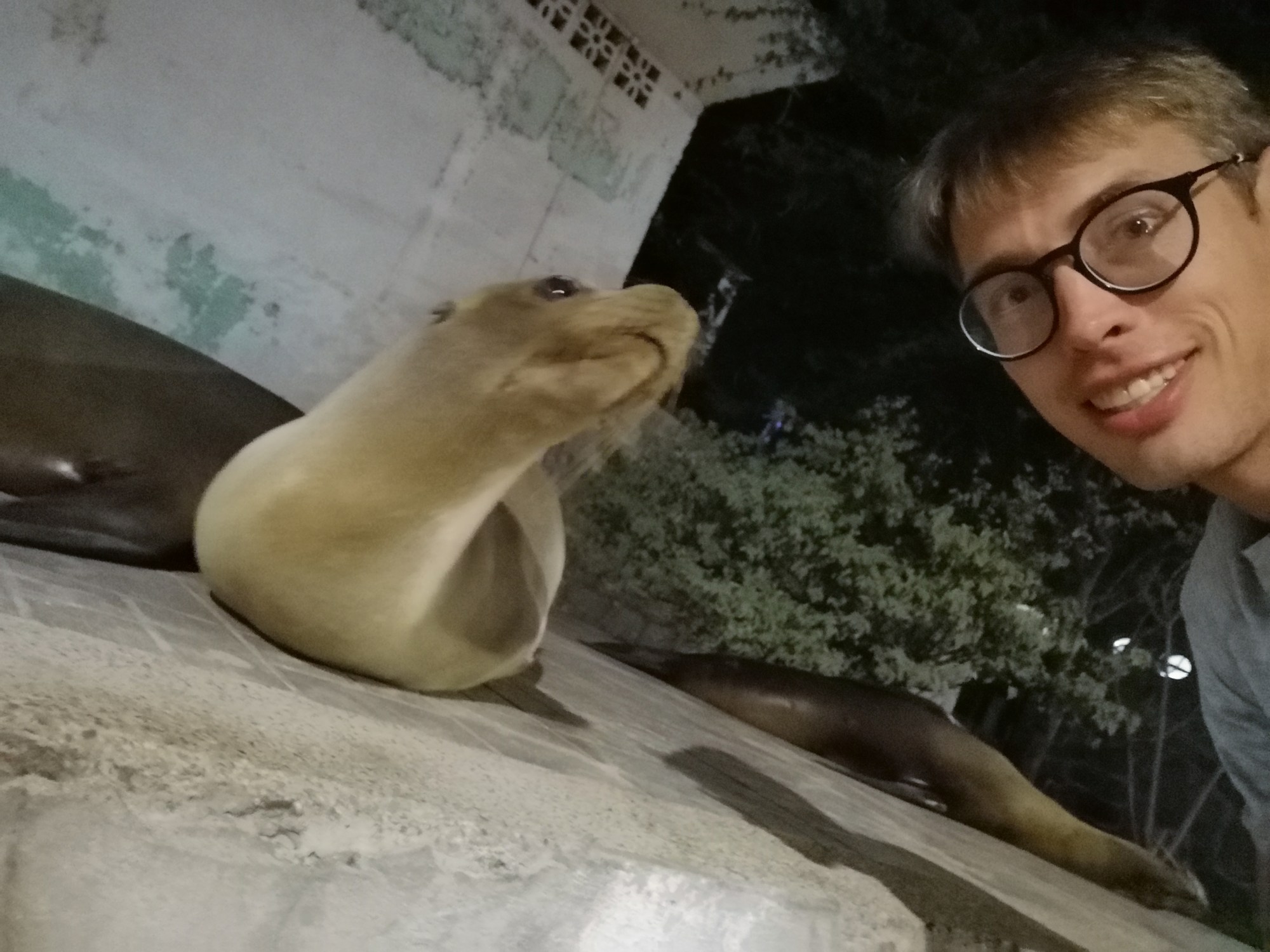
Arriving at Puerto Baquerizo (the main city of San Cristobal and the “capital” of Galápagos ) we start exploring the town on our own.
Great places to go are:
1. The boulevard, full of sea lions. These sea lions are quite present in San Cristóbal. They have a strong personality and for example would get very upset and shout at you if they are sitting on your bench and you are getting to close to them. Also, they would get upset if you get too close to their little ones… reasonably. Dozens and dozens of them typically sleep during the night on the beach facing San Cristóbal and are they noisy!!!
Some facts about sea lions:
– They can live in harems, with one dominant male and multiple females with their kids (remember, they are mammals)
– Males typically live to 15 years and females 20
– Mothers feed their little ones exclusively with milk until they are 6 months, but can continue to feed them milk until the babies are 3/4 years old (in fact you can often see a sea lion feeding another one not much smaller than herself)
– sea lions mother do not adopt, they only feed their own kids
– sea lions reach adulthood at 5 years
—
Arrivando a Puerto Baquerizo (la città principale di San Cristóbal e “capitale” delle Galápagos) iniziamo a esplorare la città da soli.
I posti migliori dove andare sono:
1. Il viale lungomare, pieno di leoni marini. Hanno una forte personalità e ad esempio si arrabbiano molto e ti urlano se sono seduti sulla tua panchina e ti stai avvicinando. Inoltre, si arrabbiano se ti avvicini troppo ai loro piccoli… ragionevolmente. Dozzine e dozzine di solito dormono durante la notte sulla spiaggia di fronte a San Cristóbal e sono veramente rumorosi !!!
Alcuni fatti sui leoni marini:
– Possono vivere in harem, con un maschio dominante e più femmine con i loro figli (ricordate, sono mammiferi)
– I maschi vivono tipicamente 15 anni e le femmine 20
– Le madri nutrono i loro piccoli esclusivamente con il latte fino ai 6 mesi, ma il periodo di svezzamento dura fino ai 3/4 anni (infatti puoi spesso vedere un leone marino che allatta un altro non molto più piccolo di lei)
– i leoni marini femmina non adottano, nutrono solo i propri figli
– i leoni marini raggiungono l’età adulta a 5 anni
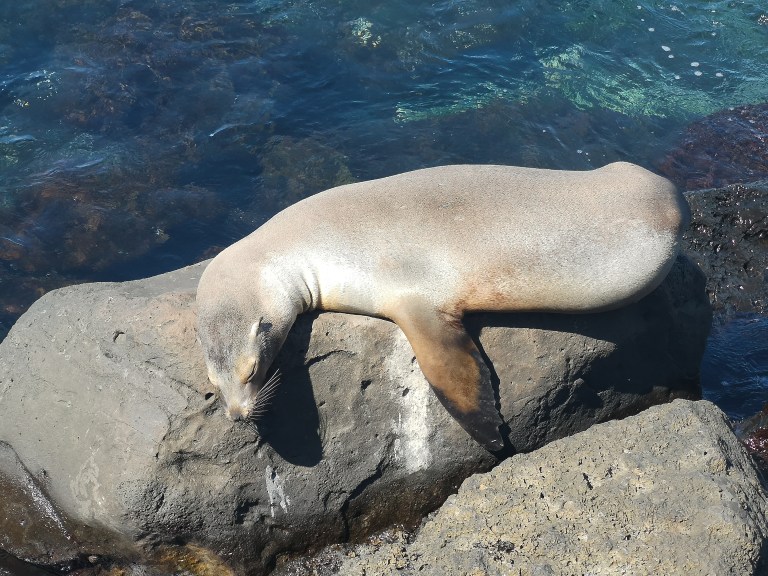
….and marine iguanas (only found in Galápagos)
—
…. e iguane marine (specie solamente presente nelle Galápagos)
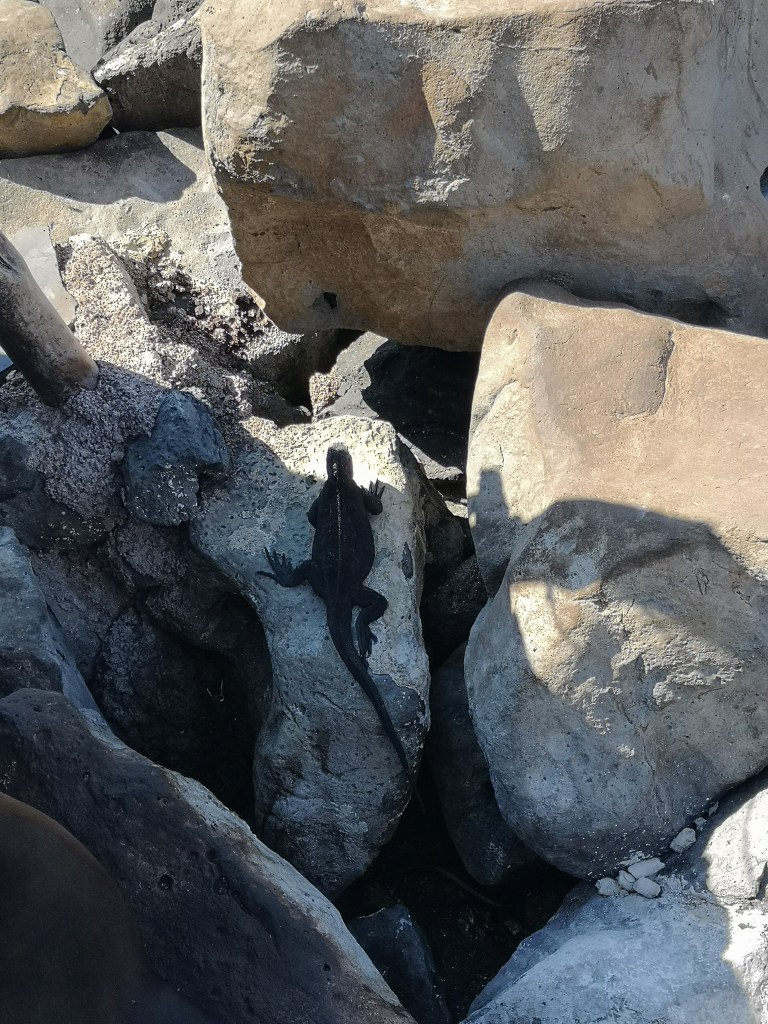
2. Playa Mann (very close to the city, not too much animals)
3. Playa Punta Carola (a bit further but quite a lot of sea lions and sea turtles 🐢)
—
2. Playa Mann (molto vicino alla città, con pochi animali)
3. Playa Punta Carola (un po ‘più lontano ma un bel po’ di leoni marini e tartarughe marine 🐢)
4. Cerro Tijeretas, nice view over the island. Down in the Bahia Tijeretas the view under water is quite clear but there are not that many fishes around (unfortunately forgot the go pro so no pictures here)
We conclude our first day on the island with a great sunset.
—
4. Cerro Tijeretas, da dove si gode di una bella vista sull’isola e giù nella Baia Tijeretas la vista sott’acqua è abbastanza chiara (purtroppo ho dimenticato il go pro quindi nessuna foto)
Concludiamo il nostro primo giorno sull’isola con un magnifico tramonto.
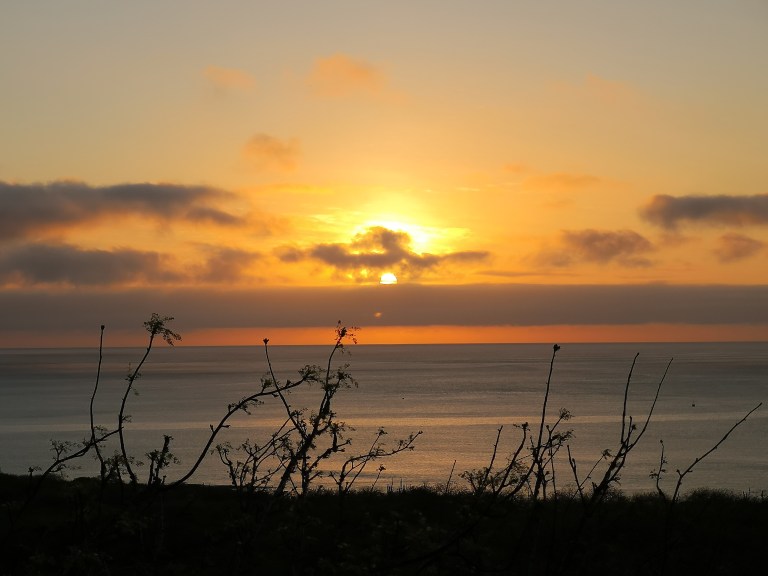
Nightlife in town is rather quiet (despite this being the high season). We would learn later that both San Cristobal as well as Isabela are the quiet islands (less locals, tourists, etc) and Santa Cruz is the busier island.
The next day we start to explore a bit further:
—
La vita notturna in città è piuttosto tranquilla. Vorremmo a sapere più tardi che sia San Cristobal che Isabela sono le isole tranquille (meno gente del posto, turisti, ecc.) e Santa Cruz è l’isola più frequentata.
Il giorno dopo iniziamo a esplorare un po’ oltre:

Our goal of the day is Puerto Chino.
There are two ways to get there, by taxi (35 minutes drive) or by bike (3 hrs/24 km/700 meters altitude, grueling ride). Cost wise they are more or less the same.
Of course what’s life without a challenge, we take the bike!
The first 15 Kms are up hill, about 2.5 hours are spent biking uphill like there is no tomorrow (one piece of advice, take the taxi..).
We pass by some of the inland villages:
—
Il nostro obiettivo del giorno è Puerto Chino.
Ci sono due modi per arrivarci, in taxi (35 minuti in auto) o in bicicletta (3 ore / 24 km / 700 metri di altitudine, corsa faticosa). Il costo è più o meno uguale.
Ma che cos’è la vita senza sfide, noi prendiamo la bici!
I primi 15 km sono in salita, circa 2,5 ore passate in bicicletta a pedalare in salita come se non ci fosse un domani (un consiglio, prendete il taxi ..).
Passiamo da alcuni villaggi dell’entroterra:
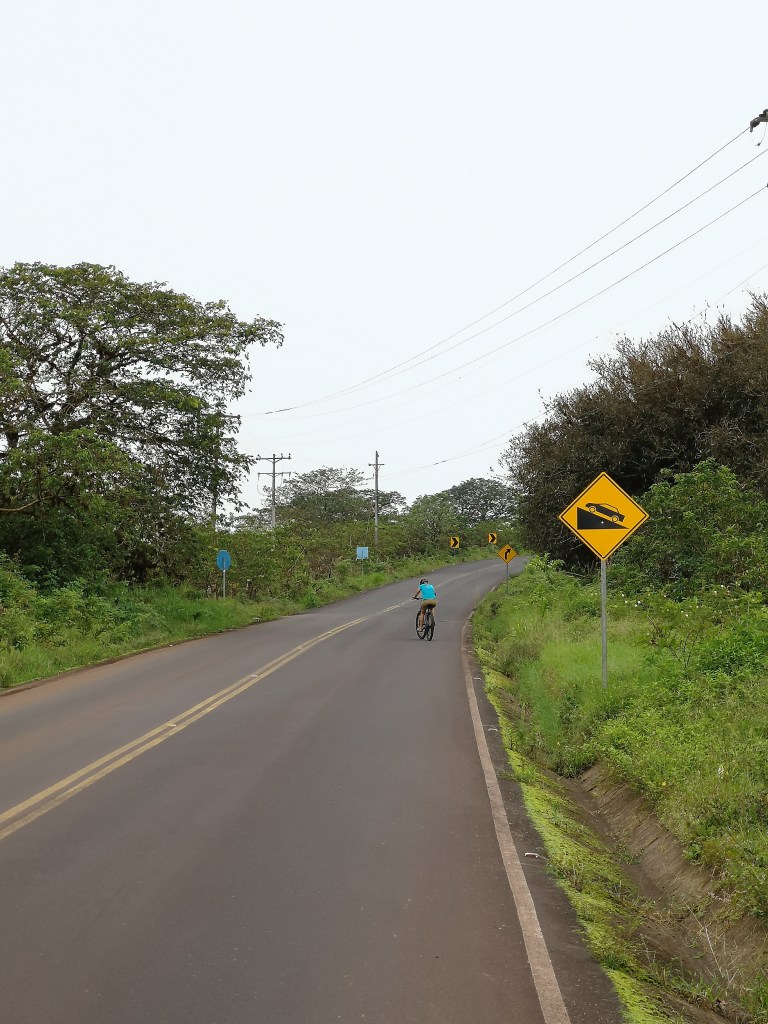
and finally end up at what is the highest point of the trip: el Junco, a small Laguna in the middle of the island where it is almost 100% of the time misty.
Pro tip: wait 15-20 minutes, the wind blows the mist away some times, after which you have a bit of view on the laguna
—
e finalmente arriviamo in quello che è il punto più alto del viaggio: el Junco, una piccola laguna nel mezzo dell’isola dove è quasi il 100% del tempo nebbioso.
Suggerimento: attendete 15-20 minuti, il vento soffia via la nebbia per un attimo, e si ha un po’ di vista sulla laguna
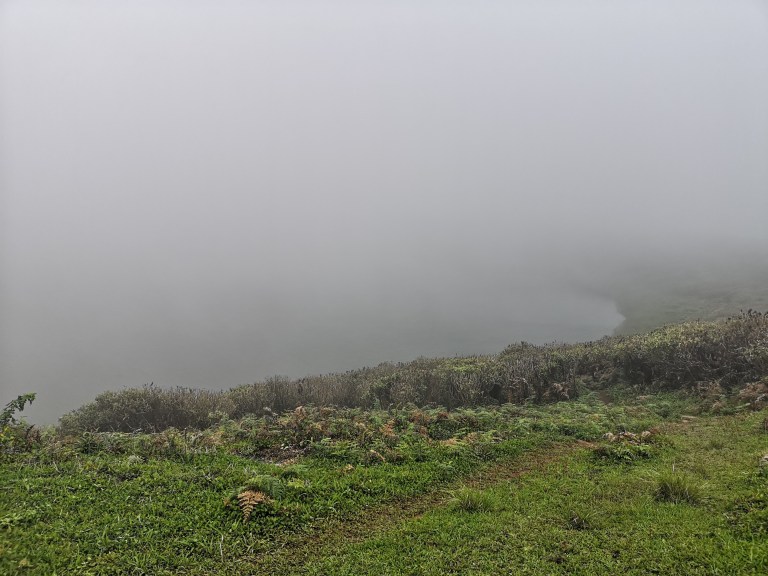
From there it is an easy 9 km (700 meter down) to the beach. As our rental bikes have a shady history (quite some shavings on the side from previous crashes), I don’t trust the brakes too much. Luckily we arrive safely down.
Right before the beach there is a turtle breeding centre; entrance is free (as it is part of the national park)
—
Da lì sono 9 km (700 metri giù) fino alla spiaggia. Dato che le nostre bici a noleggio hanno una storia oscura (alcuni segni sul lato della bici dovuti a precedenti incidenti), non mi fido troppo dei freni. Fortunatamente arriviamo sani e salvi.
Poco prima della spiaggia c’è un centro di riproduzione delle tartarughe; l’ingresso è gratuito (dato che fa parte del parco nazionale)
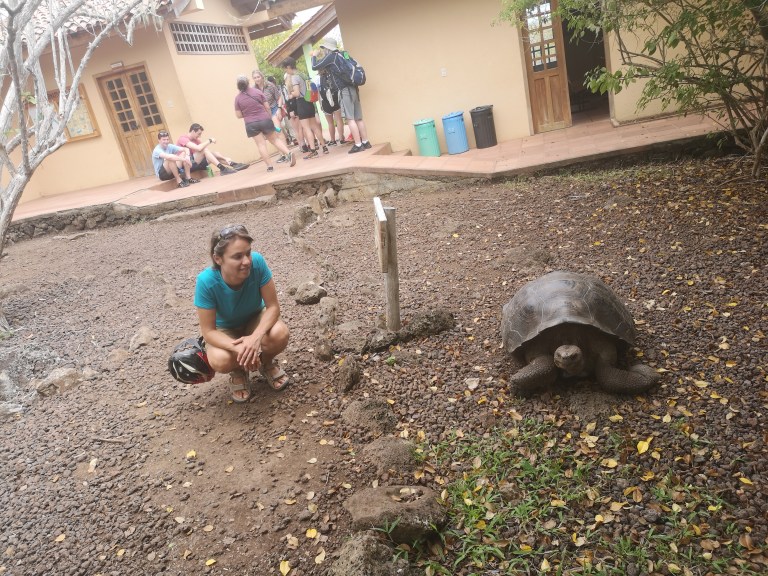
Half way the trail through the centre there is a stop with the little turtles in all stages between 0 and 5 years old.
—
A metà del percorso attraverso il centro c’è una sosta con le tartarughine in tutte le fasi tra 0 e 5 anni.
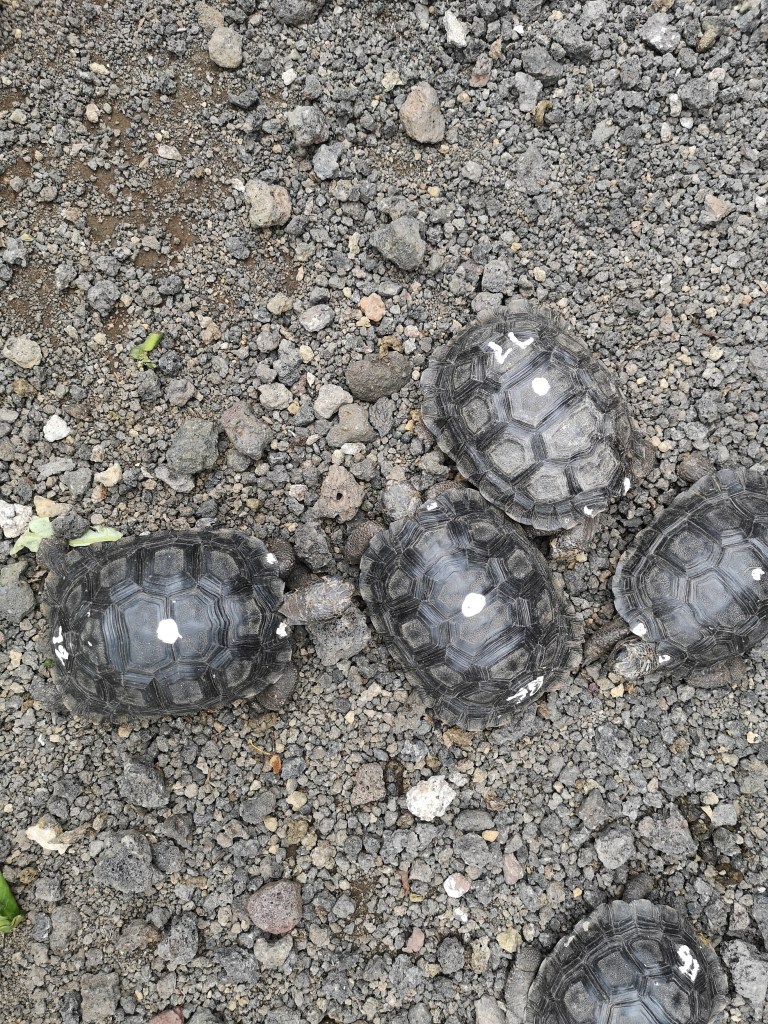
As you can imagine these are not the fastest creatures on the road (average speed: 500m per hour)…
—
Come puoi immaginare queste non sono le creature più veloci sulla strada (velocità media: 500 m all’ora) …
We resume our way to the beach, Puerto Chino. Almost there after a long way biking (we are not the only bikers, in total we met about 5-6 other bikers on the road).
—
Riprendiamo la strada per la spiaggia, Puerto Chino. Ci siamo quasi, dopo un lungo giro in bicicletta (non siamo gli unici biker, in totale abbiamo incontrato circa 5-6 altri ciclisti sulla strada).

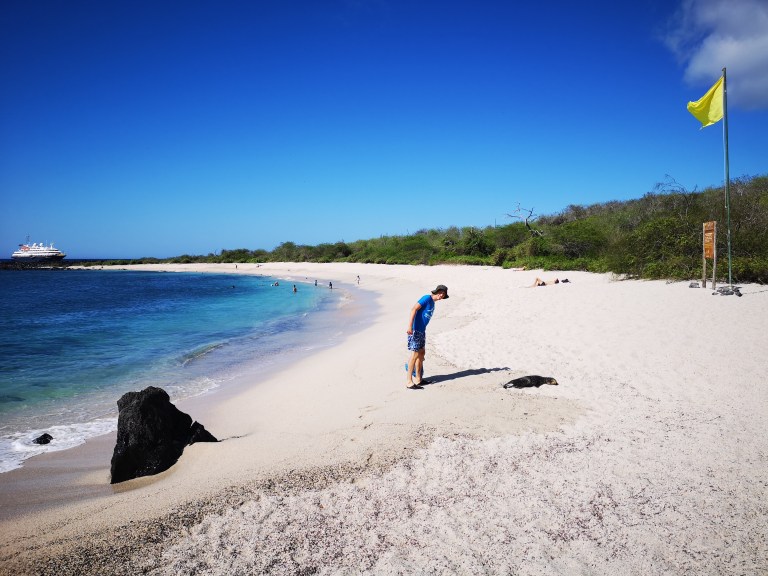
It’s a great beach, white, deep blue sea and of course the necessary sea lions:
—
È una grande spiaggia, bianca, mare blu profondo e, naturalmente, i necessari leoni marini:
On our way back we climb steep up the hill with our bikes and after 9 km we reach the top. From the top it is 15 km downhill, which gives us a well deserved result of all our hard uphill climbing.
—
Sulla via del ritorno risaliamo la collina con le nostre bici e dopo 9 km raggiungiamo la cima. Dalla cima sono 15 km in discesa, il che è un premio meritato per tutte le nostre dure salite.

As today is Epiphany we are not forgotten by the church: a whole procession including the three kings on horses goes through the streets:
—
Poiché oggi è l’Epifania, non siamo dimenticati dalla chiesa: un’intera processione che include i tre re sui cavalli percorre le strade:

Day 3 and our last day on the island, we take a 360 tour. As the name suggests this is a round around the island.
We go around anti clockwise, in a boat.
Stopping to see sea turtles, rays and sharks at Rosa Blanca Bay
—
Il terzo giorno e il nostro ultimo giorno sull’isola, facciamo un tour di 360°. Come suggerisce il nome, questo è un giro attorno all’isola in barca.
Andiamo in giro in senso antiorario.
ci fermiamo a vedere le tartarughe marine, razze e squali alla Baia Rosa Blanca
We continue to Punta Pitt to see the boobies, blue, red footed and Nazca.
—
Continuiamo verso Punta Pitt per vedere le sule con le zampe blu e rosse e Nazca.
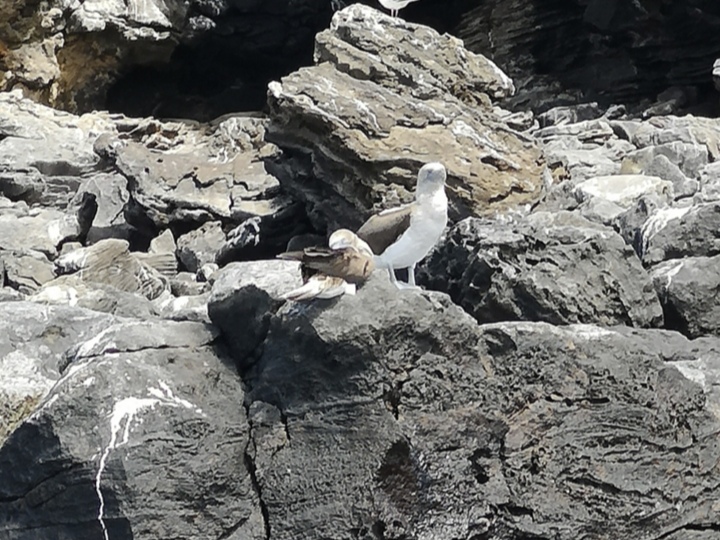
After that we have lunch in Bahia Sardina, our guide tries to sell to us that the fish we are eating is the fish we caught earlier on the boat. Considering we did not see anyone cook we politely nod that we believe the story…..
The last stop of the day is Kicker rock. Named like this because the island looks like a foot ready to kick!
—
Dopo di che pranziamo a Bahia Sardina, la nostra guida cerca di venderci che il pesce che mangiamo è il pesce che abbiamo pescato in precedenza sulla barca. Considerando che non abbiamo visto nessuno cucinare, facciamo cenno educatamente di credere alla storia …..
L’ultima tappa della giornata è Kicker rock. Chiamato così perché l’isola sembra un piede pronto a calciare!

There is no beach here so we have to jump straight into the water from the boat and the current takes us along.
Great views under water.
—
Non c’è spiaggia qui, quindi dobbiamo saltare direttamente in acqua dalla barca e la corrente ci accompagna.
Ottimi panorami sott’acqua.
With a last greeting to the sea lions we leave the island to travel to Santa Cruz. We renamed the picture below “parent of the year”, as it represents an adult sea lion ignoring a younger sea lion which is asking for food.
—
Con un ultimo saluto ai leoni marini lasciamo l’isola per recarci a Santa Cruz. Abbiamo rinominato la foto sotto ” genitore dell’anno” poiché rappresenta un leone marino adulto che ignora un piccolo leone marino il quale chiede si essere sfamato.

 Maria & Serge