Remember the good old times in November when we were at the end of the world and debating whether Chile or Argentina was at the endest? Well, many buses, flights and about 9,000 km later we ended up at the Middle of the world or “Mitad del Mundo” in Ecuador.
But first thing first, we arrived in Quito after two LATAM flights with connection in Lima, where – you guessed right – my luggage was lost. Thumbs down to LATAM and their careless customer service. Very frustrated after spending the whole January 1st in Quito airport hoping for a LATAM miracle that did not materialise, we decided to leave it to fate and set off to explore Quito on January 2nd.
I guess by now you will know that the first activity we did in the morning was showing up for a free tour. Also that turned out to be quite an adventure, but in the end we managed to do one with the Quito community hostel (different operator than planned) and it was a very nice experience. The tour started at the local market where we were introduced to the Ecuadorian national dish – the Encebollado, a fish soup with onions, potatoes, lime etc which is served with popcorns and banana chips. We tried it later at the market and loved it! 😋
—
Ricordate i bei vecchi tempi di novembre, quando eravamo alla fine del mondo e discutevamo se il Cile o l’Argentina avessero il primato? Bene, dopo molti autobus, voli e circa 9.000 km siamo finiti al centro al mondo o “Mitad del Mundo” in Ecuador.
Ma per prima cosa, siamo arrivati a Quito con due voli LATAM con scalo a Lima, dove – avete indovinato – mi hanno perso il bagaglio. Da notare il terribile servizio clienti di LATAM. Molto frustrati per aver trascorso l’intero 1 gennaio all’aeroporto di Quito sperando in un miracolo LATAM che non mai concretizzato, abbiamo deciso di affidare la mia valigia al destino ed abbiamo iniziato ad esplorare Quito il 2 gennaio.
Ormai immaginerete che la prima attività che abbiamo fatto al mattino è stata un tour gratuito. Anche questa si è rivelata una avventura, ma alla fine siamo riusciti a fare un tour con il community hostel di Quito (operatore diverso dal previsto) ed è stato un tour molto piacevole.
Il tour è iniziato al mercato locale dove ci è stato presentato il piatto nazionale ecuadoriano – l’Encebollado, una zuppa di pesce con cipolle, patate, lime ecc. che viene servita con popcorn e banane fritte. L’abbiamo provato più tardi al mercato e ci è piaciuto un sacco! 😋

The tour continues with a visit to the main square, where we could not see the president as it wasn’t Monday morning
—
Il tour continua con una visita alla piazza principale, dove non abbiamo potuto vedere il presidente perché non era lunedì mattina
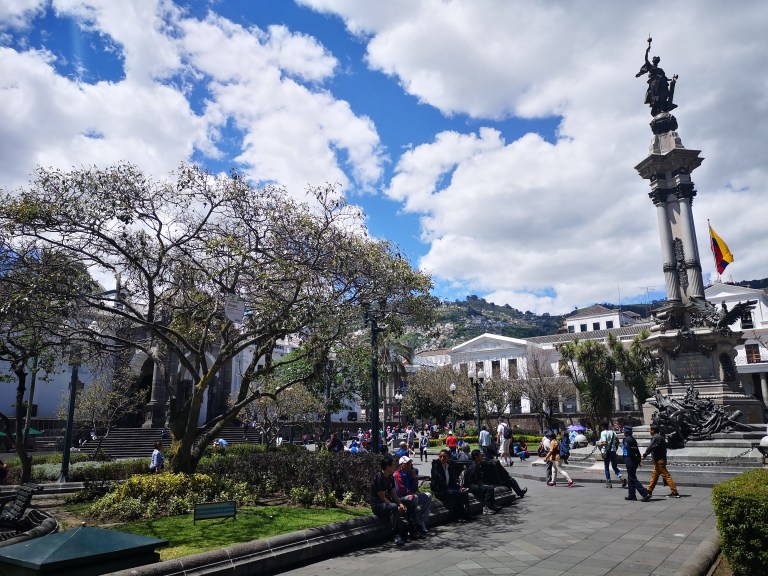
As in Arequipa, another beautiful church of the Jesuits
—
Come ad Arequipa, un’altra bella chiesa dei Gesuiti
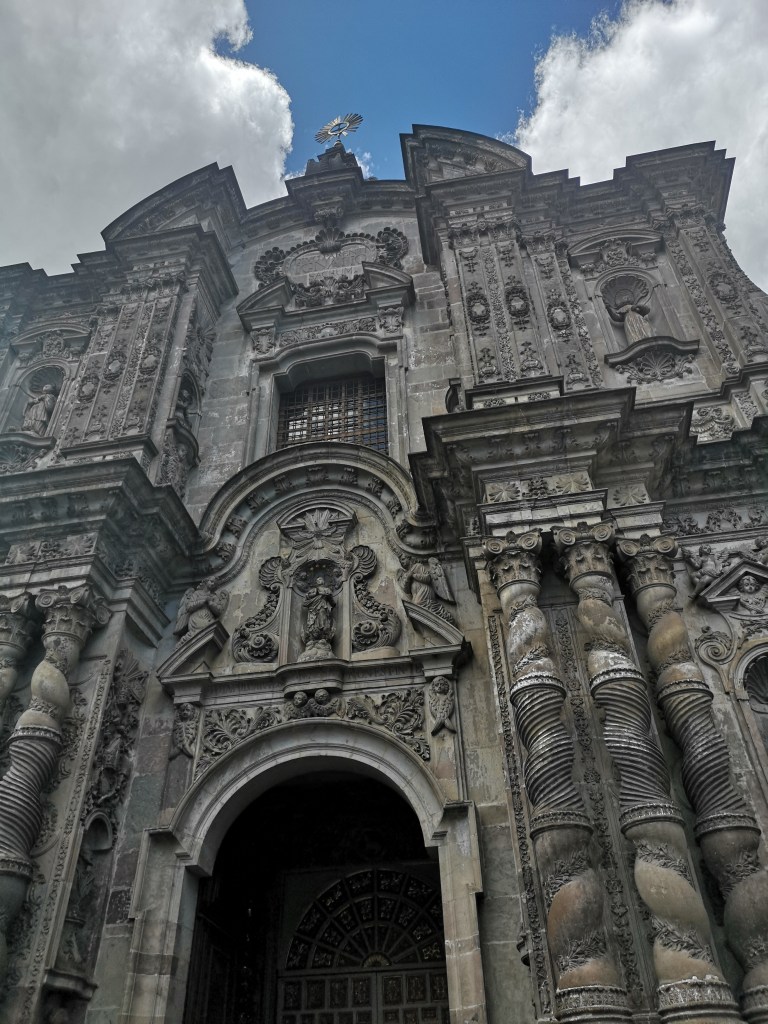
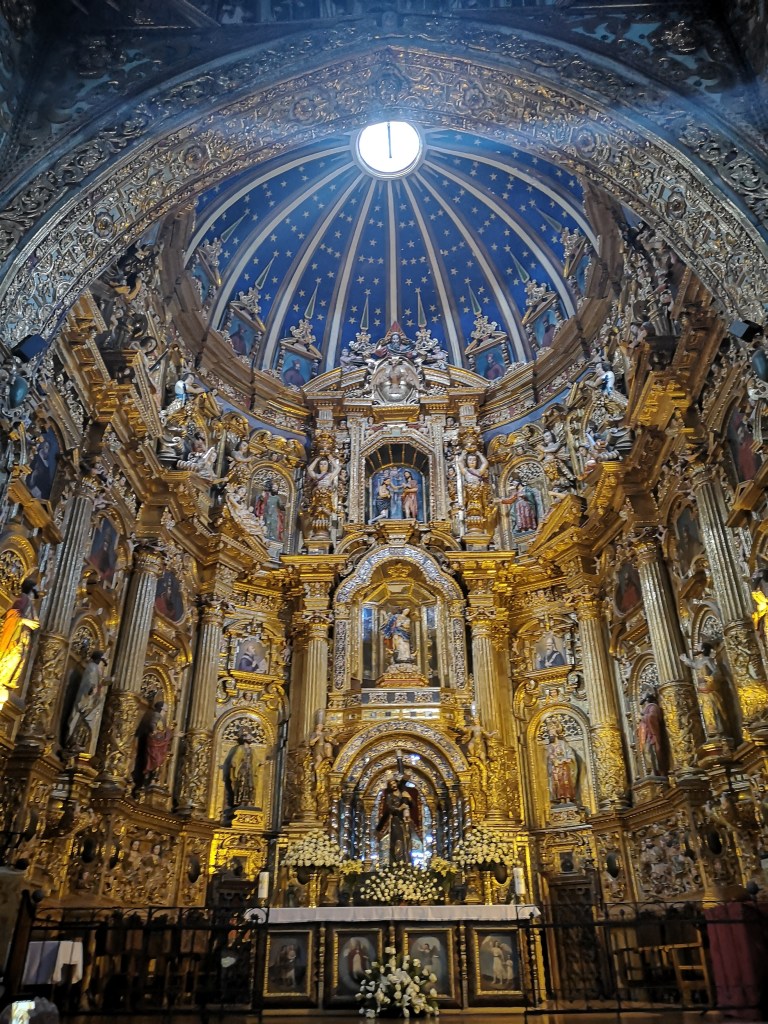
We also enter in the church of San Francisco, which is amazingly decorated with gold… the reason why so much gold is used is because the pre-Incas and the Incas used lots of gold in their temples and the Catholic wanted to make sure they maintained the same level of gold also in the churches to make the switch to Catholicism easier. Also, the San Francisco church has the original statue of the Virgen de Quito, which differently from other representations of Mary, has wings. A larger reproduction is on top of the Panecillo hill and dominates the city.
—
Entriamo anche nella chiesa di San Francisco, che è incredibilmente decorata in oro … il motivo per cui viene usato così tanto oro è perché i pre-Incas e gli Incas usavano molto oro nei loro templi e i Cattolici volevano assicurarsi di mantenere lo stesso livello d’oro anche nelle chiese per facilitare la conversione al cattolicesimo. Inoltre, la chiesa di San Francisco ha la statua originale della Vergine di Quito, che a differenza della maggior parte delle rappresentazioni della Madonna, ha le ali. Una riproduzione più grande è in cima alla collina di Panecillo e domina la città.
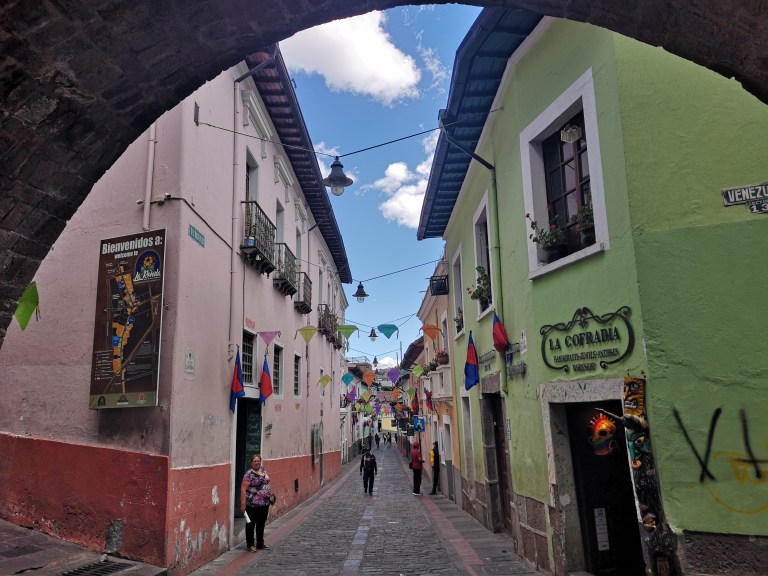
After a stop to sample some good chocolate in front of San Francisco church (more details later in the post), we passed by the Ronda – one of the oldest streets in Quito, previously an Incan road and from the seventeenth century, a road for artists, bohemians and refugees. It then filled with taverns, bars and brothels but now it is just a very nice cobbled street with interesting shops. Two of the things you can try out in La Ronda are: chocolate con queso (hot chocolate with cheese inside) and canelazo (an alcoholic drink made with a variety of yellow tomatoes) but since it was before lunch, we did not try either.
—
Dopo una sosta per assaggiare del buon cioccolato davanti alla chiesa di San Francisco (maggiori dettagli più avanti nel post), siamo passati dalla Ronda – una delle più antiche strade di Quito, in precedenza una strada inca e dal XVII secolo, una strada per artisti, bohémien e rifugiati. Si è poi riempita di taverne, bar e bordelli, ma ora è solo una bella via con negozi interessanti. Due specialità che puoi provare a La Ronda sono: cioccolato con queso (cioccolata calda con formaggio sciolto) e canelazo (una bevanda alcolica fatta con una varietà di pomodori gialli) ma visto che era prima di pranzo, non abbiamo provato nessuna delle due.
So… about the chocolate…In front of San Francisco Square, hidden in Benalcázar N2-26 y Bolivar, you can find YumbosChocolate (www.yumboschocolate.com), a company selling organic chocolate and with a real passion for cacao. After a brief peek during the free walking tour, we came back in the afternoon and we were greeted with a totally unexpected (for us) free chocolate tasting (100%, 85%, 60% cacao with lemongrass, with coffee, cacao syrup, brownies etc etc so much chocolate we were full at the end!) and were also gifted a cacao fruit, which is delicious by the way. The chocolate was really amazing and we could not resist – so we bought some tablets and some tea (made with cacao beans ofc)
—
Quindi … il cioccolato … Di fronte alla chiesa di San Francisco, nascosto in Benalcázar N2-26 y Bolivar, puoi trovare YumbosChocolate (www.yumboschocolate.com), un’azienda che vende cioccolato biologico e con una vera passione per il cacao. Dopo aver fatto capolino durante il tour gratuito, siamo tornati nel pomeriggio e siamo stati accolti con una degustazione di cioccolato gratis totalmente inaspettata (100%, 85%, 60% cacao con citronella, con caffè, sciroppo di cacao, brownies ecc. ecc., tanto cioccolato da riempirci!) e abbiamo anche ricevuto un frutto di cacao, che è delizioso tra l’altro. La cioccolata era davvero incredibile e non abbiamo potuto resistere – così abbiamo comprato alcune tavolette e del tè (fatto con chicchi di cacao ovviamente)

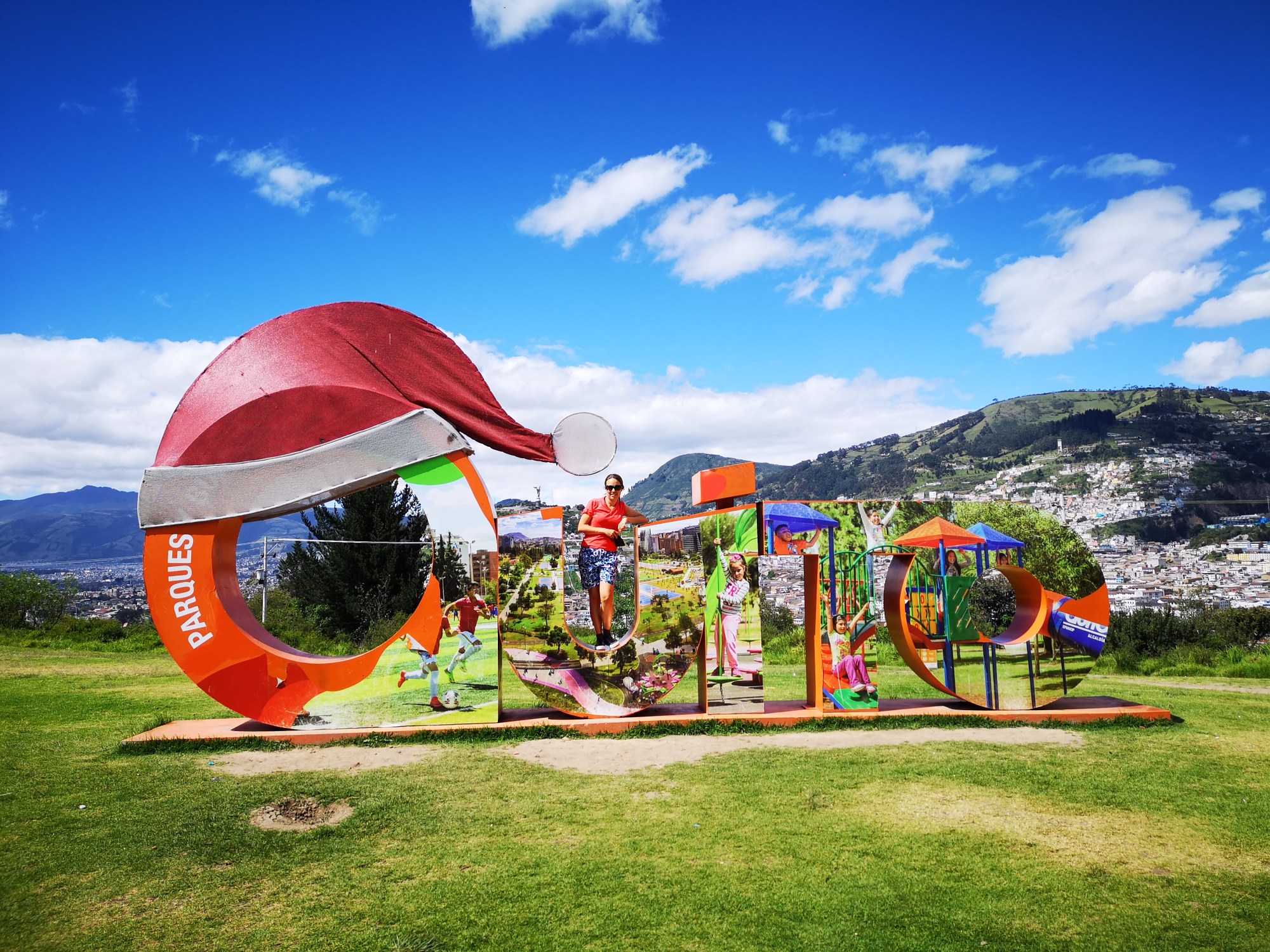
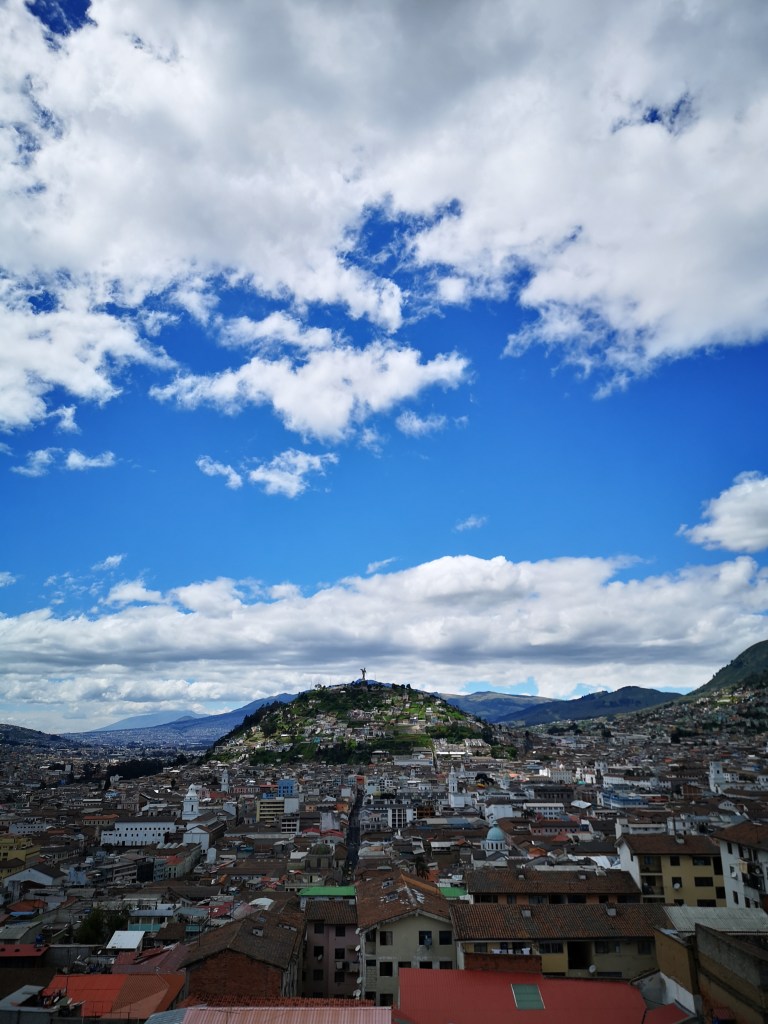
On day 2 we set off for a day of climbing and buying some essentials in case the luggage would not arrive in time for our next move. First stop: Itchimbia hill, where you find the “Quito” sign from the cover picture and from where you can enjoy views all over the city. Second stop: Basilica del Voto National, which is the two-tower church you can see standing proud and tall on a hill in the old town. It is quite a hike to reach the top, as there are stairs & ladders to climb to get to the top tower; you are however rewarded by amazing views of the city and of course of the Panecillo, the hill with the statue of the Virgen de Quito.
—
Il secondo giorno siamo partiti per una giornata di scalate ed acquisto di alcuni indumenti essenziali nel caso il bagaglio non arrivasse in tempo per la nostra prossima tappa. Primo stop: collina Itchimbia, dove si trova la scritta “Quito” dalla foto di copertina e da dove si può godere della vista di tutta la città. Seconda tappa: Basilica del Voto National, che è la chiesa a due torri che si erge fiera e alta su una collina nella città vecchia. È una bella camminata per raggiungere la cima, poiché ci sono scale e scalini per arrivare alla torre superiore; sei comunque ricompensato da fantastiche vedute sulla città e ovviamente sul Panecillo, la collina con la statua della Vergine di Quito.
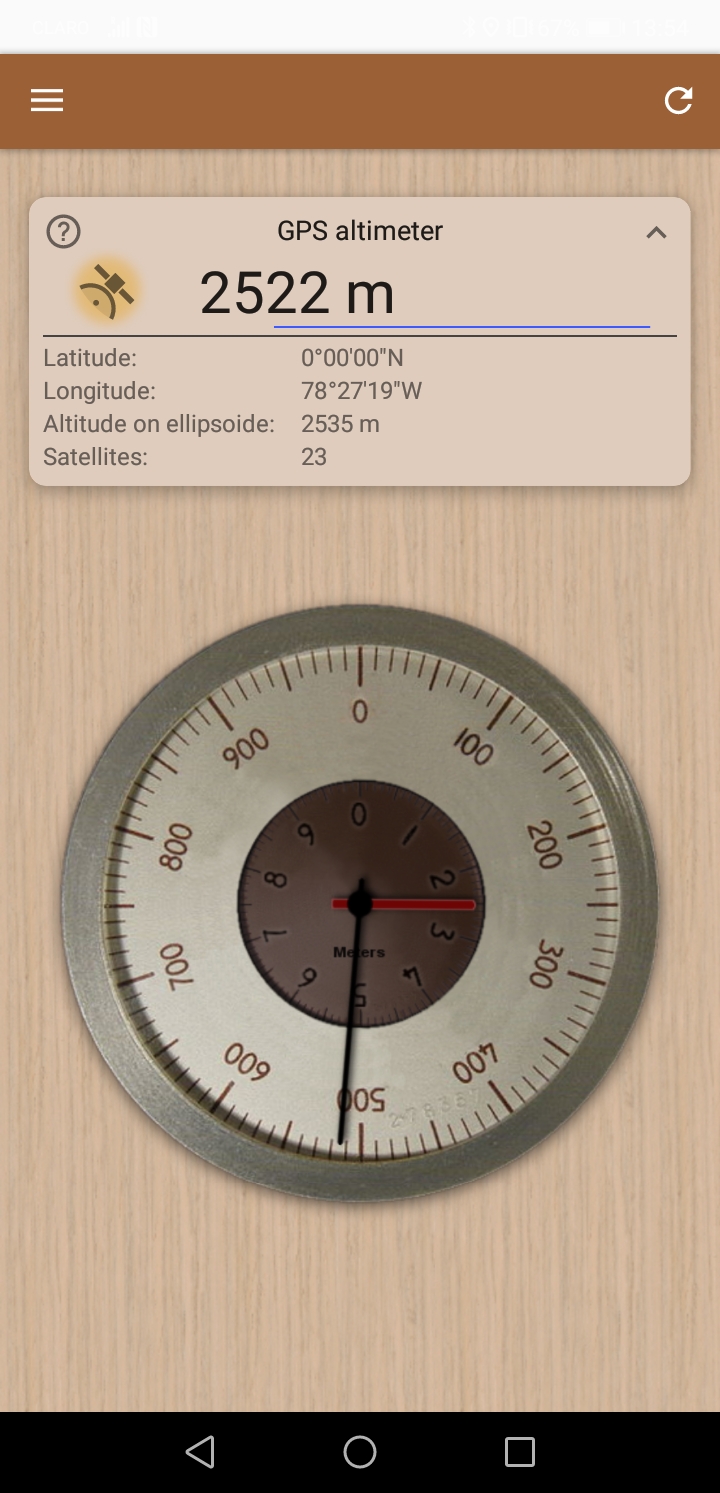
On day 3 we headed straight to the Mitad del Mundo (also known as the equatorial line). In order to do that we took an ordinary urban bus from old town to La Ofelia in the north and then an extraordinary interhemispheric bus… in case you wonder, the interhemispheric bus does actually cross the equator as shown by our GPS.
—
Il terzo giorno ci siamo diretti subito alla Mitad del Mundo (nota anche come linea equatoriale). Per fare ciò abbiamo preso un normale autobus urbano dalla città vecchia a La Ofelia al nord e poi uno straordinario autobus interemisferico … nel caso ve lo chiedeste, il bus interemisferico attraversa effettivamente l’equatore come mostrato dal nostro GPS.
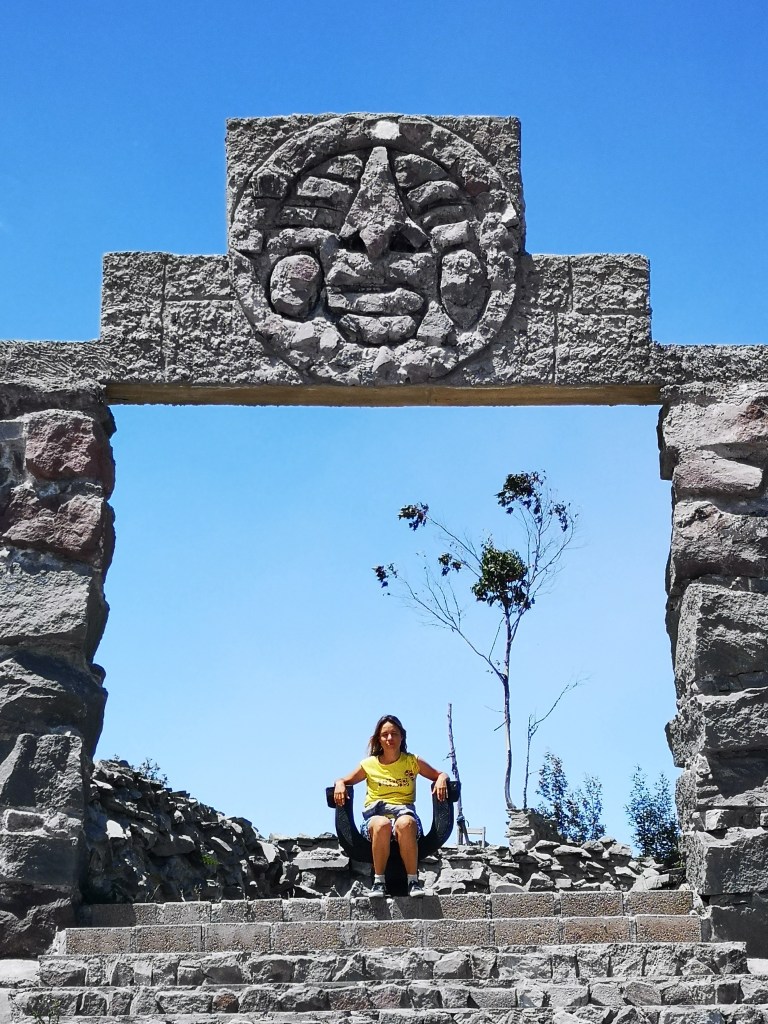
We first went to Pululahua, where you can visit the Temple of the Sun, a mostly reconstructed temple on top of former pre-Incan ruines. Next to the temple, you can find the entrance to the Pululahua Geobotanical Reserve, from where you have great views on the valley (crater of dormant vulcano) of the Pululahua
—
Per prima cosa siamo andati a Pululahua, dove si può visitare il Tempio del Sole, un tempio per lo più ricostruito sopra ad antiche rovine pre-inca. Accanto al tempio, c’è l’ingresso alla Riserva Geobotanica di Pululahua, da dove si ha una splendida vista sulla valle (cratere di un vulcano dormiente) del Pululahua
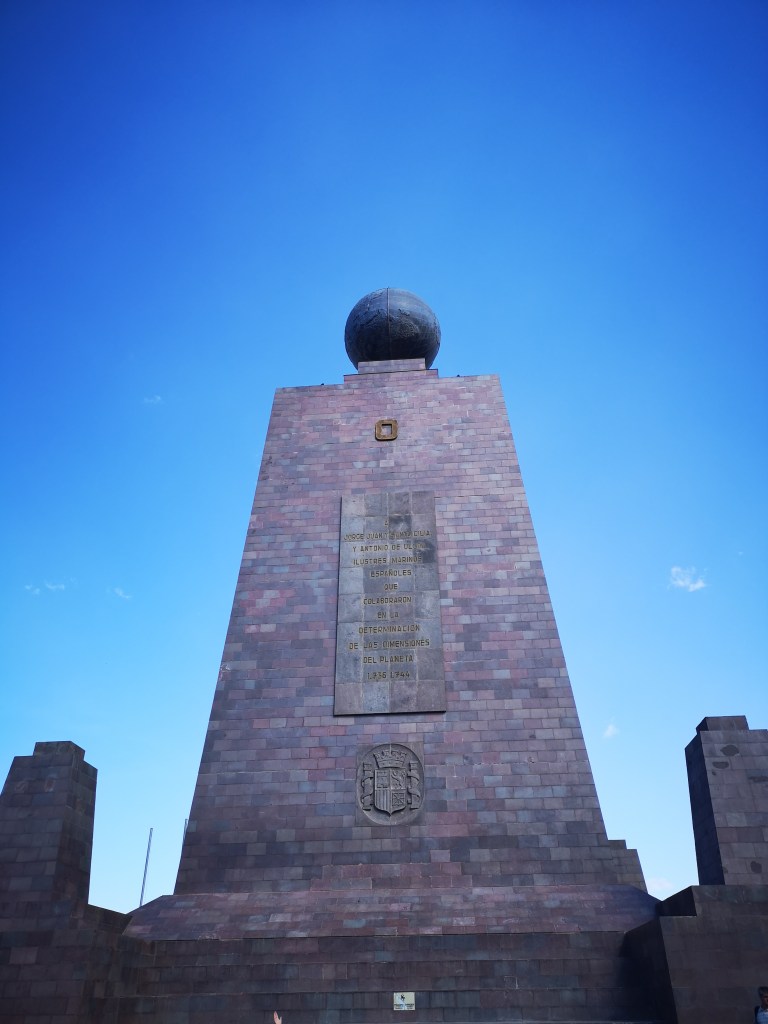
We then went down to the Mitad del Mundo attraction, which could be described as a theme park about the “middle of the world”: it looks like a town, with shops, churches, streets and squares and is dominated by the below monument. In the monument, there are a range of experiments and interesting facts about what it means to be at the equator etc etc – including the famous water drain experiment with the two drains with a water flowing in different directions…I am not a physics professor and I remember nothing from my engineering times so I might have forgotten the Coriolis effect can only be seen with large volumes, but my GPS mentioned the monument is all located south of the equator (this is quite known) and the tubes from which the water came from had different inclinations in the two drains 🤪 – but come and see for yourself – the middle of the world is waiting for you!
—
Ci siamo poi diretti verso la Mitad del Mundo, che potrebbe essere descritta come un parco tematico sulla “metà del mondo”: sembra una città, con negozi, chiese, strade e piazze ed è dominata dal monumento in foto sotto. Nel monumento ci sono una serie di esperimenti e fatti interessanti su cosa significa essere all’equatore ecc. ecc. – incluso il famoso esperimento con i due rubinetti e l’acqua che scorre in direzioni diverse … Io non sono un professore di fisica e non ricordo nulla dei miei tempi di ingegneria, quindi potrei aver dimenticato che l’effetto di Coriolis può essere visto solo su grandi volumi, ma il mio GPS diceva che il monumento si trova tutto a sud dell’equatore (questo è abbastanza noto) e i tubi da cui l’acqua proveniva avevano diverse inclinazioni nei due rubinetti – ma venite a vedere voi stessi – il centro del mondo vi sta aspettando!
 Maria & Serge