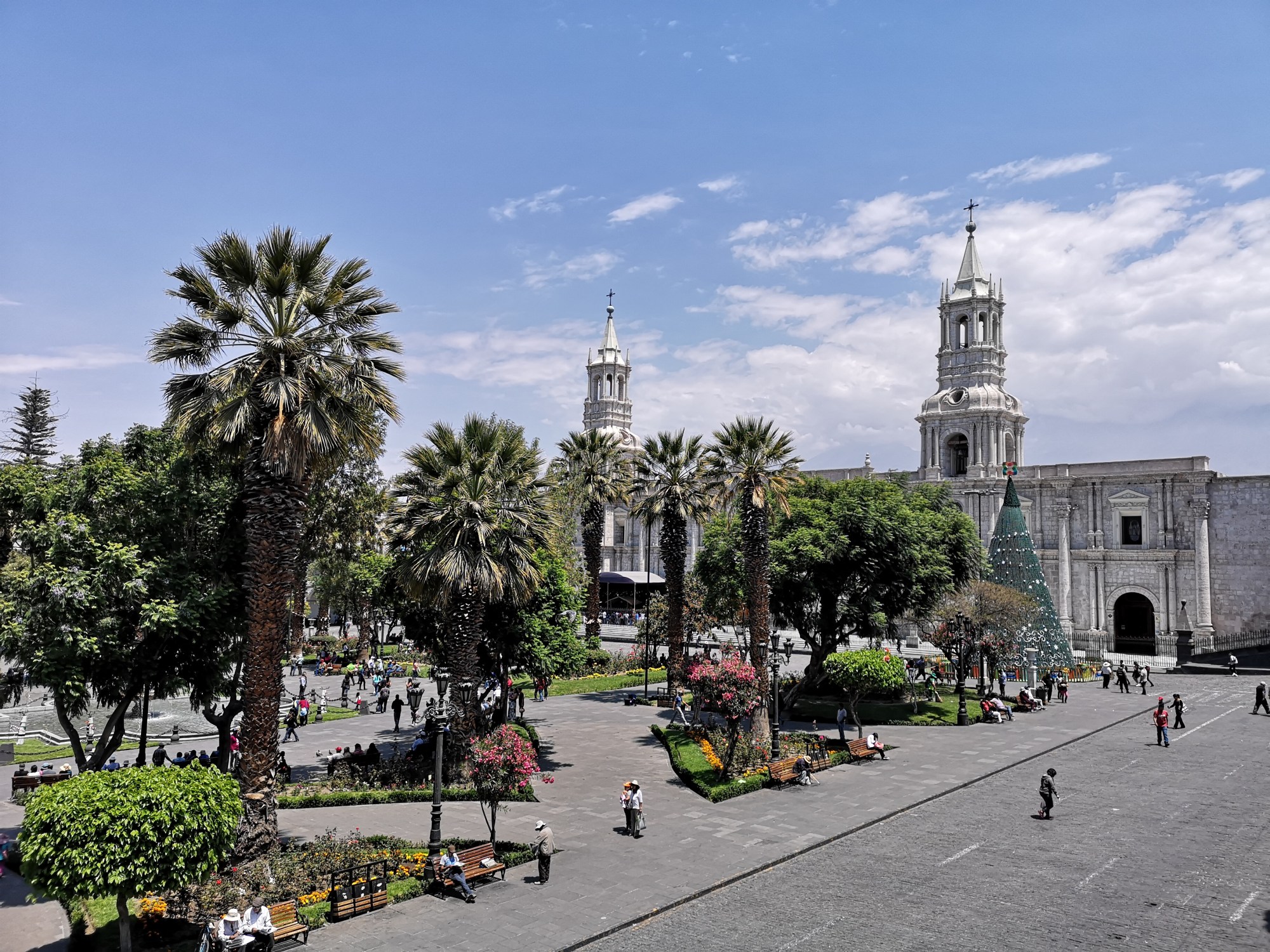
The first encounter with this beautiful city is actually when we are waiting in Puno for the bus to Cusco: a ticket seller screaming (for the whole 45 minutes that we were waiting) that she has bus tickets for Arequipaaaaaaa (try it for yourself, it’s quite a funny sound….)
We start our trip for Arequipa in Cabanaconde (see the post of our hike in the Colca canyon). It’s a 7 hour trip in a tourist van and can be booked in the Pachamama hostel in Cabanaconde for 10 USD. (Filling up spare capacity for the 2 day return tour from Arequipa to the Colca canyon)
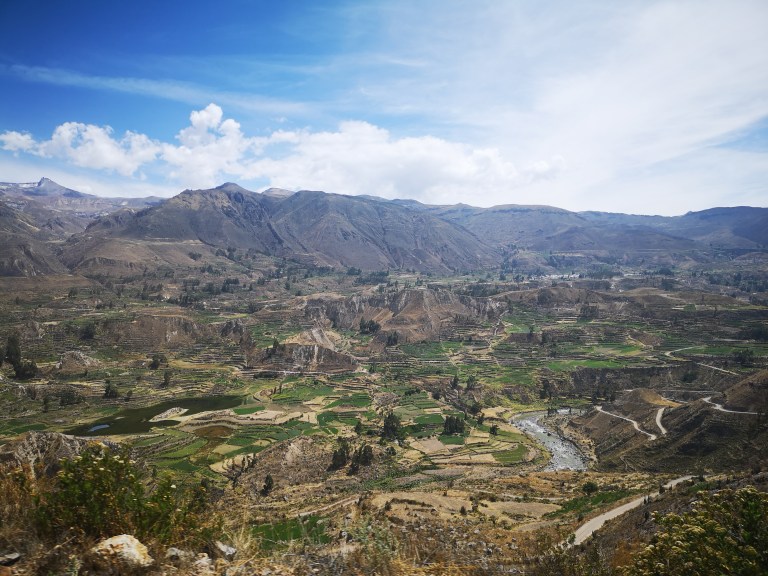
The bus leads us past hotsprings and amazing sights of the Colca valley.
—
Il primo incontro con questa bellissima città è in realtà quando stiamo aspettando a Puno l’autobus per Cusco: una venditrice di biglietti che urlava (per tutti i 45 minuti che abbiamo aspettato in stazione) che lei ha i biglietti del bus per Arequipaaaaaaa (provalo, è un suono piuttosto divertente ….)
Iniziamo il nostro viaggio per Arequipa a Cabanaconde (vedi il post della nostra escursione nel canyon del Colca). È un viaggio di 7 ore in un autobus turistico e può essere prenotato nell’ostello Pachamama a Cabanaconde per 10 Dollari. (Riempiendo i posti non prenotati del tour di andata e ritorno di 2 giorni da Arequipa al canyon del Colca)
L’autobus ci conduce oltre le sorgenti termali e viste incredibili della valle del Colca.
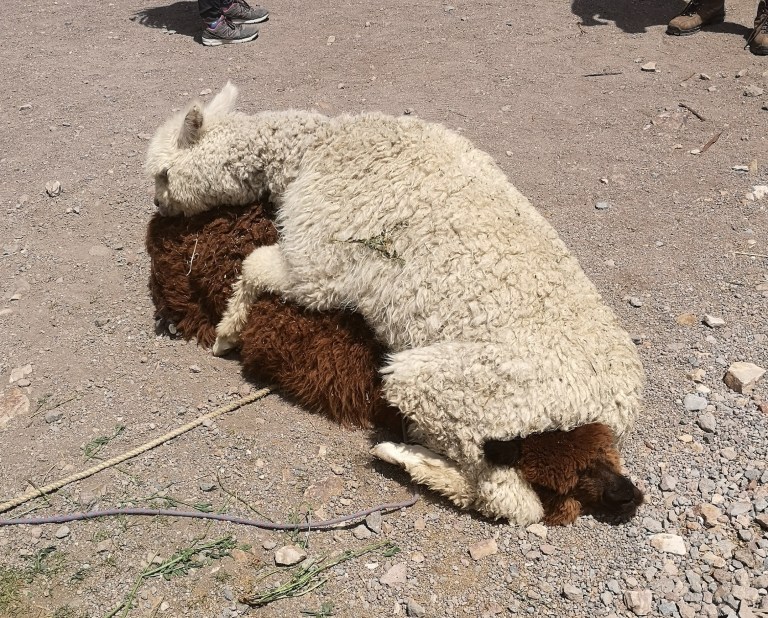
Some funny alpaca that apparently would like to have an alpaca rug:
—
Un alpaca divertente che a quanto pare vorrebbe lui stesso avere un tappeto di alpaca:
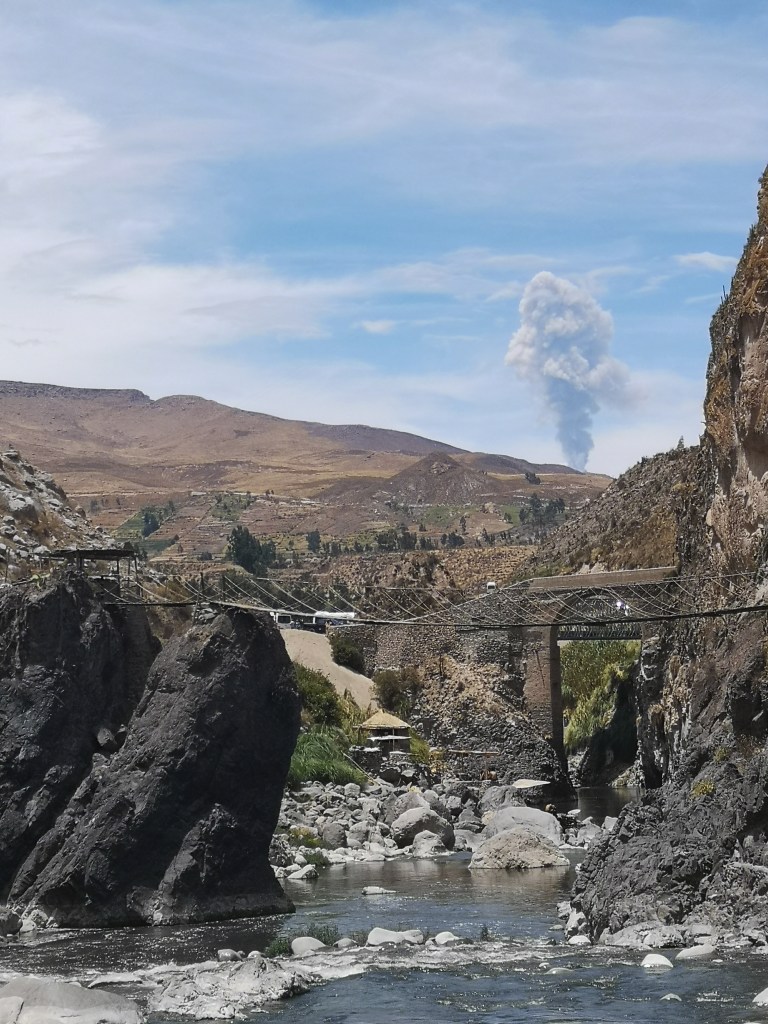
Vulcanic eruptions:
—
Eruzioni vulcaniche:
Views of more vulcanos at 5 km (!) altitude:
—
Viste di vulcani a 5 km (!) di altitudine:
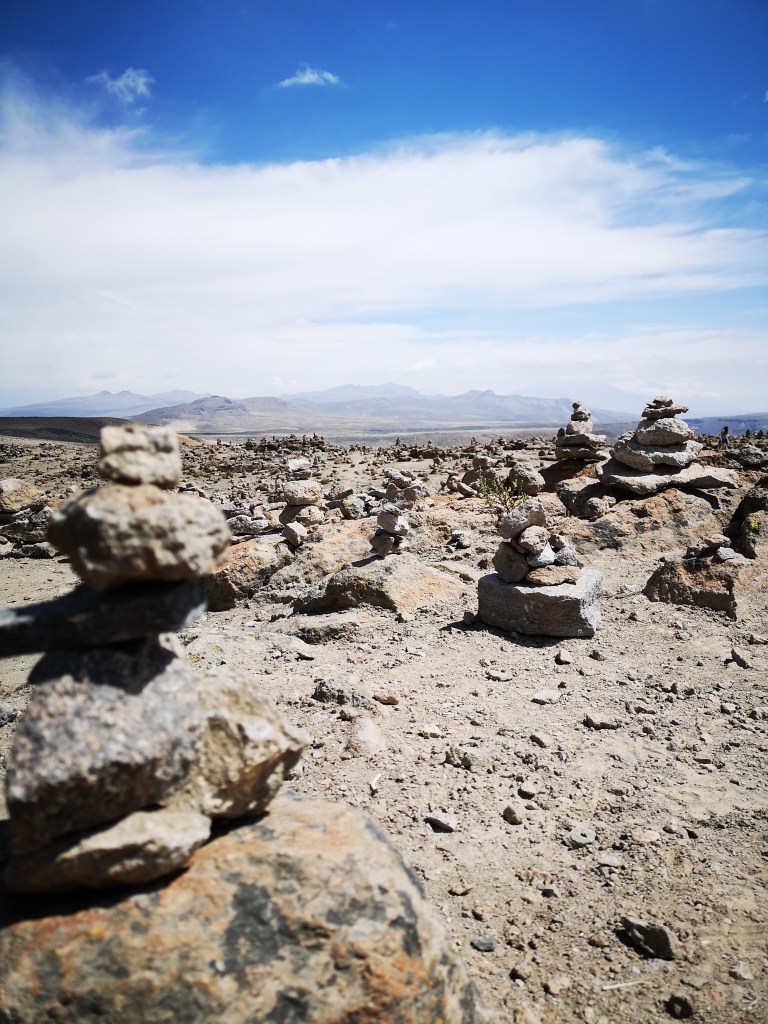
And finally arriving in Arequipa.
—
E finalmente arriviamo ad Arequipa.

Arequipa is the city of the conquerors, the Spanish settled here “en masse” During the Spanish conquest of South America. During those times it was also called the white city because it was… full of white Europeans.
Also here there is a free city tour (starting daily at 930 opposite to the Santa Catalina monastery).
The tour takes us past the typical Spanish style houses:
—
Arequipa è la città dei conquistatori, gli spagnoli si stabilirono qui “in massa” durante la conquista spagnola del Sud America. In quei tempi era anche chiamata la città bianca perché era … piena di europei di carnagione bianca.
Anche qui c’è un tour gratuito della città (che inizia ogni giorno alle 9:30 di fronte al monastero di Santa Catalina).
Il tour ci porta a visitare le tipiche case in stile spagnolo:
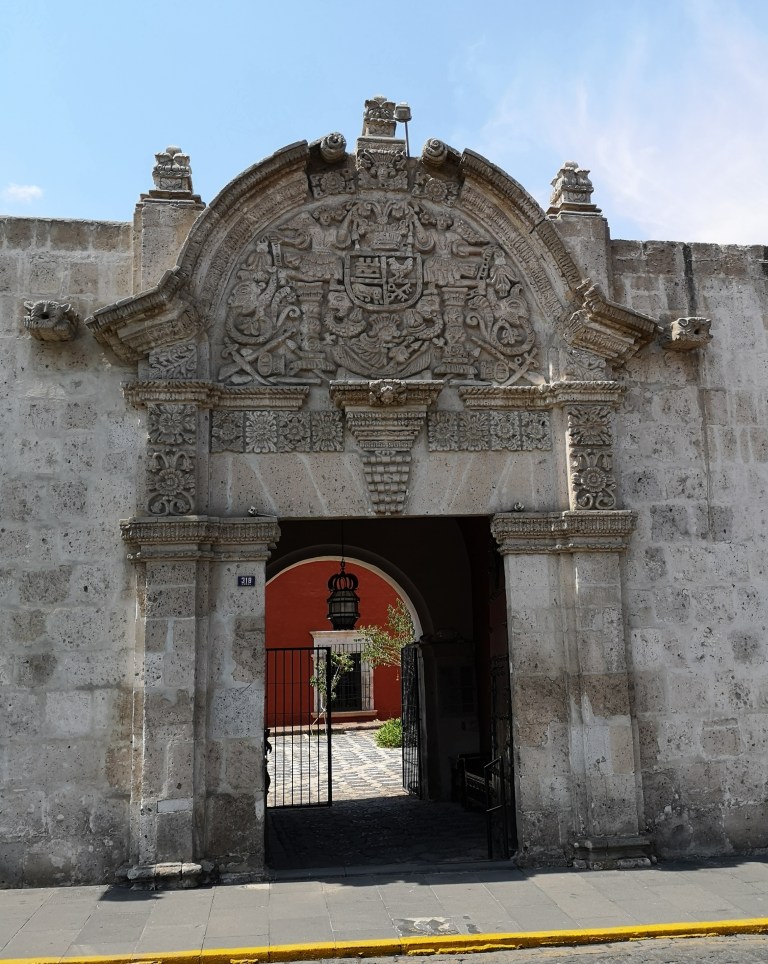
Authentic wood carved doors (from the 17-18th century). They are so well preserved as it only rains about 2 months per year.
—
Porte autentiche in legno intagliato (del 17°-18° secolo). Sono così ben conservati perché piove solo 2 mesi all’anno.
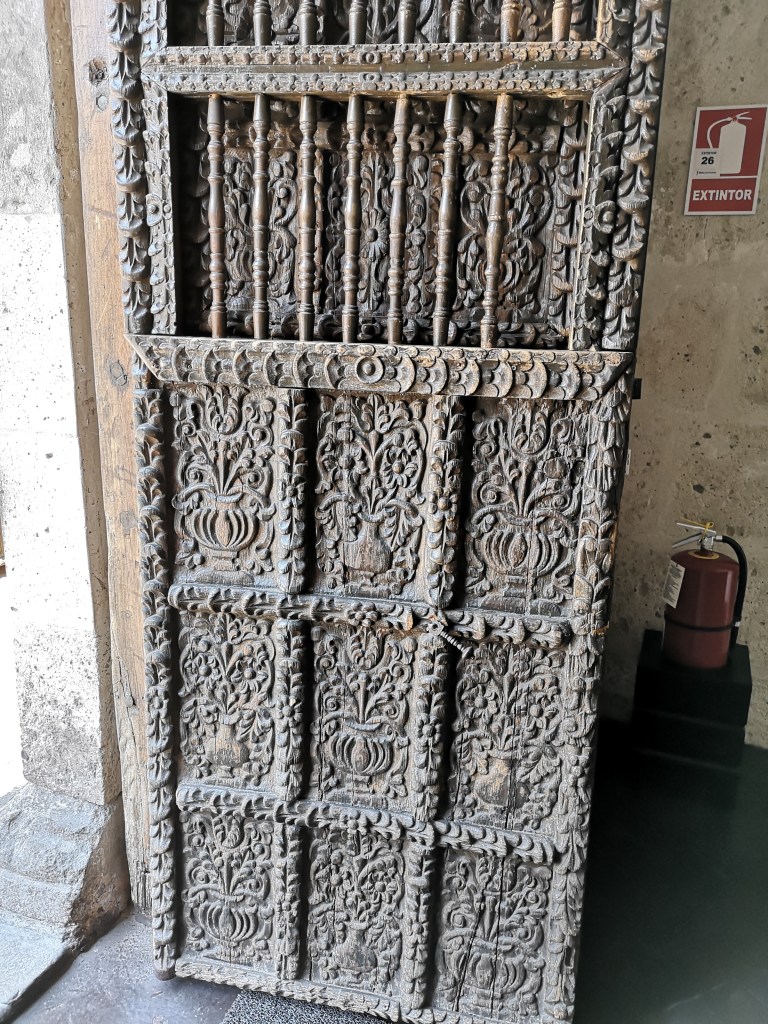
A typical Arequipian treat: queso helado (cheese ice). It is ice-cream with a vanilla taste made out of three different types of milk (fresh, condensed and pasteurised). It does not actually contain any cheese but it is gooooood! 😋
—
Un tipico dolce arequipiano: queso helado (gelato al formaggio) Gelato dal gusto alla vaniglia composto da tre diversi tipi di latte (fresco, condensato e pastorizzato). In realtà non contiene formaggio ma è buonissimo! 😋
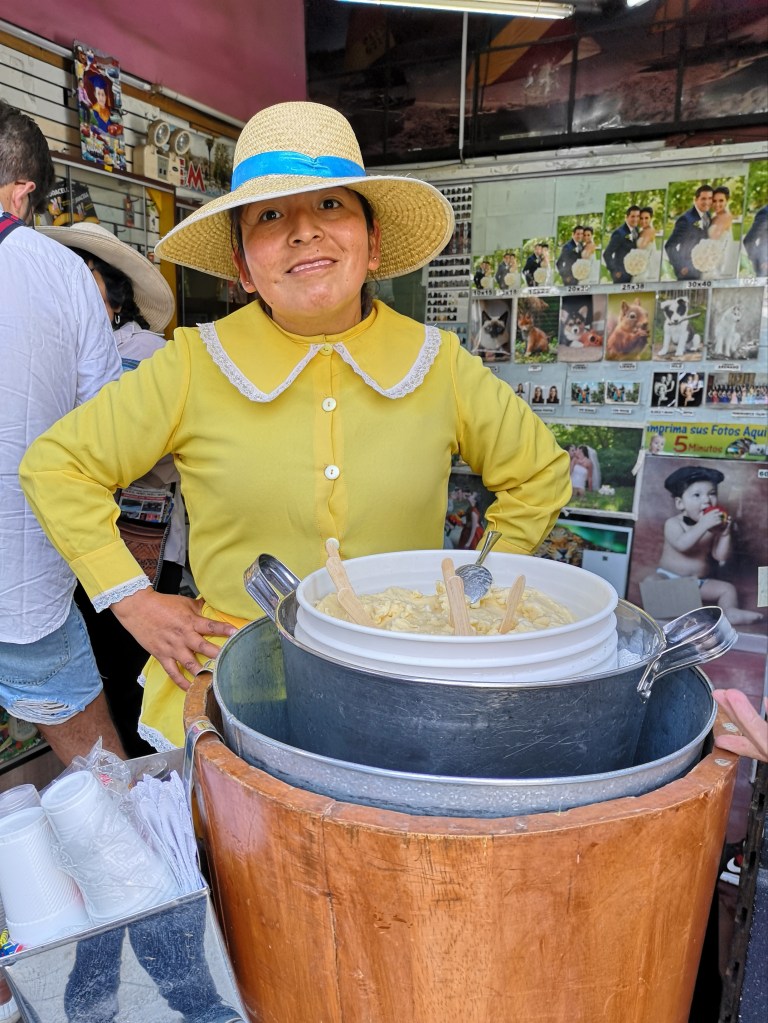
Next to the plaza de armas, we find the Iglesia de la Compañia. The facade of the church is quite detailed and contains, as usual in South America, a mix of Catholic (statues of saints, Latin references) and indigenous symbols (the puma, the snake, the condor). As the church is dedicated to Santiago de Compostela you find many seashells as well.
—
Accanto alla Plaza de Armas, troviamo la Iglesia de la Compañia. La facciata della chiesa è abbastanza dettagliata e contiene, come al solito in Sud America, un mix di simboli cattolici (statue di santi, riferimenti latini) e indigeni (il puma, il serpente, il condor). Poiché la chiesa è dedicata a Santiago de Compostela, si trovano anche molte conchiglie.

Inside the church there is a painting of the last supper. Also this is a Catholic/ indigenous mix of symbols. Zooming in on below picture: the meal on the table is cui (guineapig) and chicha de jora (a fermented corn drink). This meal was something that was only eaten by important people in the indiginous world. Hence establishing the importance of Jesus in the eyes of the locals that were converted to Catholism.
—
All’interno della chiesa c’è un dipinto dell’ultima cena. Anche questo è un mix di simboli cattolici / indigeni. Se si guarda bene l’immagine sotto: il pasto sul tavolo è cui (guineapig) e chicha de jora (una bevanda di mais fermentato). Questo pasto veniva mangiato solo da persone importanti nel mondo indigeno. Riportarlo in un dipinto cattolico stabiliva l’importanza di Gesù agli occhi dei locali che si convertirono al cattolicesimo.

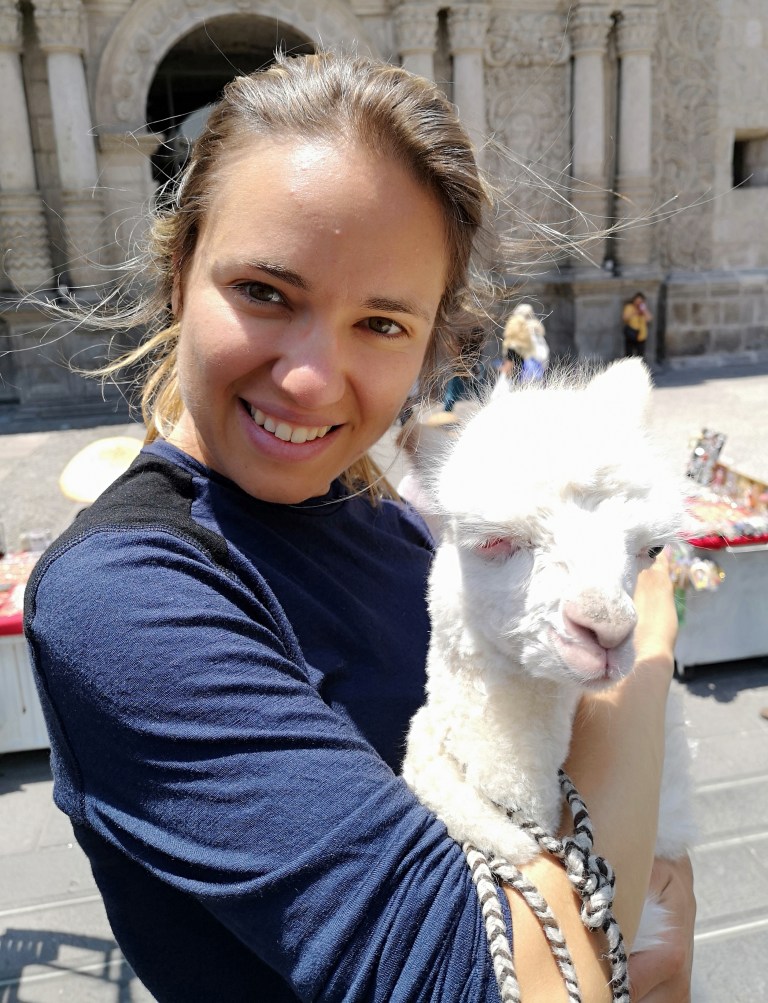
Some people bring their baby alapaca to the city, for one sol (about 30 euro cents) you can make a picture (needless to say, Maria made a fortune)
—
Alcune persone portano il loro baby alpaca in città, per un sol (circa 30 centesimi di euro) puoi fare una foto (inutile dire che Maria ha fatto fortuna)
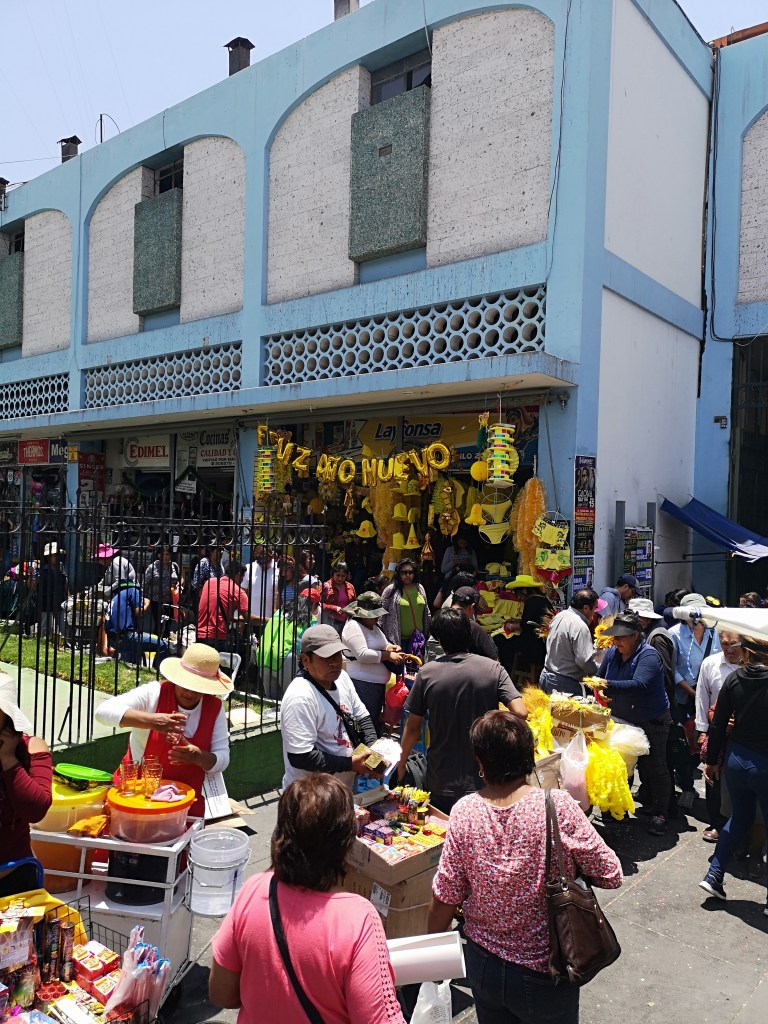
We pass by the market and since it is new year’s eve today, yellow (for good luck) accessories are sold everywhere.
—
Passiamo accanto al mercato e poiché oggi è l’ultimo giorno dell’anno, gli accessori gialli (da indossare a capodanno) sono venduti ovunque.
Inside the market the best part is the food section:
—
All’interno del mercato la parte migliore è la sezione del cibo:

Lots of fresh fruit and if you walk on a bit you’ll find fresh fruit bars where they’ll freshly squeeze the fruit for you.
Chirimoya (custard apple) con naranja is really worth trying!
After the market we visit the Santa Catalina monastery.
—
C’è un sacco di frutta fresca e se camminate un po l’ troverete bar con frutta fresca dove spremeranno la frutta per voi.
ci raccomandiamo di provare chirimoya con arancia!
Dopo il mercato visitiamo il monastero di Santa Catalina.

This is a 20,000 sq meter monastery, built in 1579.
The tradition of the time dictated that the first child of the family got married, the second child spent his/her life in devotion to the church and the third child (if a girl) would take care of the parents or (if a boy) join the army. The other children were free to choose what they would do in life.
In case the second child was a girl, her family would be living in Arequipa and she was rich enough, she could join this cloister. Most girls joined at the age of 12, after a 4 year study they would start their praying life. At least 7 hrs per day would be spent praying from the Divine Office…. (and since girls in the 15th century did not learn how to read they did this all by heart).
In the 1970s large parts of the monastery were destroyed by an earthquake. Unfortunately the nuns did not have enough money to rebuild the buildings. In order to preserve the cloister they turned about 15,000 square metres into a museum.
—
Questo è un monastero di 20.000 metri quadrati, costruito nel 1579.
La tradizione del tempo dettava che il primo figlio della famiglia si sposasse, il secondo figlio passasse la sua vita in devozione alla chiesa e il terzo figlio (se una ragazza) si prendesse cura dei genitori o si arruolasse nell’esercito (se un ragazzo). Tutti gli altri figli erano liberi di scegliere cosa avrebbero fatto nella vita.
Nel caso in cui il secondo figlio fosse una ragazza e la sua famiglia vivesse ad Arequipa e fosse abbastanza ricca, la ragazza sarebbe potuta entrare in questo convento. La maggior parte delle ragazze entrava all’età di 12 anni, e dopo uno studio di 4 anni, avrebbe iniziato la sua vita di preghiera. Avrebbe trascorso almeno 7 ore al giorno a pregare dall’Ufficio Divino … (e poiché le ragazze nel 15° secolo non sapevano leggere, lo recitavano a memoria).
Negli anni ’70 grandi parti del monastero furono distrutte da un terremoto. Sfortunatamente le suore non avevano abbastanza soldi per ricostruire gli edifici. Per preservare il chiostro hanno trasformato circa 15.000 metri quadrati in un museo.
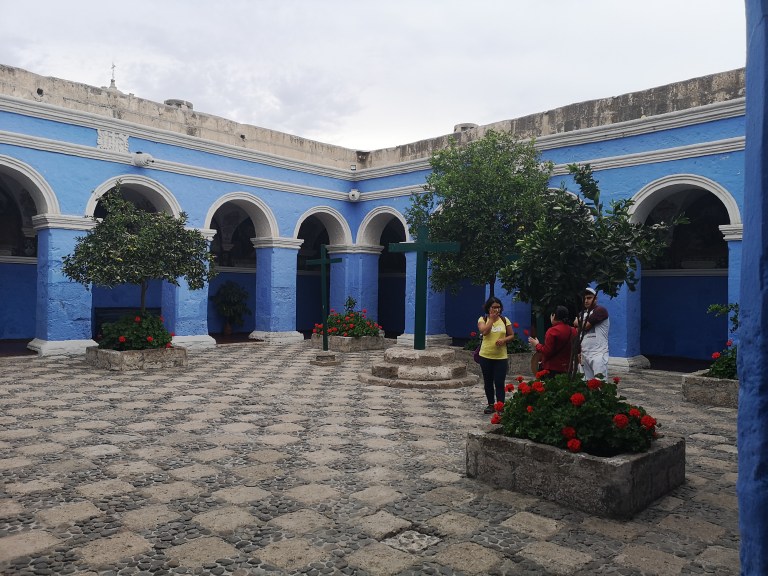
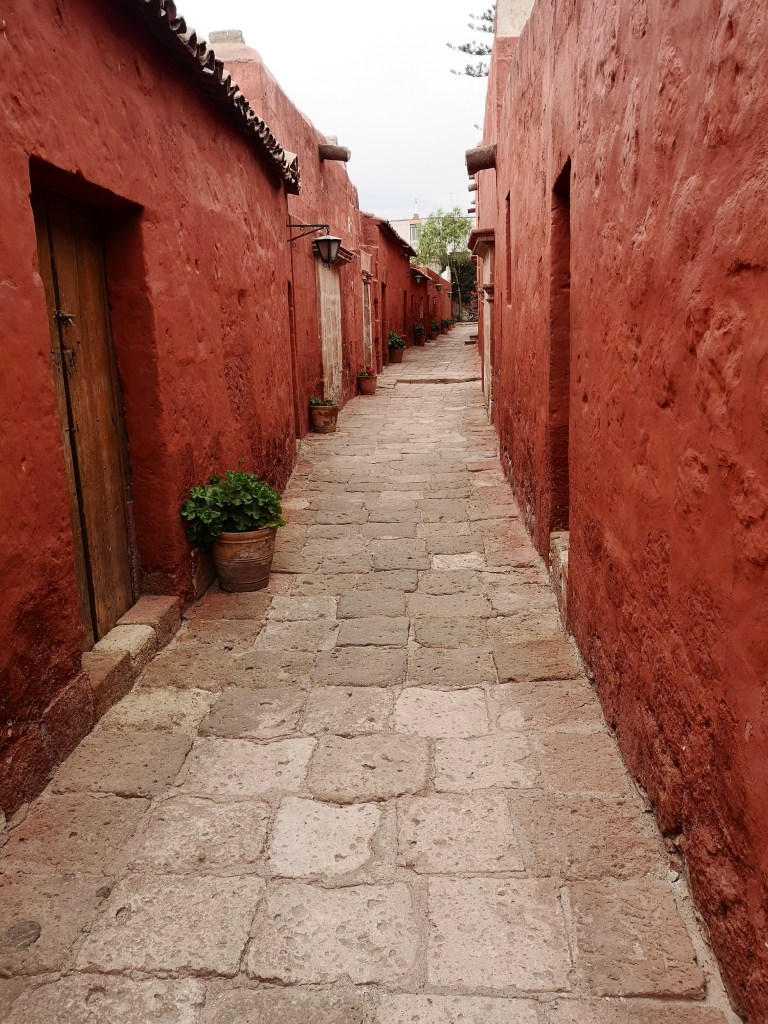
There used to be about 200 nuns living in this cloister, since they were really rich they also had servants. Nuns from one family could live together in one house (there was no communal space). Hence the whole monastery consists of many little houses and a number of streets:
—
Circa 200 suore vivevano in questo convento, e dal momento che erano di famiglia veramente ricca, avevano anche dei servi. Le suore di una stessa famiglia potevano vivere insieme in una casa (non c’era spazio comune). Quindi l’intero monastero consiste di molte piccole case e strade:
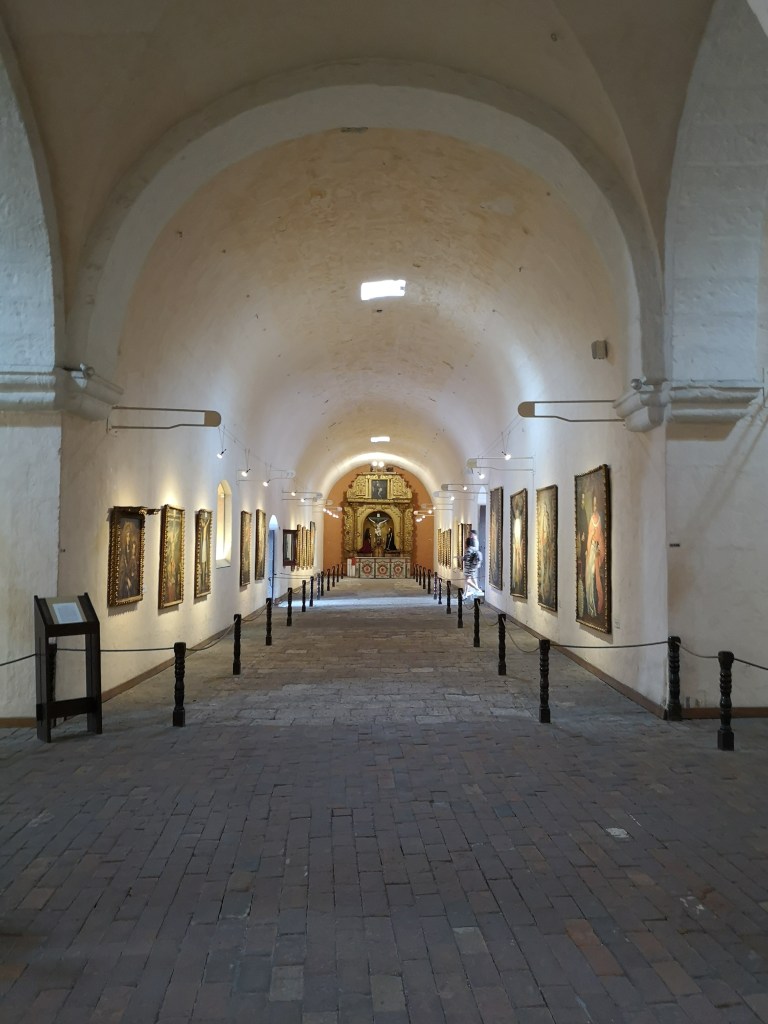
At the moment only 20 nuns live here; since 1870 the monastery is reformed and all the nuns had to work on their own (no servants) and sleep/eat together. Their former dormitory:
—
Al momento solo 20 suore vivono qui; dal 1870 il monastero è stato riformato e tutte le suore devono lavorare (senza servitù) e dormire / mangiare insieme. Il loro ex-dormitorio:
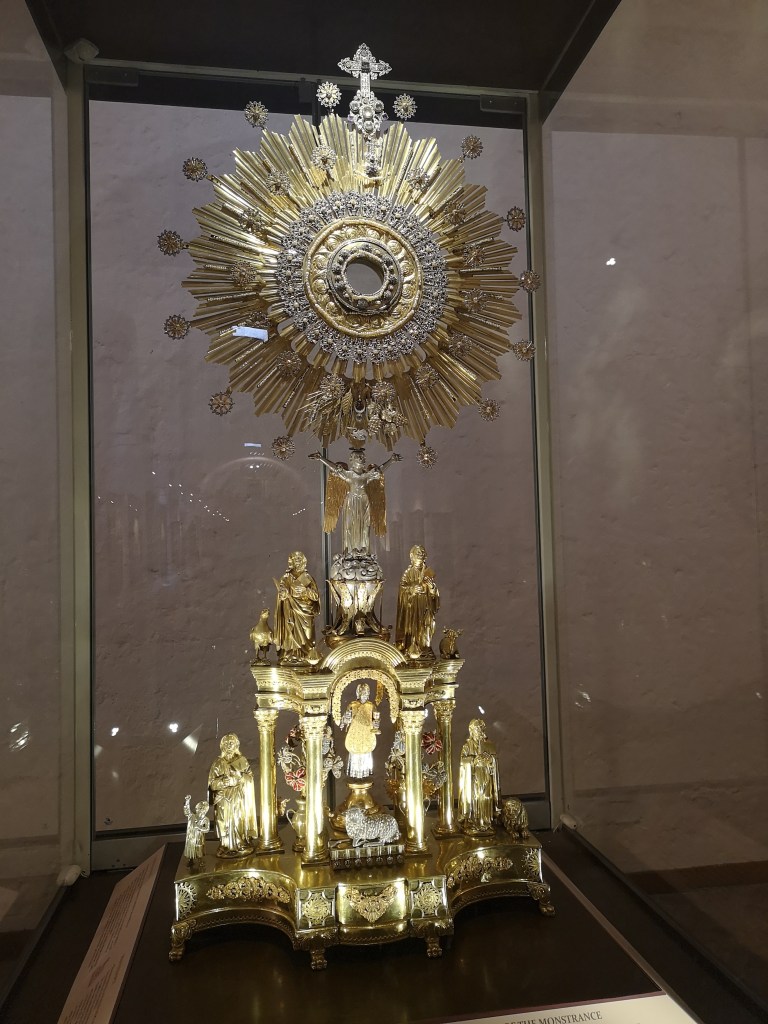
Finally at the end there is an impressive monstrance (to store the host).
—
Alla fine alla fine c’è un ostensorio impressionante (per conservare l’ostia).
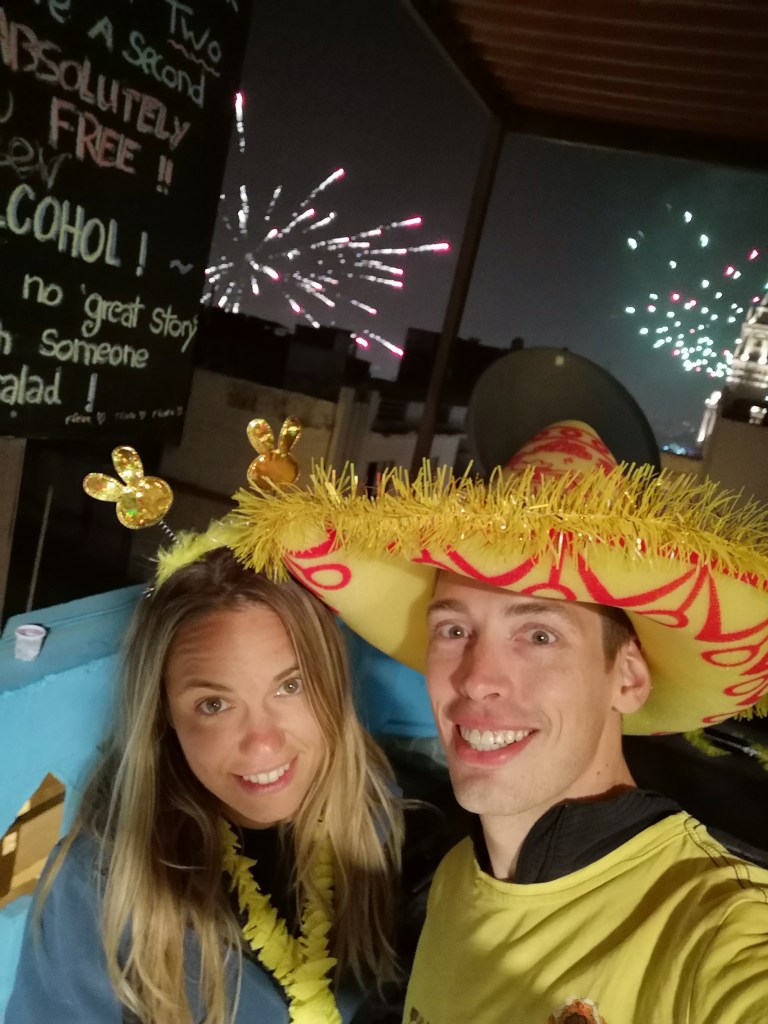
As today is new year’s eve we need to find a good place to look over Arequipa and see the fireworks!
The other two guys on the free tour mentioned that there was a rooftop party at the mb backpackers hostel. We decided to join.
—
Siccome oggi è il capodanno, dobbiamo trovare un buon posto per vedere i fuochi d’artificio su Arequipa!
Gli altri due ragazzi del tour gratuito hanno menzionato che c’era una festa sul tetto nell’ostello mb backpackers. Abbiamo deciso di partecipare.
Great views all over Arequipa!
—
Grandi vista su Arequipa!

Arequipa is a beautiful city! The plaza de Armas is definitely the highlight, although also the cloister is worth a visit. If you don’t do any excursions (to the Colca canyon etc.) probably a two day stay would be more than enough.
—
Arequipa è una città bellissima! La Plaza de Armas è sicuramente il punto forte, anche se il convento merita una visita. Se non si fanno escursioni (al canyon del Colca, ecc.), probabilmente un soggiorno di due giorni è più che sufficiente.
 Maria & Serge