First post from Peru! The border crossing went quite smooth despite the rain and the fact that you need to walk across the border while the bus proceeds empty next to you.
But all went well and we are now in Puno, the counterpart of Copacabana on the Peruvian side. Another country, another hour behind, for no apparent reason: the sun here rises at 5am and sets at 6pm.
Puno is quite famous to be the gateway for many Peruvian islands on the Titicaca lake. In particular, the most known islands are los Uros, Amantaní and Taquile. There are many travel agencies offering a 2-day package to the three islands, including an overnight stay in Amantaní with a local family.
We decided that it could be an interesting experience to have but we wanted to make sure that the local family gets appropriately compensated and hence we used the All Ways Travel (www.titicacaperu.com), which lets you pay the family directly with broadly transparent pricing.
—
Primo post dal Perù! L’attraversamento del confine è andato abbastanza liscio nonostante la pioggia e il fatto che devi attraversare il confine a piedi mentre l’autobus procede vuoto accanto a te.
Ma tutto è andato bene e ora siamo a Puno, la controparte di Copacabana dal lato peruviano. Un altro paese, un’altra ora indietro, senza una ragione apparente: il sole qui sorge alle 5 del mattino e tramonta alle 18:00.
Puno è piuttosto famosa per essere la porta d’accesso a molte isole peruviane sul lago Titicaca. In particolare, le isole più conosciute sono los Uros, Amantaní e Taquile. Ci sono molte agenzie di viaggio che offrono un pacchetto di 2 giorni alle tre isole, incluso un pernottamento ad Amantaní con una famiglia locale.
Abbiamo deciso che poteva essere un’esperienza interessante, ma volevamo assicurarci che la famiglia locale venisse adeguatamente risarcita e quindi abbiamo utilizzato All Ways Travel (www.titicacaperu.com), che ti permette di pagare la famiglia direttamente.
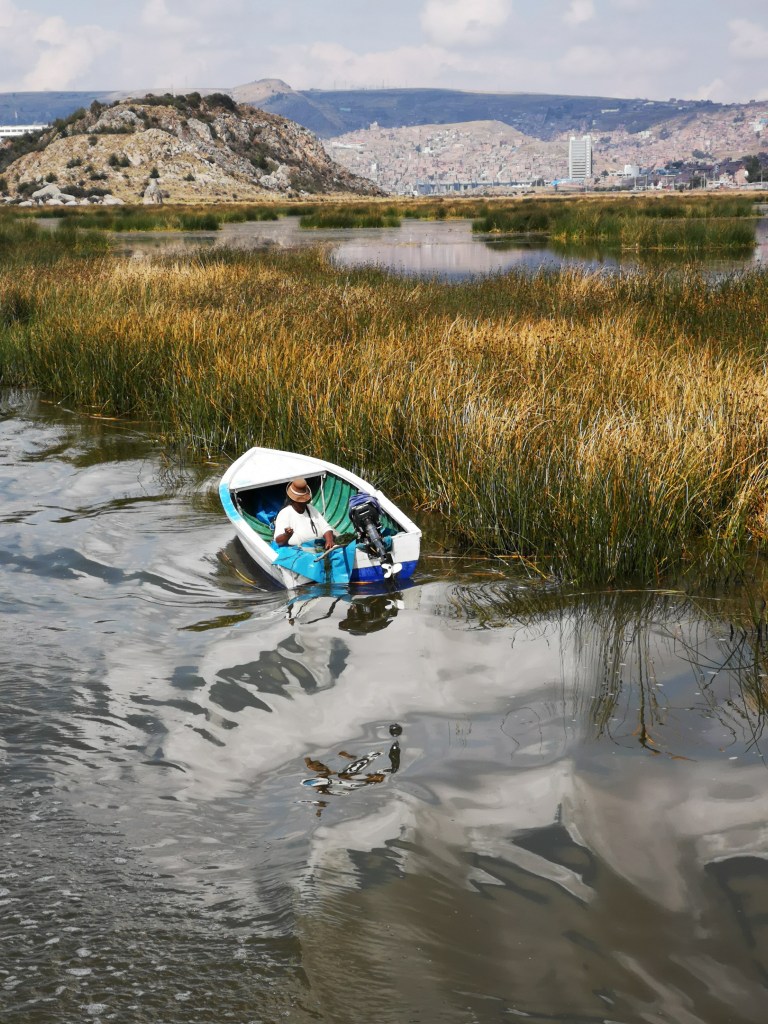
First stop: Uros islands
The Uros are a complex of 90 floating islands c.5 km off the coast of Puno hosting c.1,200 inhabitants of Uro-Aymara origin – but why? Isn’t there space for them on the mainland? Oh yes there is and there was. In fact the Uro people used to be living on the Peruvian coast of the Titicaca lake, more or less where Puno is today.
They were getting on well with Aymara people and married with them; the encounter with Incas was less peaceful and the Uru often served as slaves. However, the worst time came with the Spanish conquest: the Spanish wanted the Uru to move to Bolivia and work in the Potosí mines… which the Uru people really did not fancy. Therefore many of them took their boats made of totora reeds, which are abundant next to the shore of the lake, and took off to the middle of the lake, (c.15km off the coast) where the lake was only 9 m deep. There the Spanish could not see them and they could happily – although less easily – get on with their lives. As time went on, the boats became more permanent platforms.
—
Prima tappa: isole di Uros
Le Uros sono un complesso di 90 isole galleggianti a circa cinque chilometri dalla costa di Puno che ospitano circa 1200 abitanti di origine Uro-Aymara – ma perché? Non c’è spazio per loro sulla terraferma? Oh sì c’è e c’era. In effetti, il popolo Uru viveva sulla costa peruviana del lago Titicaca, più o meno dove è oggi Puno.
Andavano piuttosto d’accordo con il popolo Aymara e si svolgevano spesso matrimoni tra i due gruppi; l’incontro con gli Incas fu meno pacifico e gli Uru spesso servivano da schiavi. Tuttavia, il momento peggiore arrivò con la conquista spagnola: gli spagnoli volevano che gli Uru si trasferissero in Bolivia e lavorassero nelle miniere di Potosí … cosa che ovviamente gli Uru non volevano fare. Perciò molti di loro presero le loro barche fatte di canne di totora, che sono abbondanti vicino alla riva del lago, e se ne andarono in mezzo al lago, (15 km al largo della costa) dove il lago aveva solo 9 m di profondità. Lì gli spagnoli non potevano vederli e gli Uru potevano felicemente – anche se meno facilmente – andare avanti con le loro vite. Col passare del tempo, le barche divennero piattaforme più permanenti.
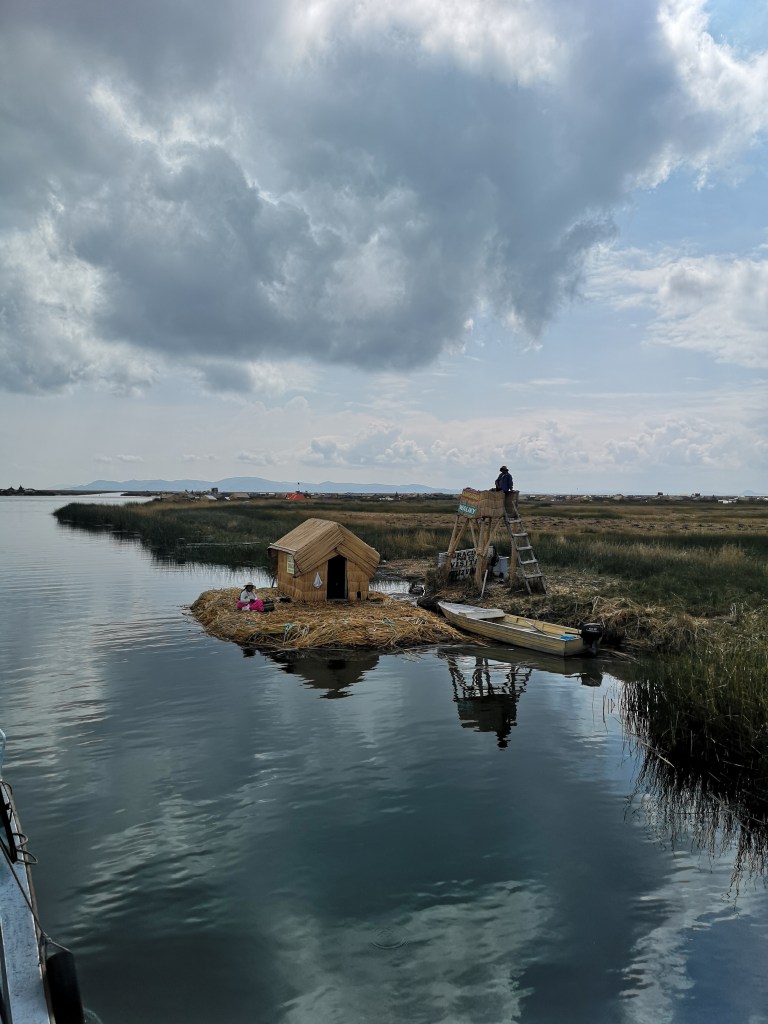
Nowadays the economy of the Uros inhabitants is mainly based on fishing, hunting, production of totora-based handicrafts and of course tourism. Although as we are travelling in the low seasons, we have not really seen too many tourists.
Upon arrival on one of the island we are greeted by a local who explains that a floating island is made of the dense roots of the totora reeds – these interweave to form a natural layer about one to two meters thick that support the islands. Islands are then anchored with ropes attached to sticks driven into the bottom of the lake. The reeds at the bottoms of the islands rot away fairly quickly, so new reeds are added to the top about every three months; one island takes c. 1 year to build and can last about thirty years.
—
Oggigiorno l’economia degli abitanti di Uros si basa principalmente sulla pesca, la caccia, la produzione di artigianato a base di totora e, naturalmente, il turismo. Anche se, viaggiando in bassa stagione, non abbiamo visto troppi turisti.
All’arrivo su una delle isole veniamo accolti da un’ abitante che spiega che un’isola galleggiante è costituita dalle fitte radici delle canne di totora – queste si intrecciano per formare uno strato naturale di uno o due metri di spessore che sostiene le isole. Le isole sono quindi ancorate con funi attaccate a bastoni condotti sul fondo del lago. Gli strati inferiori dell’isola marciscono abbastanza velocemente, quindi nuovi strati vengono aggiunte in superficie ogni tre mesi circa; un’isola impiega c. 1 anno per essere costruita e può durare circa trenta anni.
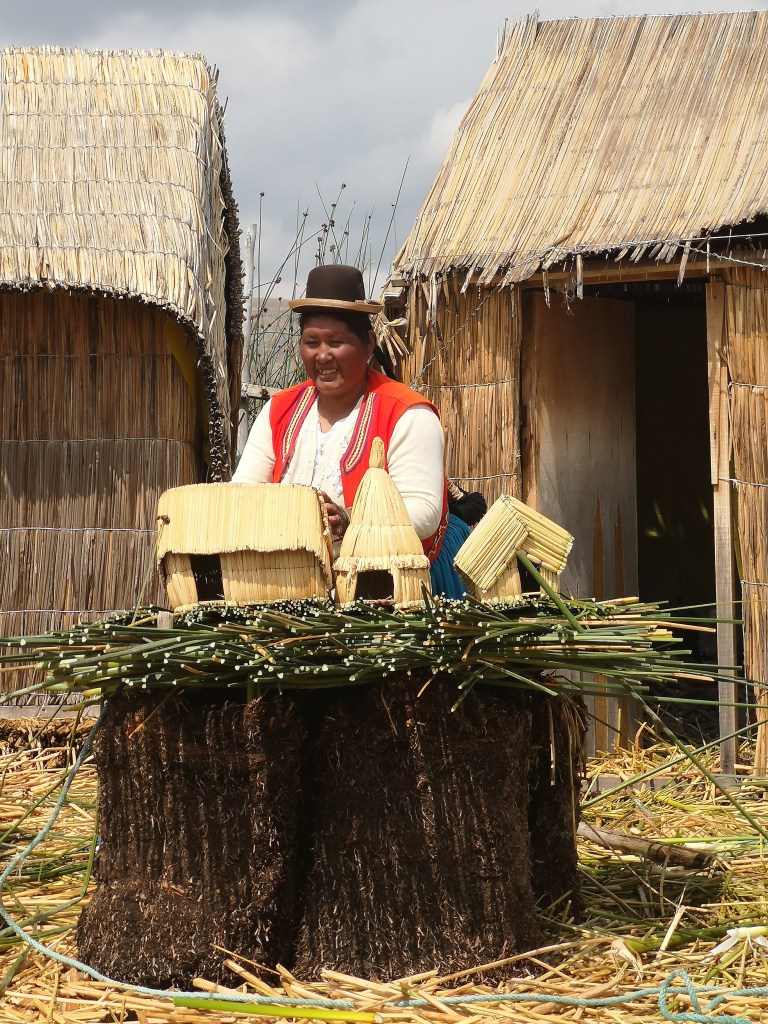
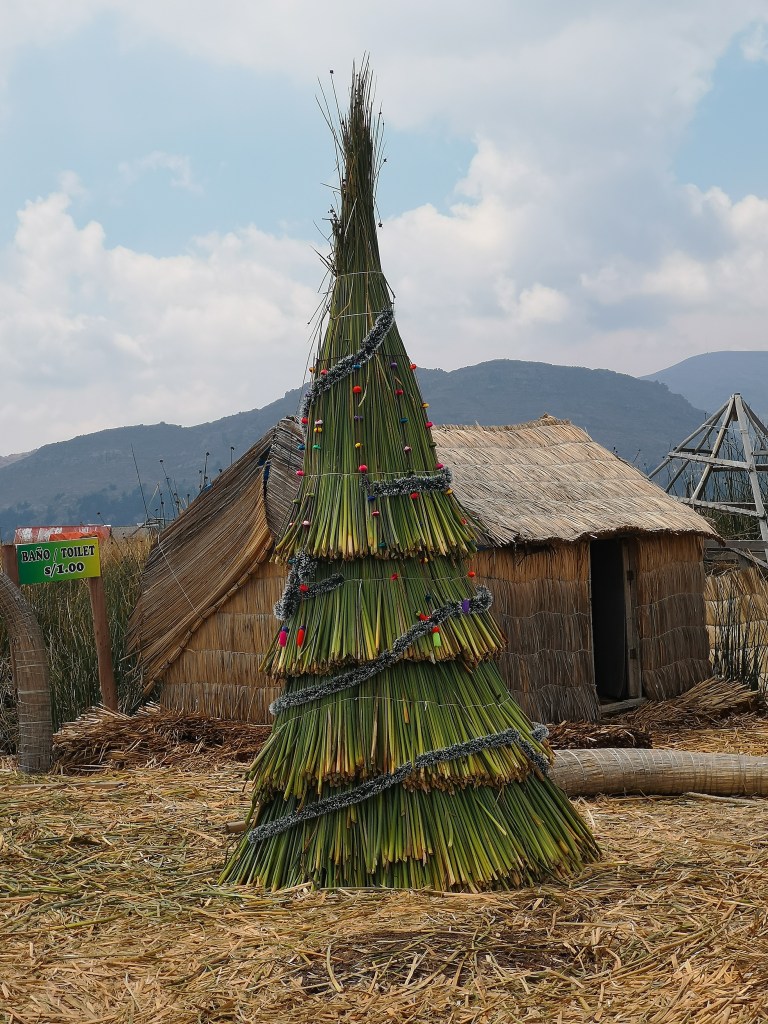
An individual island can host from 3 to 10 families according to its size. On the islands there are primary schools, a basic hospital, a football field, a hotel, some restaurants and lively Christmas trees also made of totora reeds. Solar panels provide electricity.
—
Ogni isola può ospitare da 3 a 10 famiglie in base alle sue dimensioni. Sulle isole ci sono scuole elementari, un ospedale con servizi base, un campo di calcio, un albergo, alcuni ristoranti e vivaci alberi di Natale fatti anch’essi di canne di totora. I pannelli solari forniscono elettricità.
There are also funky boats to transport tourists around from an island to another. Cool huh? But why that cat shape on the front of the boat?… Those are pumas, not cats; “Titicaca” in fact means puma of stone in Quechua, and the boats are on the Titicaca lake, so it all makes sense now.
—
Ci sono anche barche colorate per trasportare turisti da un’isola all’altra. Belle, no? Ma perché quella figura di gatto sulla parte anteriore della barca? … in realtà sono puma, non gatti; “Titicaca” significa puma di pietra in quechua, e le barche sono sul lago Titicaca, quindi tutto ha senso ora.

Second stop: Amantaní
We arrive in Amantaní at about lunch time and we are immediately divided up in groups, each of which ends up with a given family of the Ocosuyo community (there are 10 communities on the island). The representative of each family leads us to his/her home.
—
Seconda tappa: Amantaní
Arriviamo ad Amantaní all’incirca all’ora di pranzo e siamo immediatamente divisi in gruppi, ognuno dei quali finisce con una determinata famiglia della comunità Ocosuyo (ci sono 10 comunità sull’isola). Il rappresentante di ogni famiglia ci porta a casa sua.

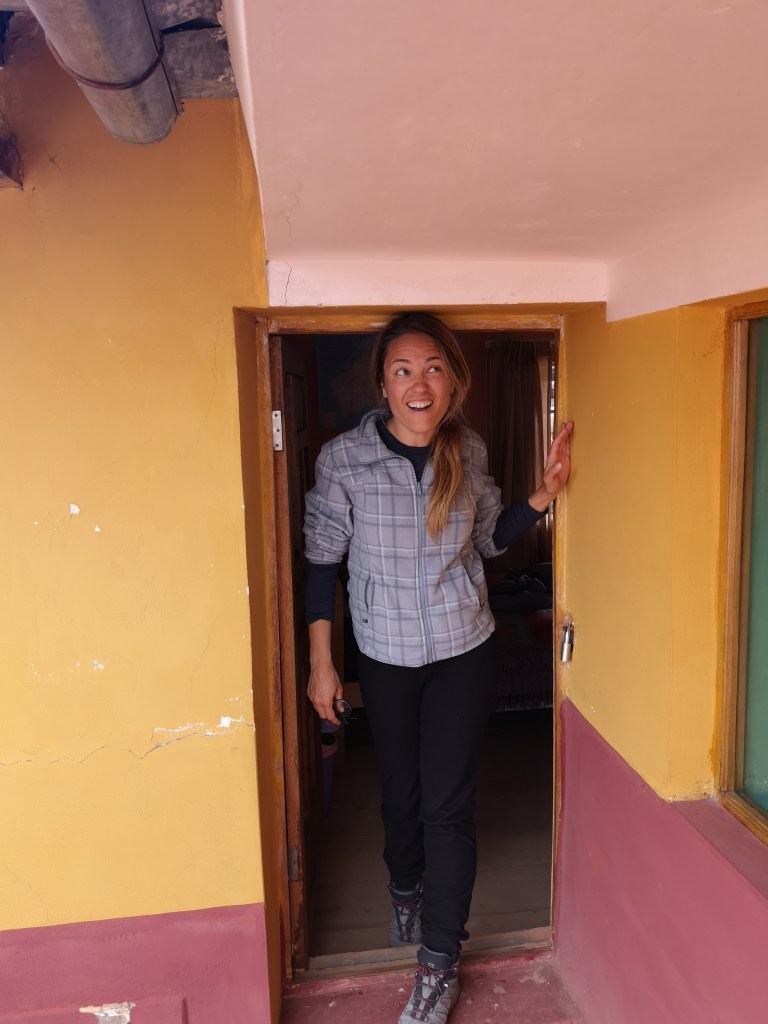
Serge and I get a private double room for the two of us, but the ceiling is lower than we are used to and my self esteem sky rockets (after bumping my head, of course)
—
Io e Serge veniamo sistemati in una camera doppia per noi due, ma il soffitto è più basso di quello a cui siamo abituati e la mia autostima va alle stelle (dopo aver sbattuto la testa, ovviamente)
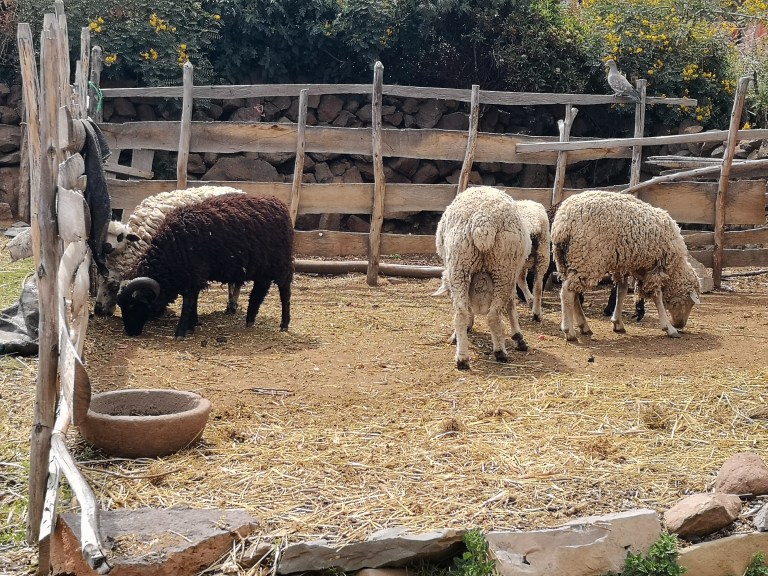
We find some friendly individuals in the back yard who are looking forward to speak to us during the evening.
—
Troviamo alcuni individui simpatici in giardino che non vedono l’ora di tenerci compagnia durante la serata.
We have our vegetarian lunch and we are then set to explore the island. The main activity carried out by the c.4,000 inhabitants of the island is agriculture, with main products being potatoes, corn, oca, quinoa, beans and peas, all arranged in terraces. There is no other source of energy on the island besides solar and little/ no mobile phone signal – time seems to pass quite slow for the locals and the daughter of our host family seems to spend the majority of her free time knitting.
—
Facciamo il nostro pranzo vegetariano e siamo quindi pronti per esplorare l’isola. L’attività principale svolta dai circa 4000 abitanti dell’isola è l’agricoltura; i prodotti principali sono patate, mais, ocra, quinoa, fagioli e piselli, tutti disposti in terrazze. Sull’isola non c’è altra fonte di energia oltre a quella solare e il segnale del telefono cellulare è scarso o assente: il tempo sembra passare piuttosto lento per la gente del posto e la figlia della nostra famiglia ospite passa la maggior parte del suo tempo libero a lavorare a maglia.
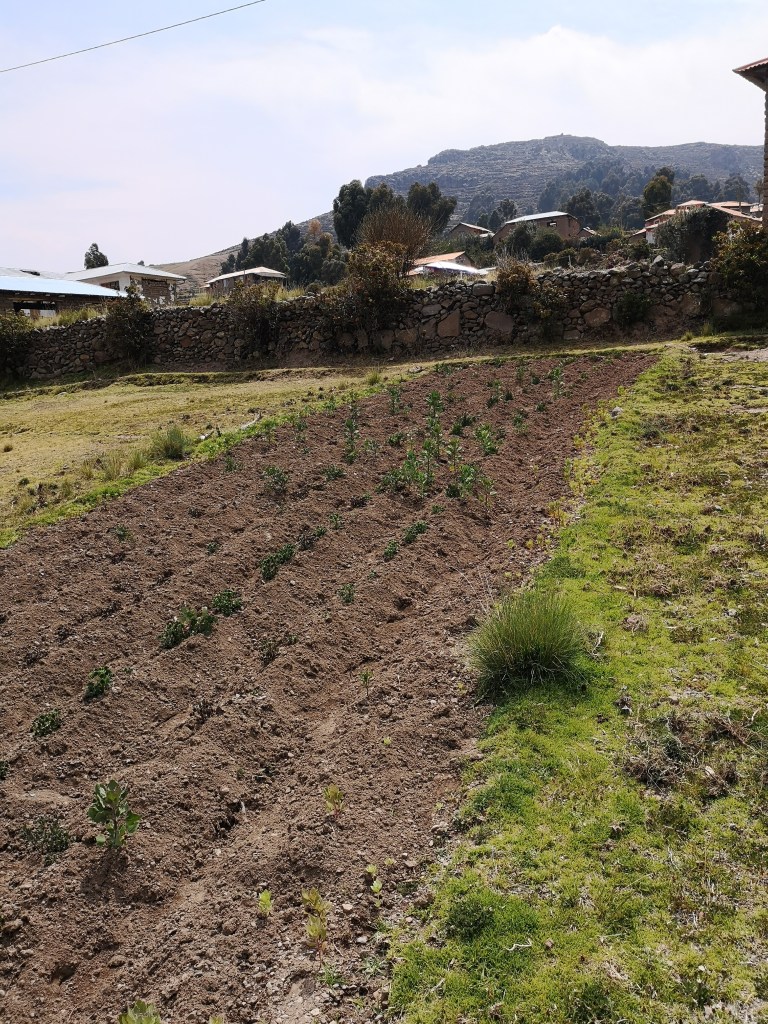
We then hike up to the two mountain peaks, Pachamama (“mother earth”)…
—
Poi saliamo sulle due cime montuose, Pachamama (“madre terra”) …
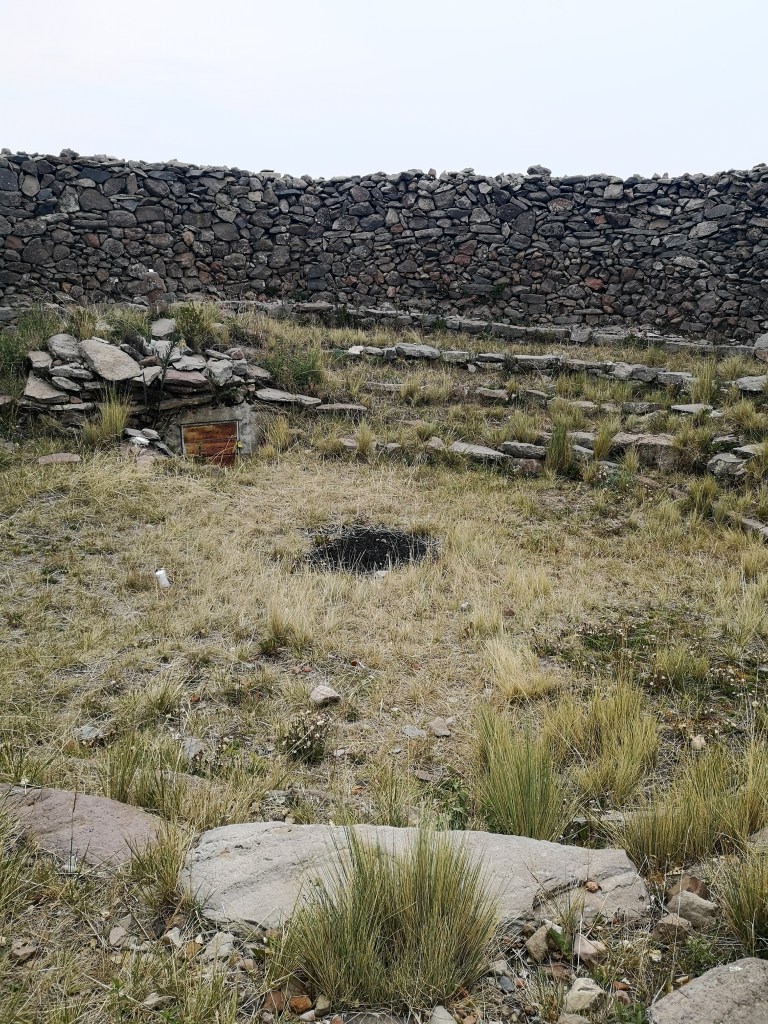
…and Pachatata (“father earth”), with ancient Inca and Tiwanaku ruins on top of both. Looking at the entrance of the Pachamama, we are told we need to walk around it counterclockwise and think of a wish, which will then come true in due course.
—
… e Pachatata (“padre terra”), con antiche rovine Inca e Tiwanaku in cima a entrambi. Guardando all’ingresso di Pachamama, ci viene detto che dobbiamo camminarci attorno in senso antiorario ed esprimere un desiderio, che si realizzerà a tempo debito.
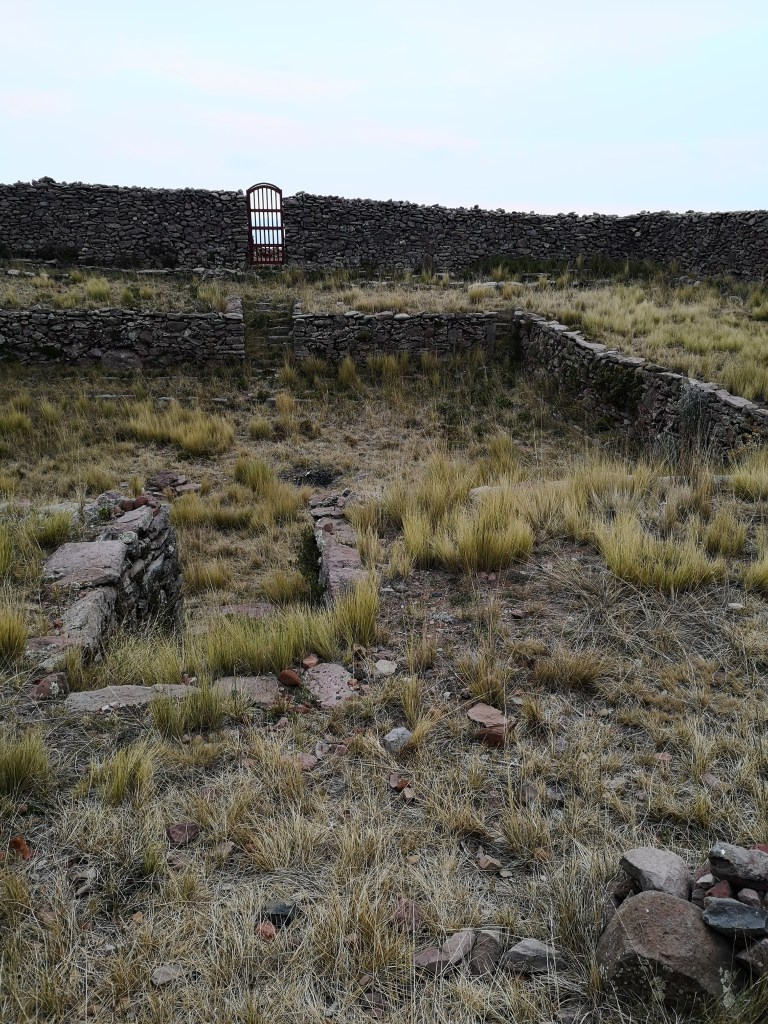
We then have our vegetarian dinner at “home” and we are all set for the party!!! Which does not happen without traditional clothes. Other fellow travellers from South America can pull off the traditional clothes, but Serge and I really can’t. We are invited to dance along the music, which we of course do although one song is enough to take our breath away (literally, since we are at 4000 meters above sea level).
—
Abbiamo poi la nostra cena vegetariana a “casa” e siamo pronti per la festa !!! Che non non può essere una vera festa senza vestiti tradizionali. Altri turisti del Sud America si mimetizzano meglio, ma io e Serge sembriamo un po’ fuori luogo. Siamo invitati a ballare, cosa che ovviamente facciamo anche se una canzone è sufficiente per togliere il respiro (letteralmente, visto che siamo a 4000 metri).

The morning after, the view from our home looks like this – the sun really would like to come out but it knows it is rainy season and the island needs rain for the crop ( it did rain in the end but after we left)
—
La mattina dopo, la vista dalla nostra casa è così: il sole vorrebbe davvero uscire ma sa che è la stagione delle piogge e l’isola ha bisogno di pioggia per il raccolto (ha piovuto alla fine, ma dopo che siamo partiti)
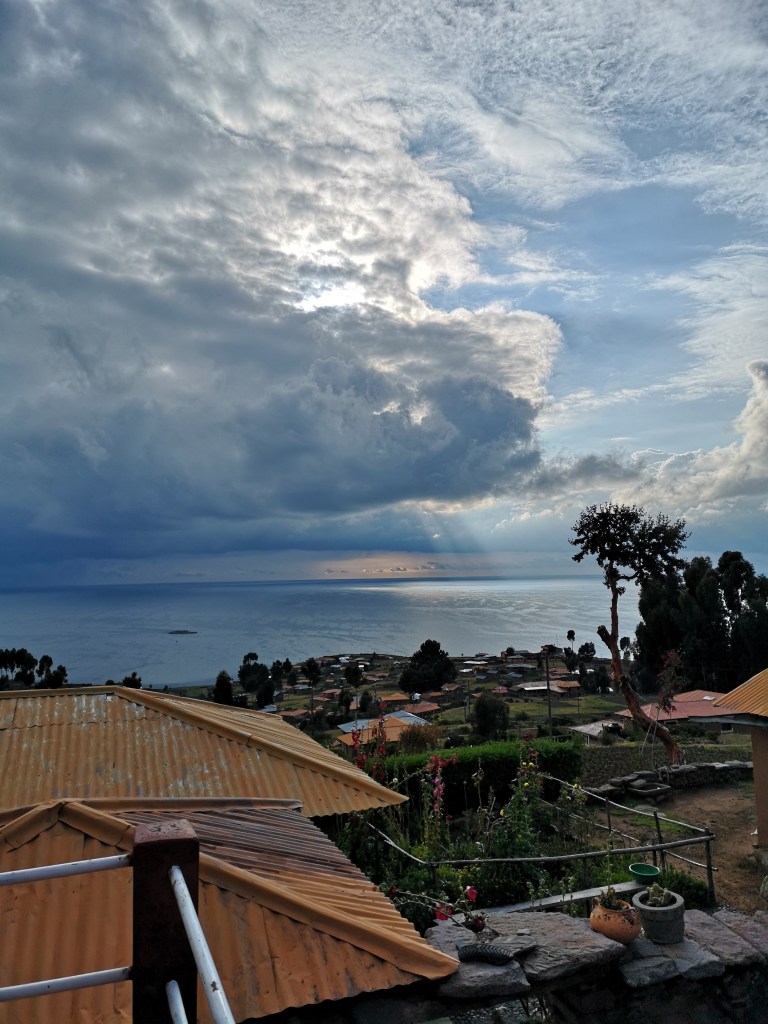
Third and last stop: Taquile island
We arrive in Taquile island, where we take a nice hike up to the main square. Taquile, just like Amantaní, is car-free (way to steep for cars) and transport is carried out manually.
—
Terza e ultima tappa: l’isola di Taquile
Arriviamo all’isola di Taquile, dove facciamo una bella camminata fino alla piazza principale. Taquile, proprio come Amantaní, è priva di auto (è troppo ripida per le auto) e il trasporto viene effettuato manualmente.
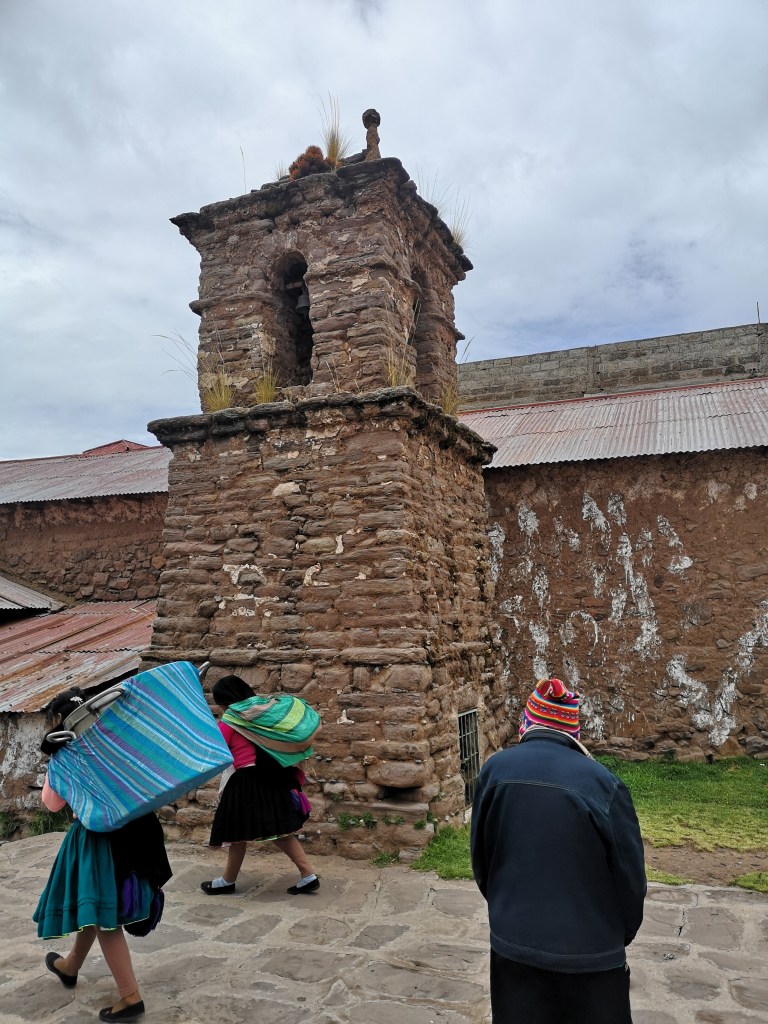
The island has an interesting history as it was used as a political prison between the colonialism period and the beginning of the 20th century. In 1970, the island was declared to be property of the Taquilenos and declared Intangible Cultural Heritage of humanity by UNESCO, due to its textile art.
—
L’isola ha una storia interessante in quanto fu usata come prigione politica tra il periodo del colonialismo e l’inizio del XX secolo. Nel 1970, l’isola fu dichiarata proprietà dei Taquilenos e dichiarata patrimonio culturale immateriale dell’umanità dall’UNESCO, grazie alla sua arte tessile.
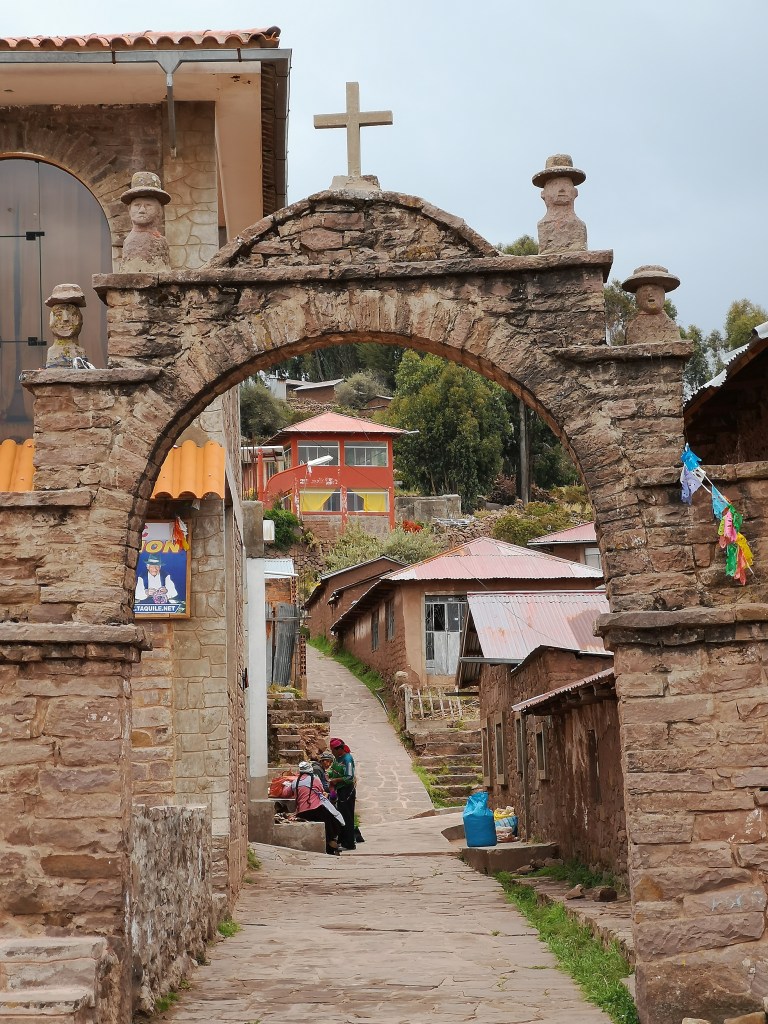
We have our lunch where we are introduced to the traditional clothes of the island (and what each of them means in terms of civil status) and after our lunch (trout from the lake this time), we are set to go back to Puno, where we will spend a night before heading off to Cusco.
—
Facciamo il nostro pranzo dove ci vengono presentati i vestiti tradizionali dell’isola (ed il significato di ognuno in termini di stato civile) e dopo il nostro pranzo (trote dal lago questa volta), siamo pronti per tornare a Puno, dove passeremo una notte prima di andare a Cusco.
 Maria & Serge
🙂 posti visti… 35 anni or sono, quando tutto era ancora “agli esordi” e per i pochi pazzi che, come me, giravano col sacco in spalla e vivevano nelle case dei locali! Bel reportage, grazie per la condivisione 🙂 claudine
LikeLike