Nope we did not in all of a sudden skip to Brazil (and did not see any Lola’s either, sorry Barry Manilow)
Copacabana is a small village at 3800 meters high next to lake Titicaca.
To get to the village we took the bus from La Paz.
The “Terminal de Busses” of La Paz is an impressive building! (with impressive chaos inside!)
—
No, non siamo saltati improvvisamente in Brasile (e non abbiamo visto neanche Lola, mi dispiace Barry Manilow)
Copacabana è un piccolo villaggio a 3800 metri di altezza vicino al lago Titicaca.
Per raggiungere il villaggio abbiamo preso l’autobus da La Paz.
Il “Terminal de Busses” di La Paz è un edificio imponente! (con una confusione assurda all’interno!)

Half way our trip, however the road ends and we need to cross the strait of Tiquina.
Everyone out of the bus, the bus on some kind of floating platform and all passengers on a small boat to the other side… Not something we are used to in Europe!
—
A metà strada tuttavia la strada finisce e dobbiamo attraversare lo stretto di Tiquina.
Tutti fuori dal bus, l’autobus va su una sorta di piattaforma galleggiante e tutti i passeggeri su una piccola barca dall’altra parte … Un po’ anomalo!

Arriving in Copacabana, we walk up 72 meters to the hostel. The hostel has a nice view over lake Titicaca and we realize that we have been lucky, in the morning it rained and it is sunny now (something that seems to be quite common here in December: rain in the morning and sun in the afternoon)
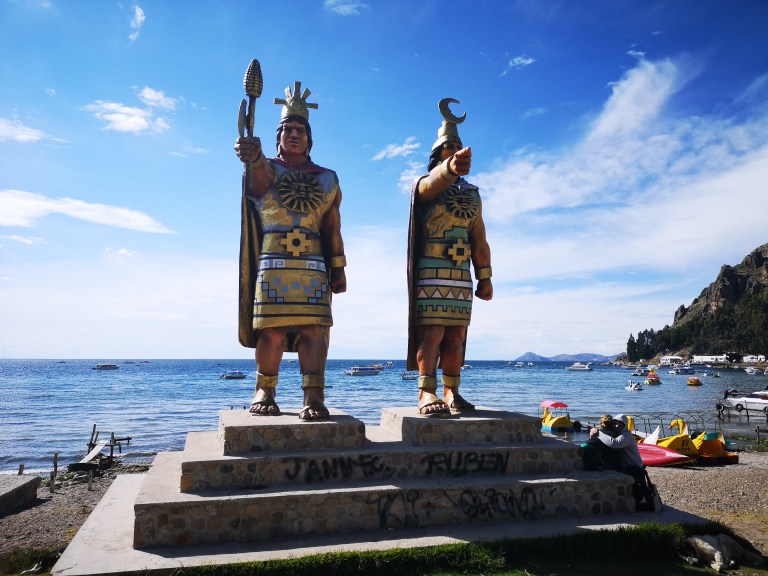
First things first and we arrange some tickets for the days after and then make a small walk through town, where we find a statue of the sun and the moon. That’s why we are here… Isla del Sol (Sun Island)!
—
Arrivando a Copacabana, camminiamo per 72 metri fino all’ostello. L’ostello ha una bella vista sul lago Titicaca e ci rendiamo conto che siamo stati fortunati, al mattino ha piovuto ed è soleggiato ora (sembra essere abbastanza comune qui a dicembre: pioggia al mattino e sole nel pomeriggio)
Per prima cosa, organizziamo dei biglietti per i giorni successivi e facciamo una piccola passeggiata per la città, dove troviamo una statua del sole e della luna. Ecco perché siamo qui … Isla del Sol (Isola del Sole)!
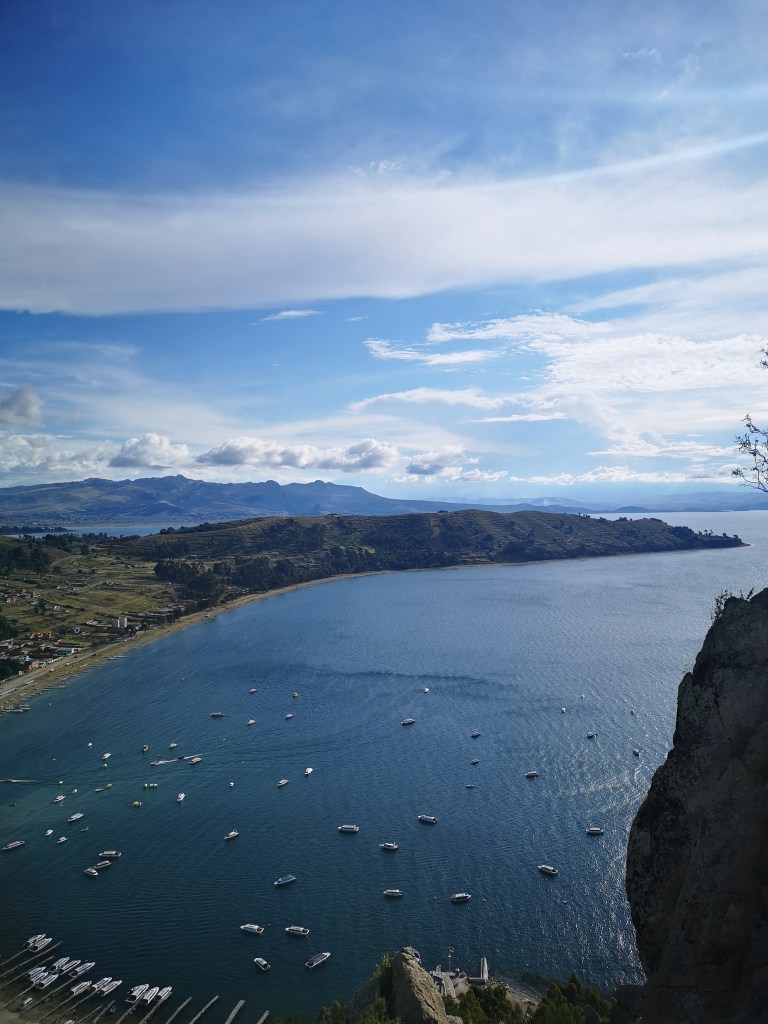
Once we are all set we climb the closest view point (Cerro Calvario) which brings us over 4 km in altitude. Which is no small feat given the lack of oxygen at this altitude.
—
Decidiamo quindi di salire sopra al Cerro Calvario, una collina che supera i 4,000 m. Che non è un’impresa da poco data la mancanza di ossigeno a questa altitudine.
At the top, we find a lively market with all kinds of toys (cars, houses) and drinks/food….
—
In cima, troviamo un vivace mercato con diversi tipi di giocattoli (automobili, case) e bevande / cibo ….
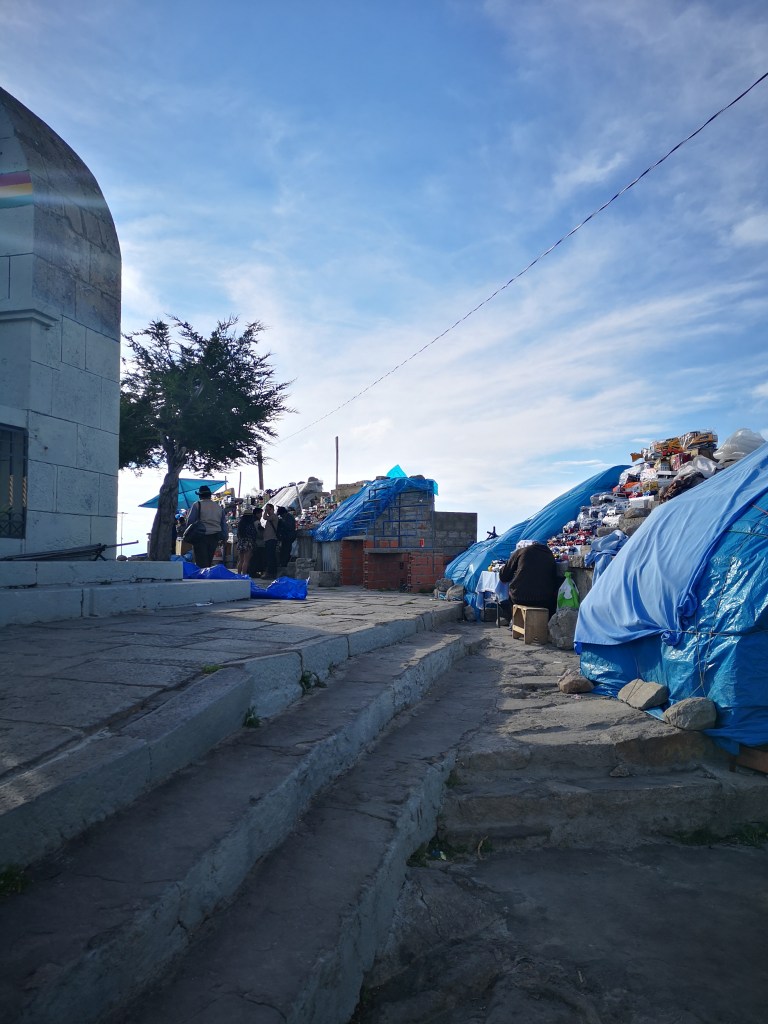

This appears to be a point of worship for Pachamama.
The idea is very similar to going to church: light a candle and wish for something, albeit a bit more elaborate.
One might wish for good health or fortune or remember a family member. In that case the colours of the candle matter (there is white, red, purple, etc.)
If the wish is a bit more materialistic, for instance a wish for a car or house, next to the candle put a toy car/house.
It’s very common to then continue the celebration and drink a beer or any other beverage, of course you share a bit of the drink with Pacha Mama (by spraying some of the drink on the ground).
After seeing an amazing sunset we walk down.
—
Questo sembra essere un punto di culto per Pachamama.
L’idea è molto simile all’andare in chiesa: accendi una candela e preghi che il tuo desiderio si avveri, anche se il processo è un po’ più elaborato.
Si potrebbe desiderare buona salute o fortuna o ricordare un membro della famiglia: in questo caso i colori della candela contano (c’è il bianco, rosso, viola, ecc.)
Se il desiderio è un po’ più materialistico, ad esempio un desiderio per un’auto o una casa, accanto alla candela metti una macchinina / casa.
È molto comune quindi continuare la celebrazione e bere una birra o qualsiasi altra bevanda, ovviamente il primo sorso della bevanda va condiviso con Pachamama (spruzzando un po’ della bevanda a terra).
Dopo aver visto un tramonto fantastico, scendiamo.

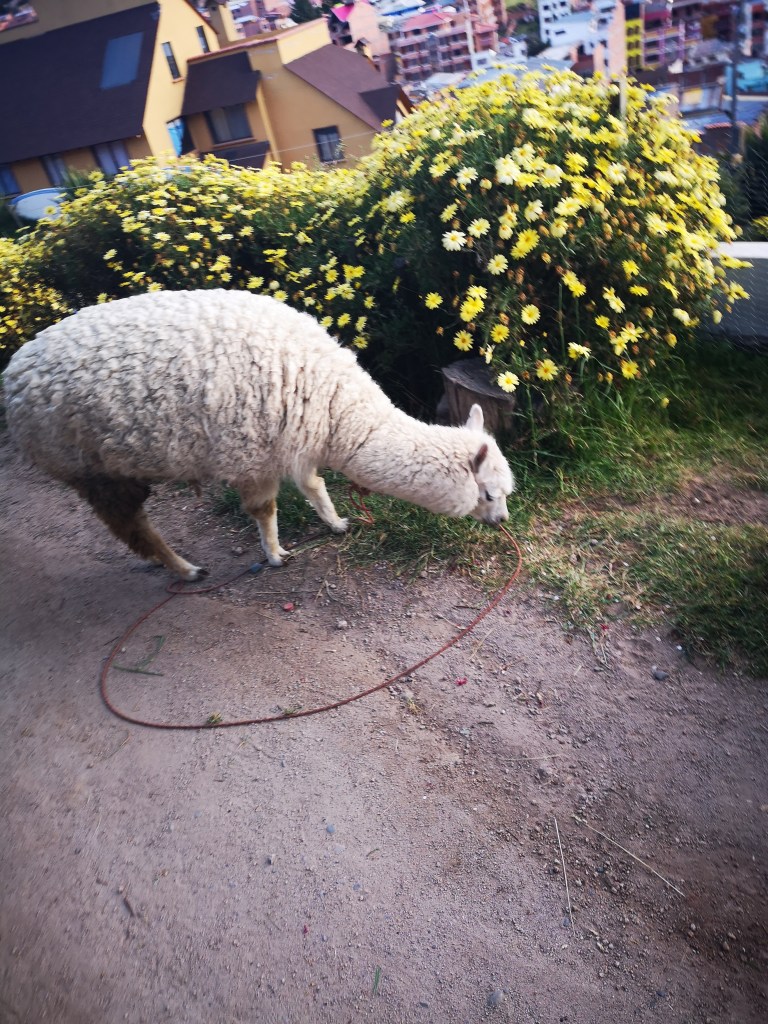
We meet some alpacas and have dinner in a lovely restaurant with an amazing view over the town of Copacabana.
—
Incontriamo alcuni alpaca e ceniamo in un delizioso ristorante con una splendida vista sulla città di Copacabana.
The next day we have breakfast in the hotel, can you guess what this is?
—
Il giorno dopo facciamo colazione in albergo, puoi indovinare di cosa si tratta?
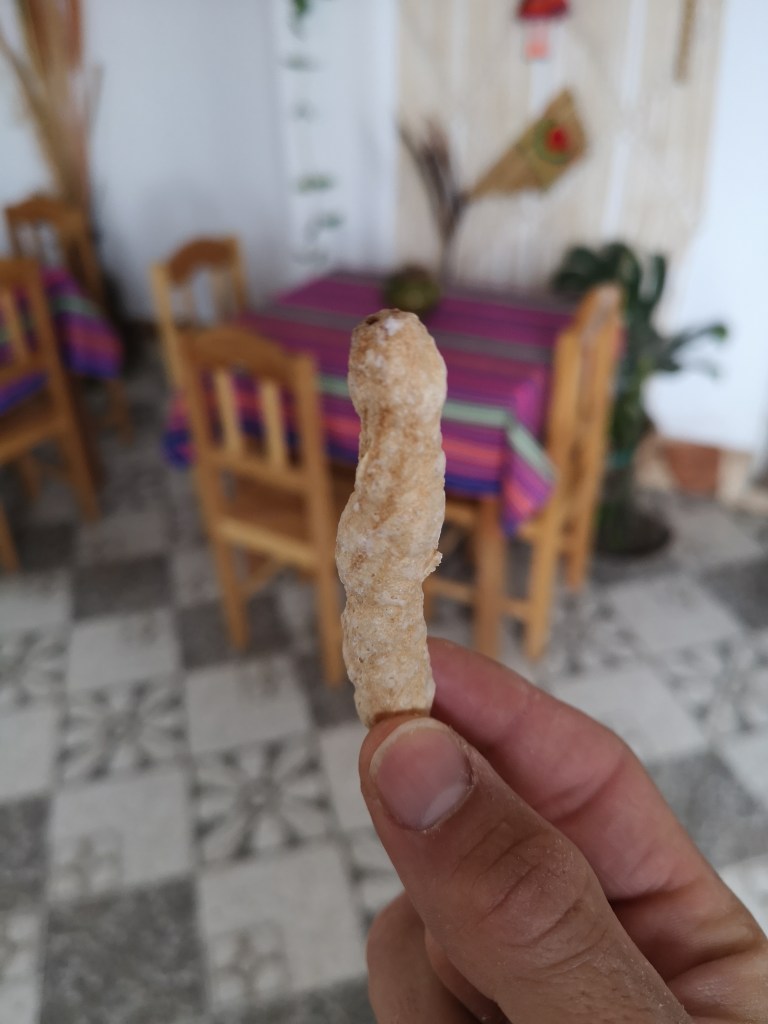
It’s pop-pasta. It used to be some penne and it was air fried (like lean popcorn) to become a more airy snack, normally sold in the streets of Bolivia. Personally I think I’ll keep with the regular way of preparing pasta!
Once we overcome the shock of this new culinary invention, we pack up our stuff and left for Isla del Sol (sun island). The island is so called because the Incas thought that the sun was born on this island.
As we wrote earlier, it mostly rains in the morning hence we arrived at the sun island without the sun.
—
È pop pasta. In passato era una penna che è stata fritta ad aria (come se fosse un popcorn magro) per diventare uno spuntino più arioso, normalmente venduto per strada in Bolivia. Personalmente penso che continuerò a mangiare pasta nel modo tradizionale!
Una volta superato lo shock di questa nuova invenzione culinaria, impacchettiamo le nostre cose e partiamo per Isla del Sol (isola del sole). L’isola è così chiamata perché gli Inca pensavano che il sole fosse nato su quest’isola.
Come abbiamo già scritto, piove per lo più al mattino, quindi siamo arrivati all’isola del sole senza il sole.
On the island, there is an ongoing dispute about how to divide the tourist revenues between the north and the south.
This resulted in only the south part of the island being safely accessible by tourists over the last year. We were told that, on the way between north and south, you could come across (we haven’t seen them though) guards that urge you to go back to the south part.
We started with a hike to the very south of the island, where there is the temple of the sun.
Walking from the boats up the hill to the closest village and taking a turn to “cerro Queñuani”, we walked through the only forest on the island (full of eucalyptus trees).
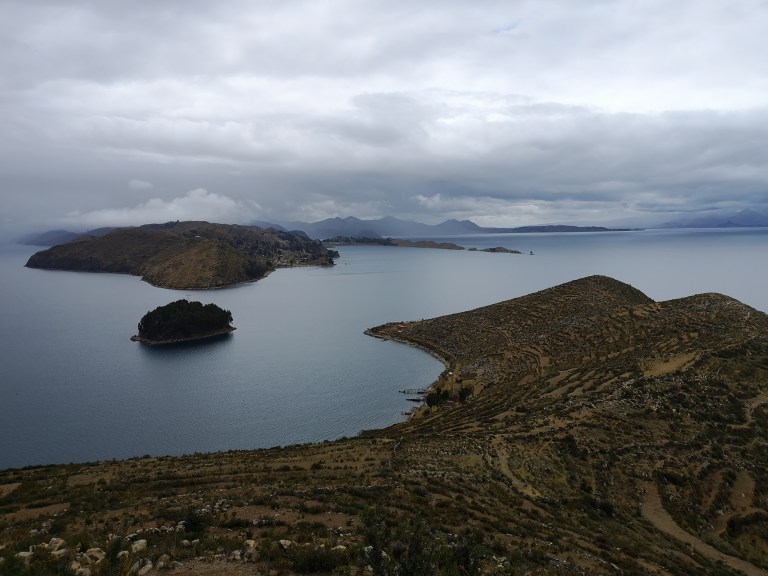
The view of the south of the island is magnificent.
—
Sull’isola, c’è una disputa in corso su come dividere gli introiti turistici tra il nord e il sud.
Ciò ha comportato che solo la parte sud dell’isola sia stata accessibile ai turisti durante l’ultimo anno. Ci è stato detto che, sulla strada tra il nord e il sud, potresti incontrare (non li abbiamo visti) guardie che ti spingono a tornare nella parte sud.
Abbiamo iniziato con un’escursione nell’estremo sud dell’isola, dove c’è il tempio del sole.
Camminando dal porto su per la collina fino al villaggio più vicino e facendo una svolta a “cerro Queñuani”, abbiamo camminato attraverso l’unica foresta dell’isola (piena di alberi di eucalipto).
La vista del sud dell’isola è magnifica.
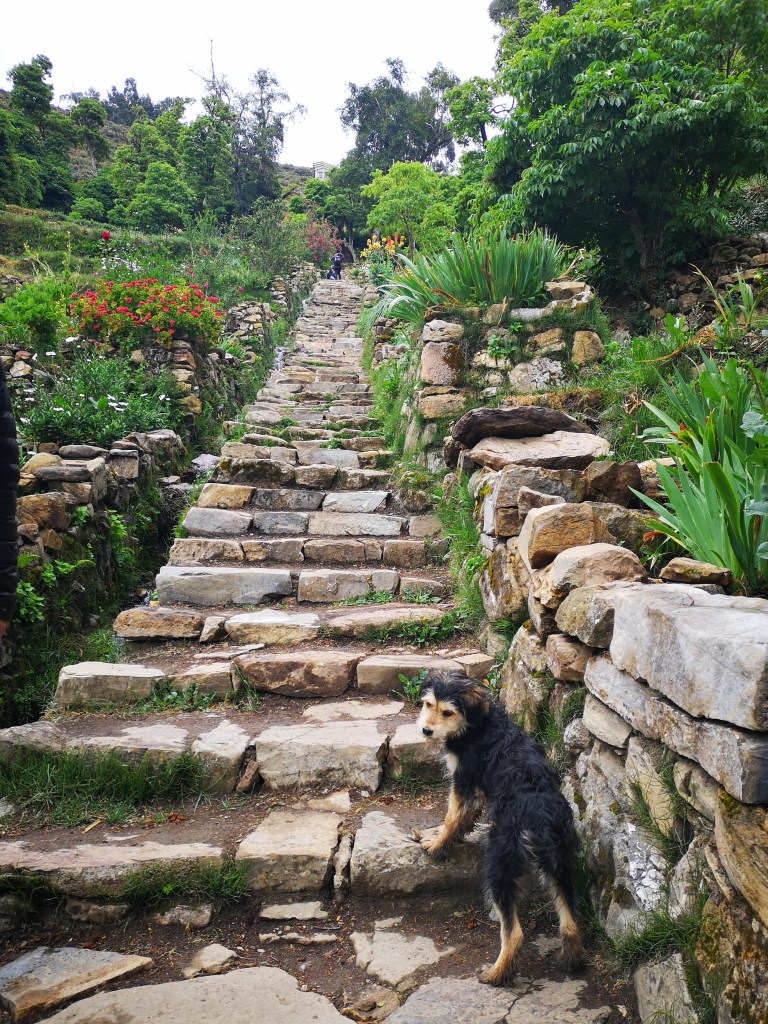
From the cerro we walked straight down to the temple of the sun, unfortunately there is no official path hence we took the donkey trail down.
—
Dal cerro siamo andati dritti al tempio del sole, sfortunatamente non c’è un sentiero ufficiale, quindi abbiamo attraversato le terrazze.
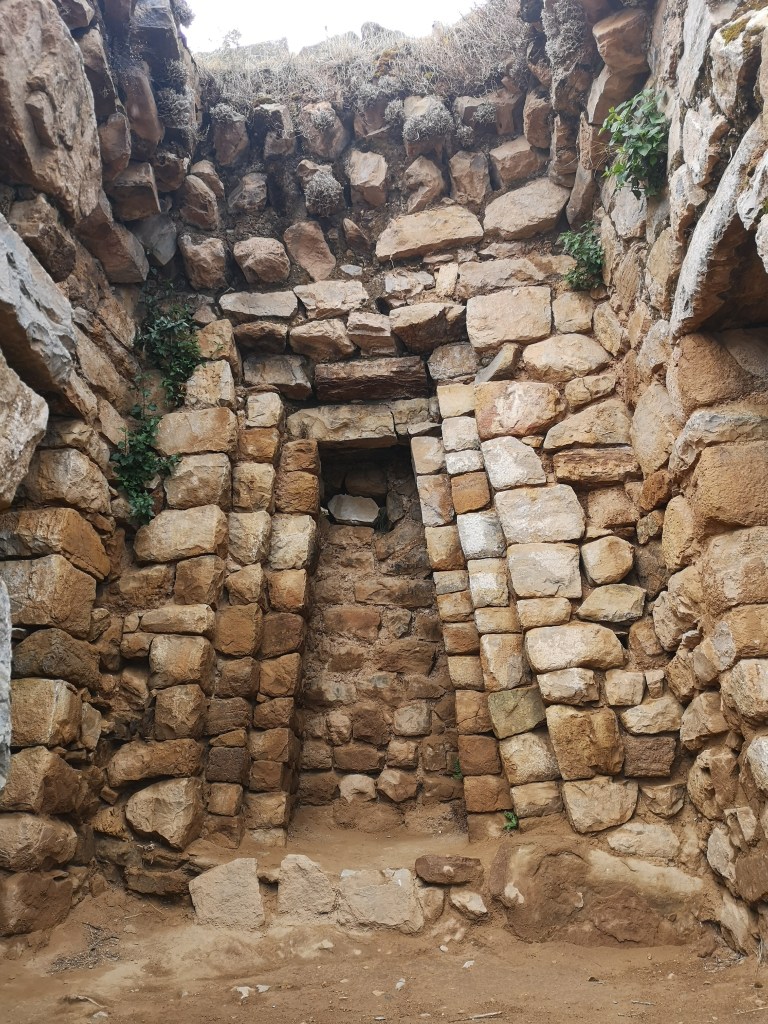
The temple of the sun is small (13th century) but nevertheless a great piece of engineering for the altitude on which it was built.
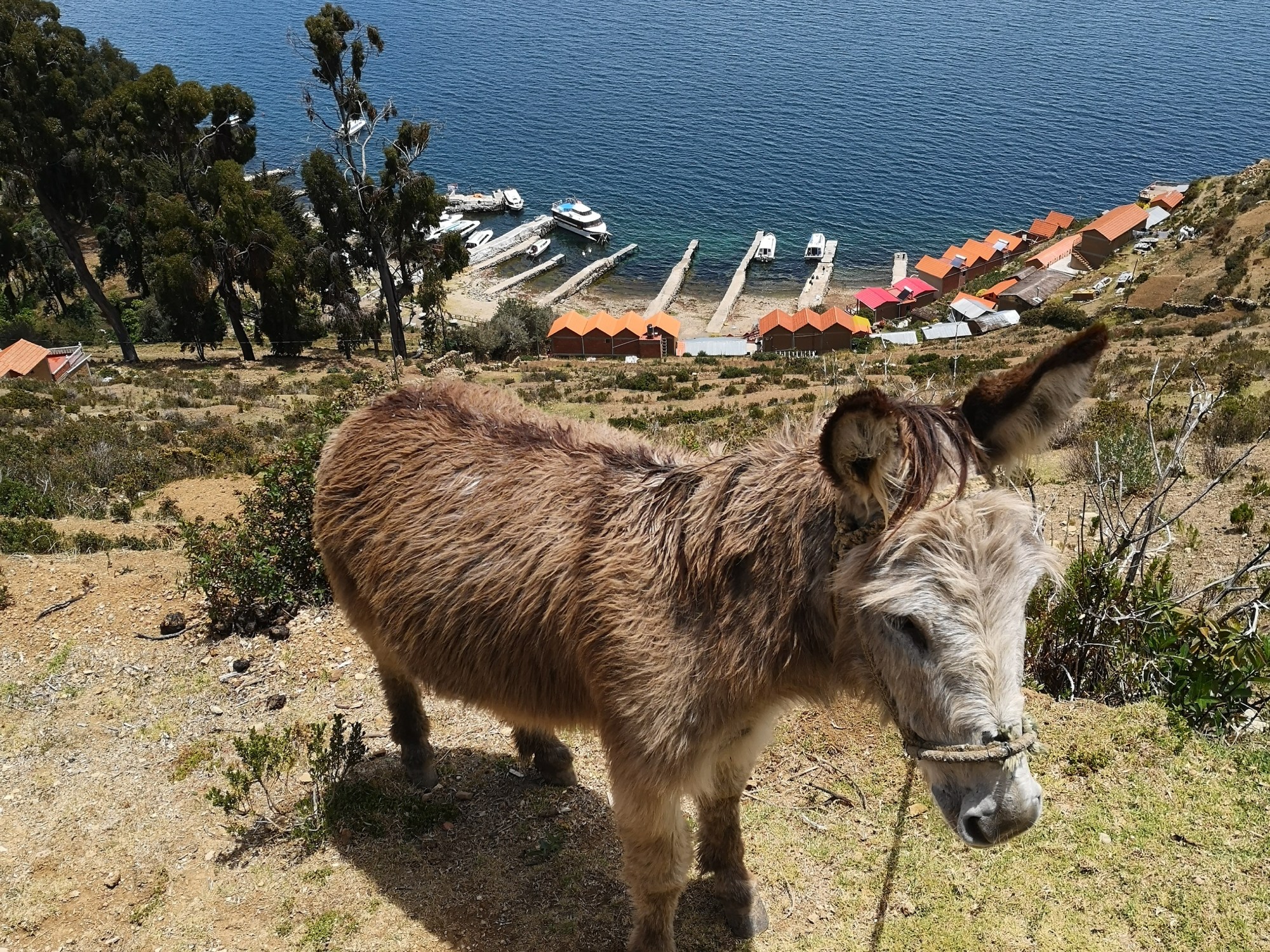
Continuing back to the north we found some donkeys:
—
Il tempio del sole è piccolo (13 ° secolo), ma comunque un grande pezzo di ingegneria per l’altitudine su cui è stato costruito.
Continuando a nord abbiamo trovato alcuni asini:
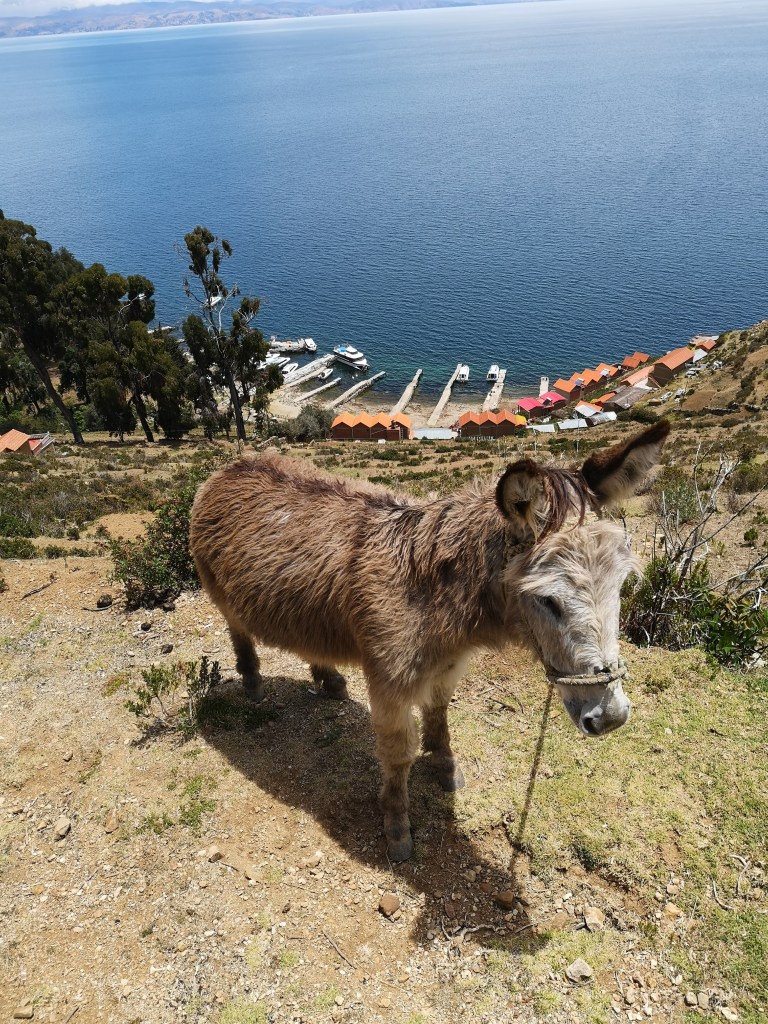
Amazing post card views:
—
Incredibili scorci che sembrano cartoline:

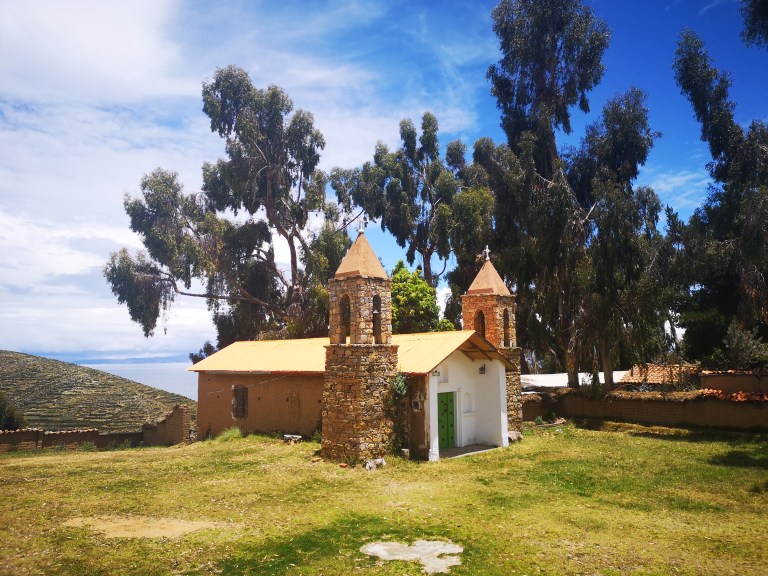
And a lovely church in the name of San Antonio de Padua.
—
E una bella chiesa dedicata a San Antonio da Padova.
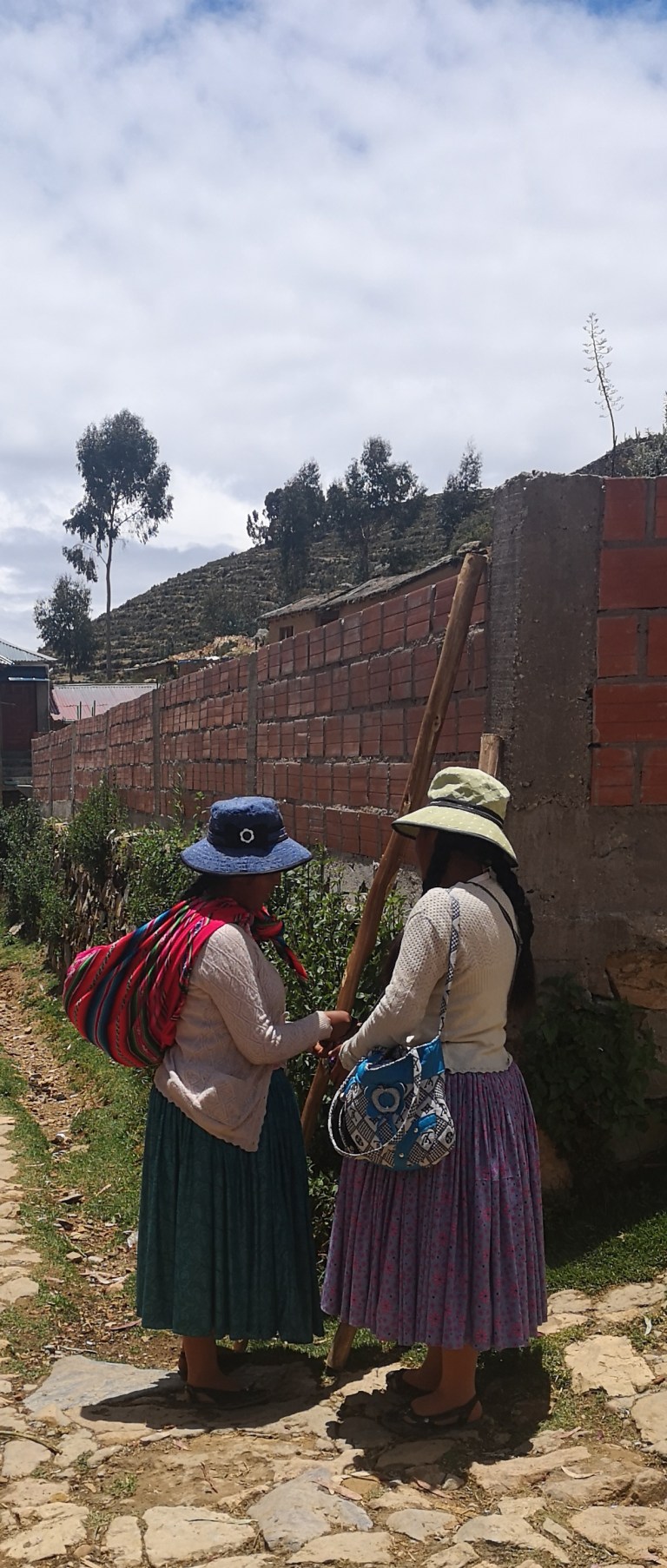
The stories about this island being too touristic seem a bit exaggerated. We were not alone on the island but we didn’t find a lot of tourists. Maybe this has to do with the fact that we are traveling in the low season, or maybe tourism took a hit because of the earlier mentioned dispute.
There are a lot of indigenous inhabitants of the island though:
—
Le storie di quest’isola troppo turistica sembrano un po’ esagerate. Non eravamo soli sull’isola ma non abbiamo trovato molti turisti. Forse questo ha a che fare con il fatto che stiamo viaggiando in bassa stagione, o forse il turismo sta soffrendo a causa della disputa citata in precedenza.
Ci sono molti abitanti indigeni dell’isola però:
After reaching the highest point of the island (cerro Palla Khasa), it is already time to go back to the boat as it leaves at 3pm. As you can see the rain of this morning totally disappeared and we are bathing in the warm sun!
—
Dopo aver raggiunto il punto più alto dell’isola (cerro Palla Khasa), è già ora di tornare alla barca che parte alle 15:00. Come puoi vedere la pioggia di questa mattina è completamente scomparsa ed abbiamo un bel sole caldo!

The way back we sat on top of the boat in the sun and enjoyed the views on the way back to Copacabana.
—
La via del ritorno ci siamo seduti in cima alla barca sotto il sole e ci siamo goduti i panorami sulla via del ritorno a Copacabana.


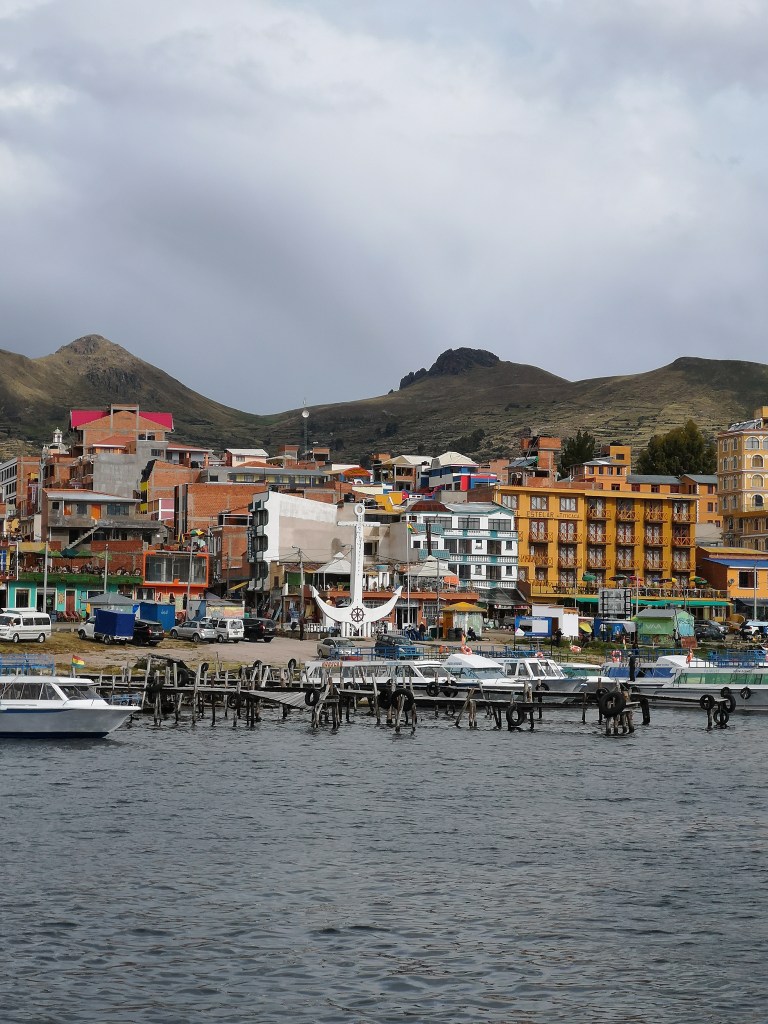
Copacabana is a nice place to visit, the Sun island is definitely a recommendable island to go to, despite the north not being available it makes a good day trip.
This is our last post from Bolivia. Next stop Peru!
—
Copacabana è un bel posto da visitare, l’isola del sole è sicuramente da vedere; nonostante il nord non sia visitabile, ci sono abbastanza sentieri e cose da vedere in una gita di un giorno.
Questo è il nostro ultimo post dalla Bolivia. Prossima fermata Perù!
 Maria & Serge