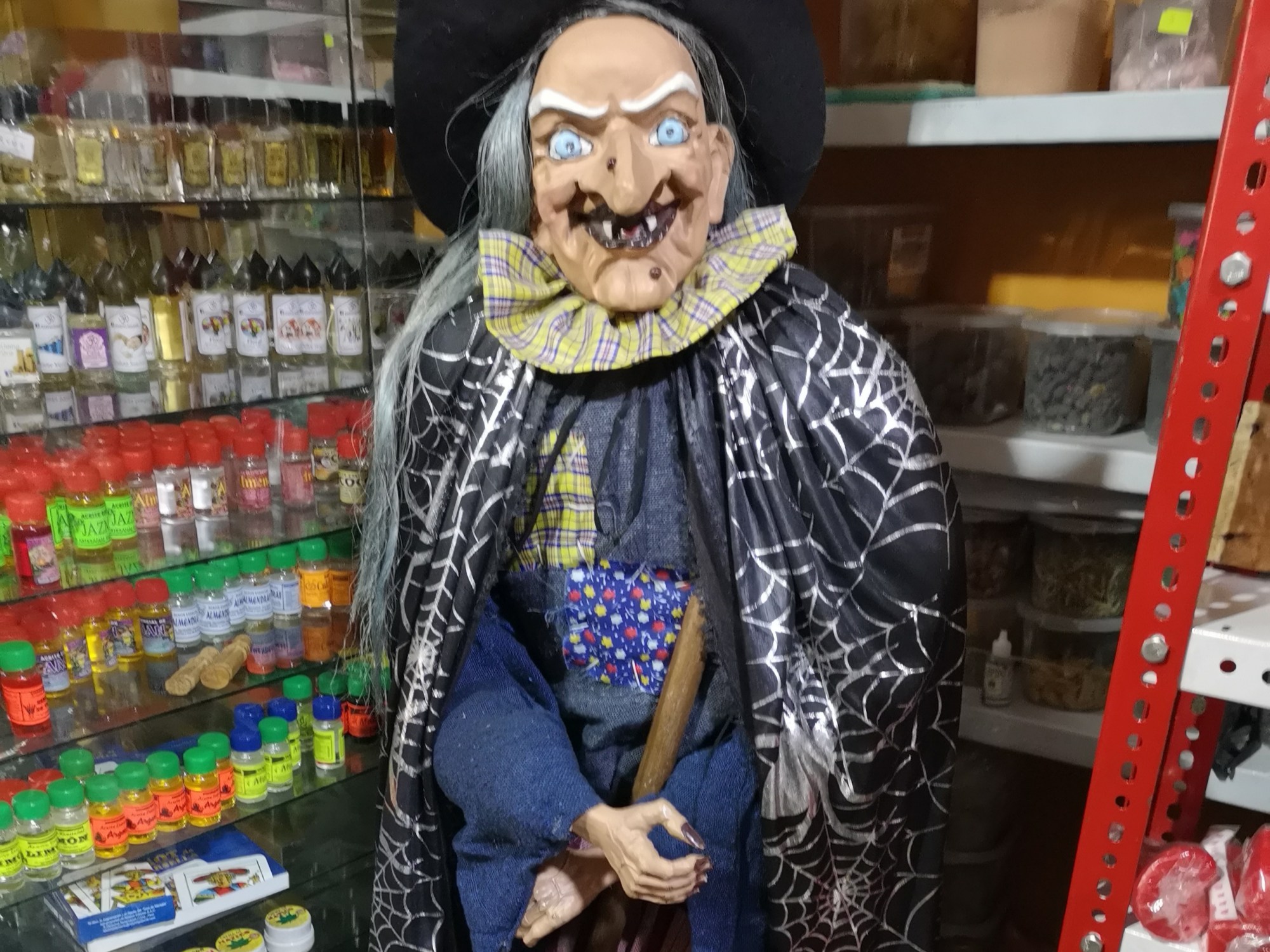
We have now been traveling for about 1.5 month in South America. Given all the warnings of cities being unsafe, we actually felt safe in every city… Till now.
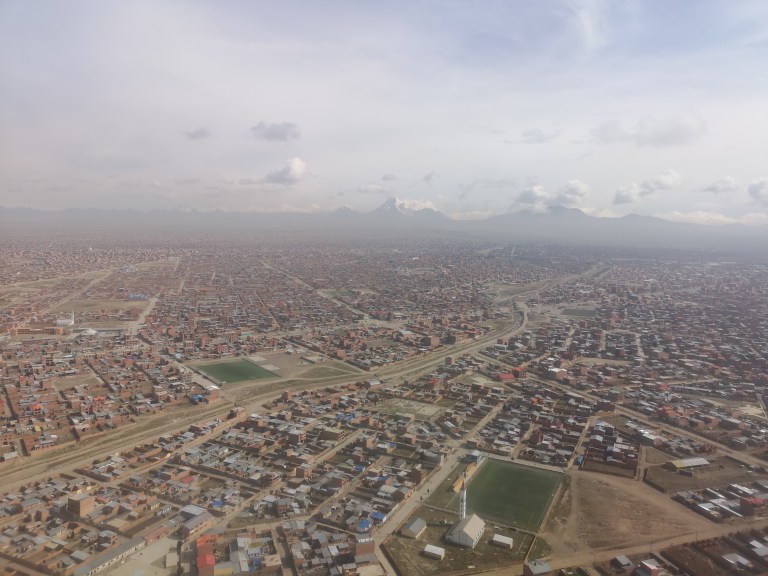
Flying in to La Paz we fly over El Alto. This used to be a suburb of La Paz, however it grew so much in the last couple of years that by now it is a separate city with 1 million inhabitants (and with its own mayor, city hall, etc)
—
Sono ormai un mese e mezzo che stiamo viaggiando per il Sud America. Nonostante tutti i vari avvertimenti, in realtà ci siamo sentiti al sicuro in ogni città … Fino ad ora almeno.
Volando a La Paz si sorvola El Alto. Questo era un sobborgo di La Paz, tuttavia è cresciuto così tanto negli ultimi due anni che ormai è una città separata che conta più di 1 milione di abitanti (con il suo sindaco, municipio, ecc.)
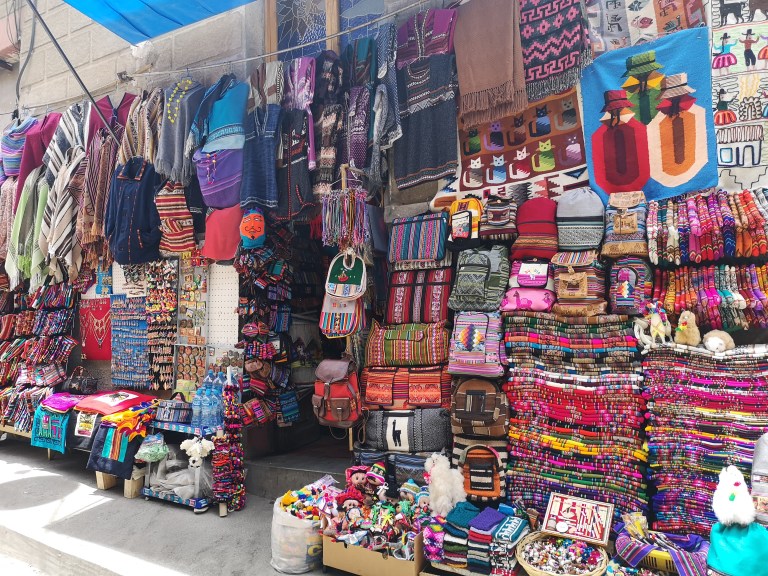
Normally South American cities are quite chaotic, La Paz peaks in every way in chaos. Every one seems to do what he or she likes. There is hardly any space to walk (everyone puts their stuff to sell on the side walk) and the cars are not totally congested so walking between them and surviving is a miracle on its own.
—
Normalmente le città sudamericane sono piuttosto caotiche, La Paz le batte tutte sotto vari punti di vista. Ognuno sembra fare ciò che gli piace. Non c’è quasi spazio per camminare (i commercianti mettono le proprie mercanzie sul marciapiede) e le macchine non sono totalmente congestionate, quindi camminare tra di loro e sopravvivere non è semplicissimo.

La Paz is also one of the most colorful cities we have seen so far:
—
La Paz è anche una delle città più colorate che abbiamo visto finora:
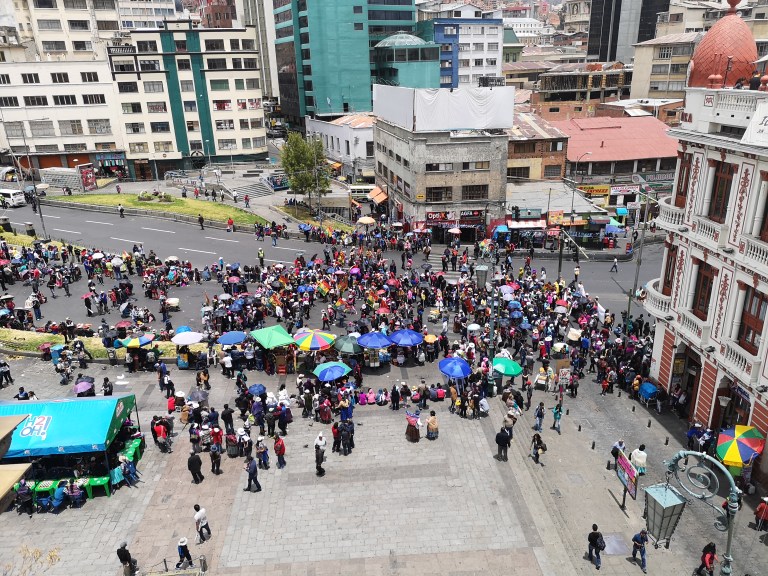
Our first encounter with the cities central square is a protest of street sellers (including fireworks and at least 30 police) that want to sell Christmas stuff on the square in front of the church, but are not allowed.
—
Il nostro primo incontro con la piazza centrale delle città è una protesta dei venditori ambulanti (con tanti di botti e almeno 30 poliziotti) che vogliono vendere oggetti natalizi nella piazza di fronte alla chiesa, ma non gli è permesso.
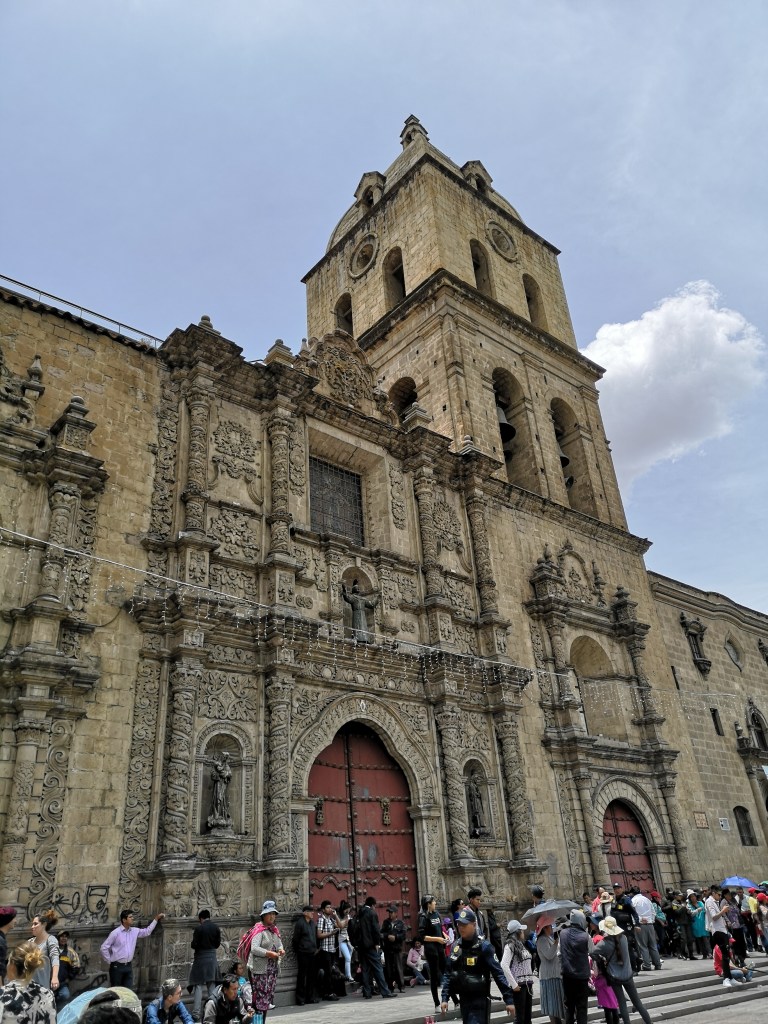
After taking a quick look at the facade of the San Francisco church (note the indigenous symbols on the church, the faces and the Pacha mama giving birth next to San Francisco) we hop in to the cloister museum right next to the church.
—
Dopo aver dato una rapida occhiata alla facciata della chiesa di San Francisco (notate i simboli indigeni sulla facciata della chiesa, con Pachamama che partorisce vicino a San Francesco) saliamo al museo del chiostro proprio accanto alla chiesa.
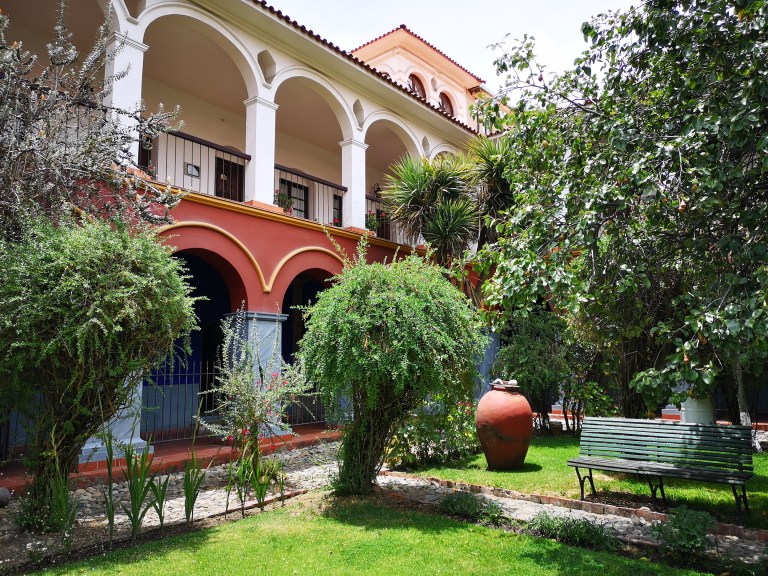
For 20 BOB you get a private guided tour through the cloister, where it is really quiet and relaxed compared to outside and you can really imagine how the Franciscaner monks made wine here.
—
Per 20 BOB fai un tour guidato privato nel chiostro, dove è veramente tranquillo rispetto a fuori e si può davvero immaginare come i monaci francescani potessero produrre il vino qui.
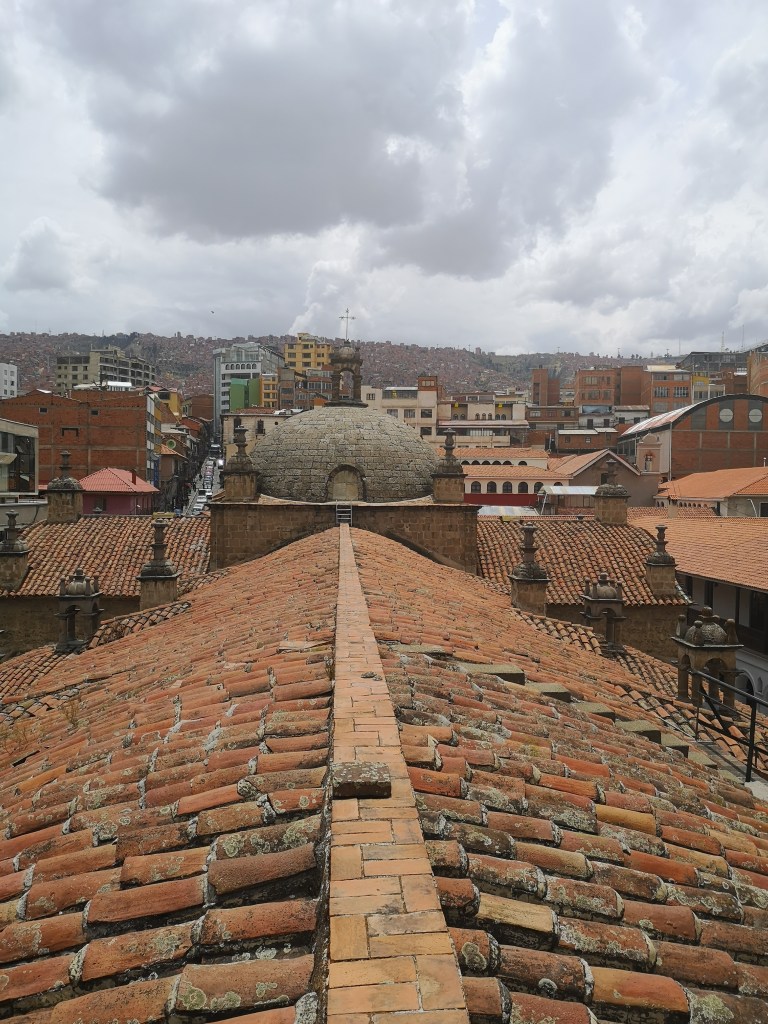
The tour leads to the roof of the church, don’t expect too much from the view. But it is nice to visit.
—
Il tour porta al tetto della chiesa, non aspettatevi troppo dalla vista. Ma è bello da visitare.
After a quick lunch (lunches are big and the extra calories are much needed as our metabolism works much faster on this altitude – or so we like to believe) we go to Sucre square for the start of a semi-free city tour (red caps – www.redcapwalkingtours.com)
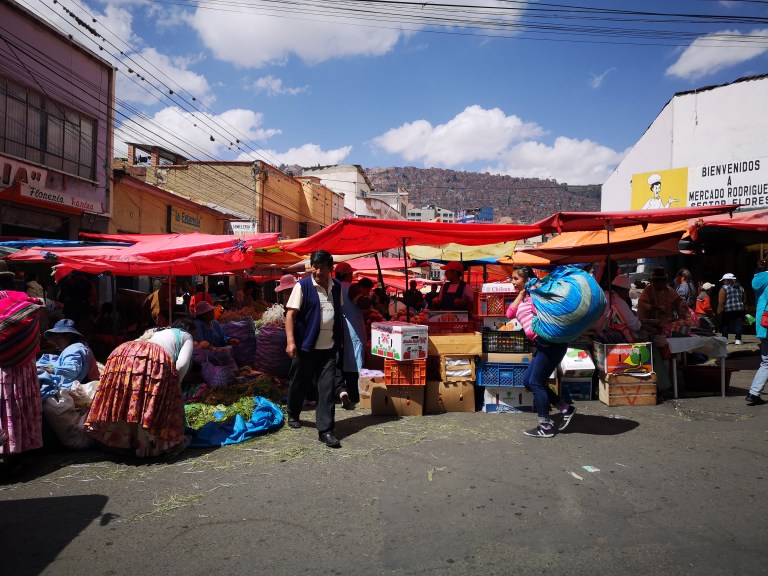
Starting next to the bizarre city prison (where there are only guards to protect the perimeter, but inside the prison the prisoners rule and prisoners also need to pay for the rent of their cell) we continue to the markets of the city. Open markets are basically everywhere and they sell everything, mainly potatoes (in every size and colour), fruits and vegetables. As a consequence there are hardly any supermarkets.
—
Dopo un pranzo veloce (i pranzi sono tipicamente abbondanti e le calorie in eccesso sono necessarie dato che il nostro metabolismo funziona molto più velocemente su questa altitudine – o almeno ci piace credere) andiamo in piazza Sucre per un tour semi-gratuito della città (red caps – http://www.redcapwalkingtours.com)
Partiamo con una descrizione della bizzarra prigione cittadina (dove ci sono solo guardie per proteggere il perimetro, ma all’interno della prigione i prigionieri governano e anche i prigionieri devono pagare l’affitto della loro cella), per poi continuare verso i mercati della città. I mercati sono praticamente ovunque e vendono tutto, principalmente patate (di ogni dimensione e colore), frutta e verdura. Di conseguenza non ci sono quasi per niente supermercati.
We continue to the “Mercado de las Brujas” or the “witch market”. This is an area with shops that sell all kinds of things needed to perform Bolivian rituals (potions, coca leaves, medicinal plants all of which are offerings for Pachamama). Despite colonialism bringing Catholicism to Bolivia and despite Bolivians identifying themselves as Catholics, a large part of them still holds on to the Pre-Inca and Inca traditions and therefore goes to these shops to solve their troubles and ask for good luck (troubles in love, general bad luck in life, good health etc)
—
Continuiamo verso il “Mercado de las Brujas” o al “mercato delle streghe”. Questa è un’area con negozi che vendono varie cose necessarie per eseguire rituali Boliviani (pozioni, foglie di coca, piante medicinali – tutte offerte per Pachamama). Nonostante il colonialismo abbia portato il Cattolicesimo in Bolivia e nonostante i boliviani si identifichino come Cattolici, una grande parte di loro mantiene ancora le tradizioni pre-inca e inca e quindi va in questi negozi per risolvere i propri problemi e chiedere buon auspicio (problemi nell’amore, sfortuna generale nella vita, buona salute ecc.)

From the witches we go past the San Francisco church, which we already saw in the morning. On to one of the biggest food markets in town where we have a snack with filled… (you might guess it) potatoes.
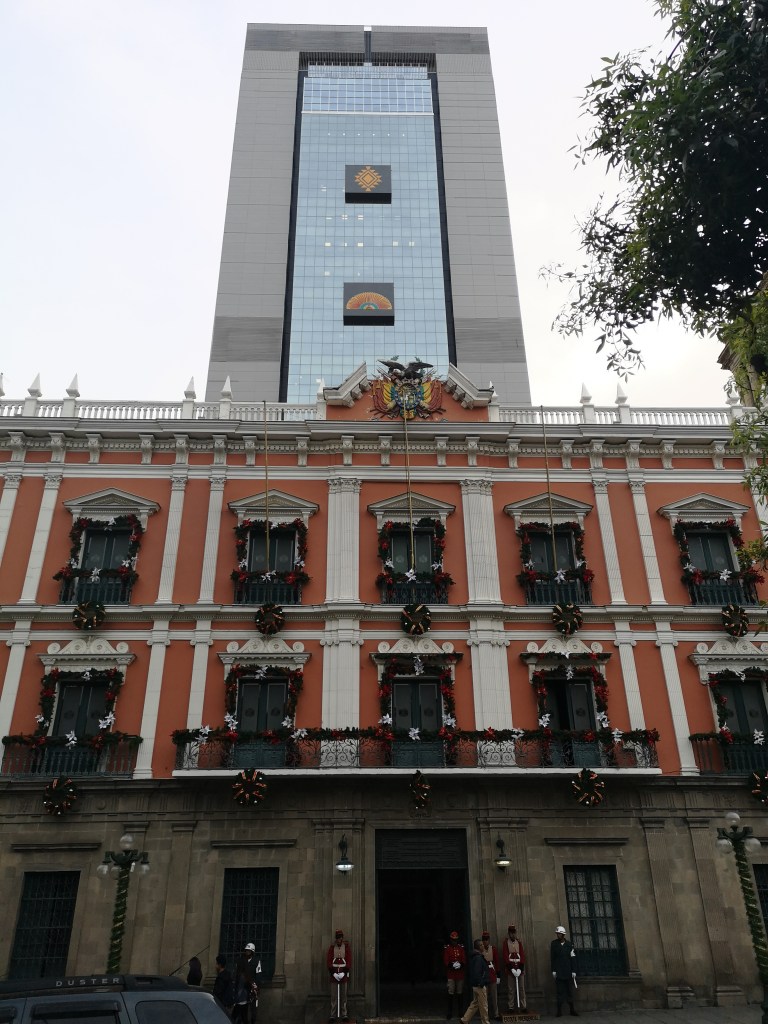
After lunch we set direction to plaza Murillo, this square is more or less the political heart of the country. With on one side the presidential palace (photo below) and the other side the military and police headquarters.
Not so long ago (2003) there was a cross fire between the police and the military as a result of political opposition and a tax measure introduced by the government which impacted, among others, many public bodies except the military. In the cross fire, 17 people died and c.100 were wounded; the marks left by the bullets are still visible today on a building.
—
Dalle streghe passiamo davanti alla chiesa di San Francisco, che abbiamo già visto al mattino. Da lì ci spostiamo verso uno dei più grandi mercati alimentari della città dove facciamo uno spuntino a base di … patate.
Dopo di che andiamo Piazza Murillo, questa piazza è più o meno il cuore politico del paese. Da un lato sorge il palazzo presidenziale (foto sotto) e dall’altra parte il quartier generale militare e di polizia.
Non molto tempo fa (2003) c’è stata proprio in questa piazza una sparatoria tra la polizia e l’esercito a seguito di una misura fiscale introdotta dal governo che colpi’, tra gli altri, molti organismi pubblici esclusi i militari. Nella sparatoria morirono 17 persone e ne vennero ferite 100; i segni lasciati dai proiettili sono ancora visibili oggi su un edificio.
One building to note is the military headquarters. Look at the clock and you’ll notice something different.
—
Un edificio da notare è il quartier generale militare. Guarda l’orologio e noterai qualcosa di anomalo.
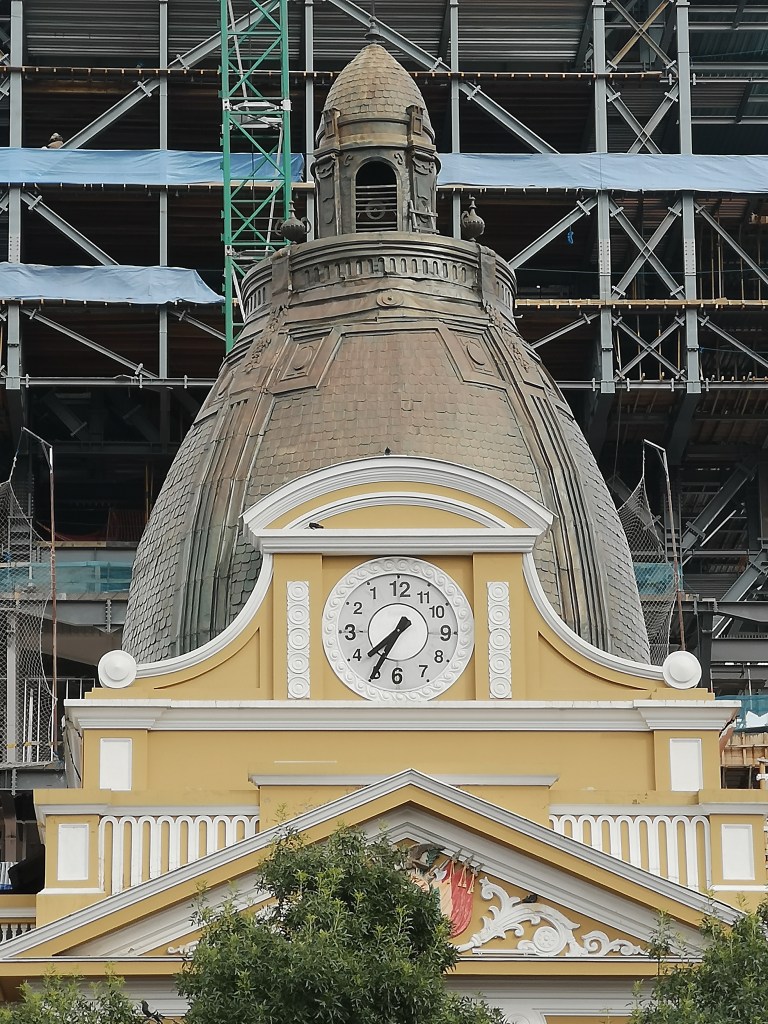
But why on earth such decision? This is what we understand:
Around 2014, there was a presidential scandal, involving corruption. To cover up this scandal the new clock was introduced; the rationale was – Bolivia is on the Southern Hemisphere and in the Southern Hemisphere the shadow of a meridian turns anti-clockwise; so clocks should adapt accordingly: welcome to the clock of the South!
The people were begging not to change all clocks (funny detail, when we took the picture it was 4:25 so we were able to read the clock correctly, probably not that much of a problem to have a clock like this); however this topic kept people busy and newspapers did not talk about the political scandal anymore…but of course no other clocks like this were introduced.
—
Ma perché mai una tale decisione? Questo è ciò che capiamo:
Intorno al 2014, c’è stato uno scandalo presidenziale, con tanto di corruzione ai vertici ecc. Per coprire questo scandalo è stato introdotto il nuovo orologio; la logica era: la Bolivia si trova nell’emisfero australe e nell’emisfero australe l’ombra di un meridiano gira in senso antiorario; quindi gli orologi dovrebbero adattarsi di conseguenza: ed eccovi l’orologio del Sud!
La gente chiedeva di non cambiare tutti gli orologi (quando abbiamo scattato la foto erano le 4:25 quindi siamo stati in grado di leggere correttamente l’orologio, probabilmente non è un grave problema avere un orologio come questo); tuttavia questo argomento teneva le persone occupate e i giornali non parlavano più dello scandalo politico … ma ovviamente non sono stati introdotti altri orologi come questo.
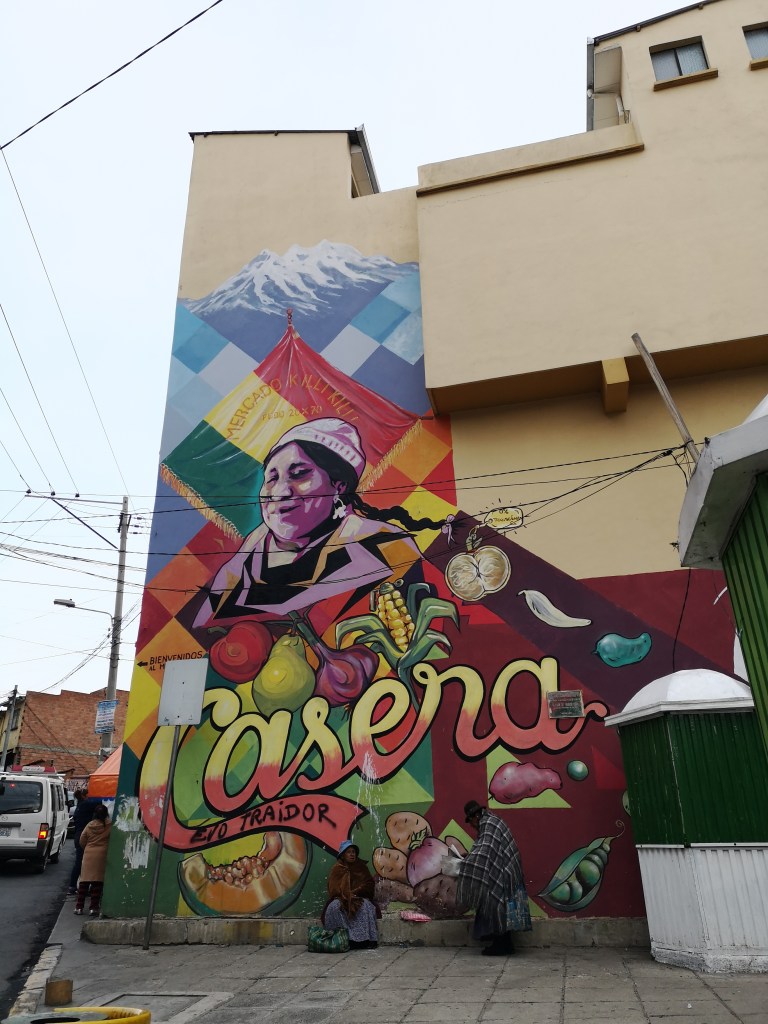
After the tour we walked up to one of the best view points of La Paz. On the way we find this painting of the “Casera”. La Casera is your go to market woman. The first time you go to her, she will not treat you particularly well and she will potentially wonder why she needs to sell you her produces. The second time you go to her, she will start to recognise you, talk about a bit more personal subjects etc; you then will become part of her circle and you can start calling her Casera and she will call you back Casera/Casero. Haggling is not done on the market, instead you say:”Casera give me a couple extra of this or that” and she will give you some extra free of charge. Also if you have any personal problems (broke up with your gf/bf, lost your money, etc) you can talk about it with your Casera, but be careful as before you know it, the whole market will know about you!
The Casera might be dressed as the typical indigenous Bolivian woman also called Cholita. Dressed with a bowler hat, many layers of clothes and the typical hair extensions, she represents the indigenous tradition.
In the city you find many of the Cholitas selling fruits and vegetables on the market. Unfortunately these days, most Bolivians with office jobs don’t wear the traditional clothes anymore, it’s becoming more something limited to the country side (although you do see many women in traditional clothes in the city)
—
Dopo il tour siamo arrivati a uno dei migliori punti panoramici di La Paz. Sulla strada troviamo questo dipinto della “Casera”. La Casera è la tua fornitrice di riferimento al mercato. La prima volta che vai da lei, lei non ti tratta particolarmente bene e si chiederà potenzialmente perché mai dovrebbe venderti i suoi prodotti. La seconda volta che vai da lei, inizierà a riconoscerti, a parlare di argomenti più personali, ecc .; allora diventerai parte della sua cerchia e potrai iniziare a chiamarla Casera e lei ti richiamerà Casera / Casero. Non è tipico richiedere sconti al mercato, invece tu dici: “Casera dammi un paio in più di questo o quello” e lei ti darà qualcosa in più gratuitamente. Inoltre se hai qualche problema personale (ti sei lasciato con il tuo ragazzo/ragazza, hai perso i tuoi soldi, ecc.) Puoi parlarne con la tua Casera, ma fai attenzione come prima lo sai, l’intero mercato saprà di te!
La Casera potrebbe essere vestita come la tipica donna boliviana indigena chiamata anche Cholita. Vestita con una bombetta, molti strati di vestiti e le tipiche “extensions” sui capelli, rappresenta la tradizione indigena. In città trovi molte Cholitas che vendono frutta e verdura sul mercato. Purtroppo oggigiorno, la maggior parte dei boliviani con un lavoro in ufficio non indossa più i vestiti tradizionali, sta diventando più qualcosa di limitato alla campagna (anche se vedi molte donne in abiti tradizionali in città)
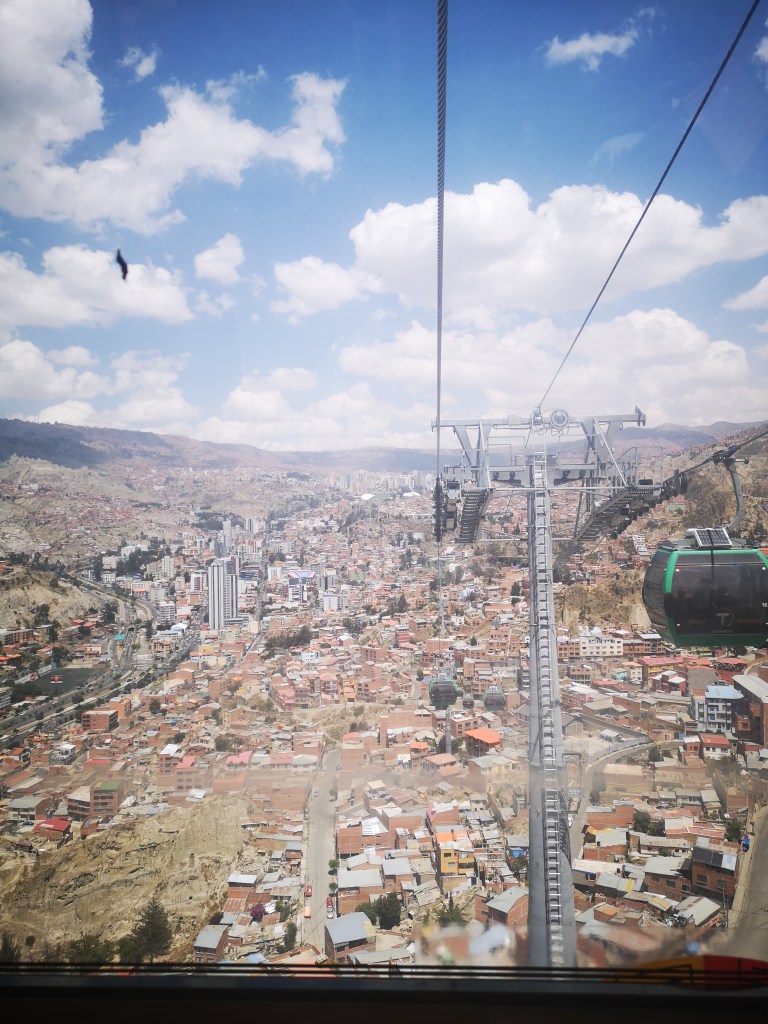
On day 2 in La Paz we explored the cable cart network. Like London has the metro, La Paz has cable carts. With 7 lines active and 3 being built it is probably one of the largest deployments of cable carts in a single city in the world.
We took the blue and green line to the south (richer) part of the city. For about 3 BOB (50 euro cent) we make the 30 minute tour in one of the carts.
—
Il giorno 2 a La Paz abbiamo esplorato la funivia. Come Londra ha la metropolitana, La Paz ha la funivia. Con 7 linee attive e 3 in costruzione, è probabilmente una delle più grandi implementazioni di funivie in una singola città nel mondo.
Abbiamo preso la linea blu e verde verso la parte sud (più ricca) della città. Per circa 3 BOB (50 centesimi di euro) facciamo il tour di 30 minuti in una delle cabine.
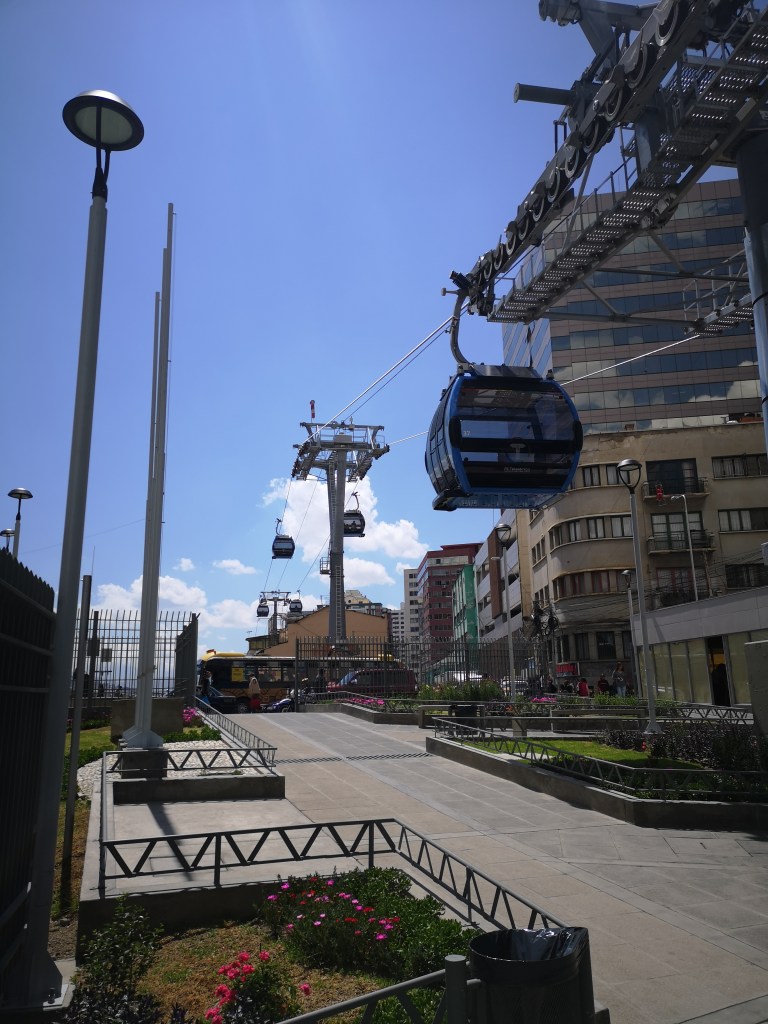
The sights from the cable cart are amazing
—
Le vista dalla funivia è incredibile
After lunch we decided to take the extended city tour with the same guys as yesterday (redcap tours) Partially because it is nice to hear some explanation about the city and partially because the areas where we will be going are not the safest/hardest to understand for an outsider.
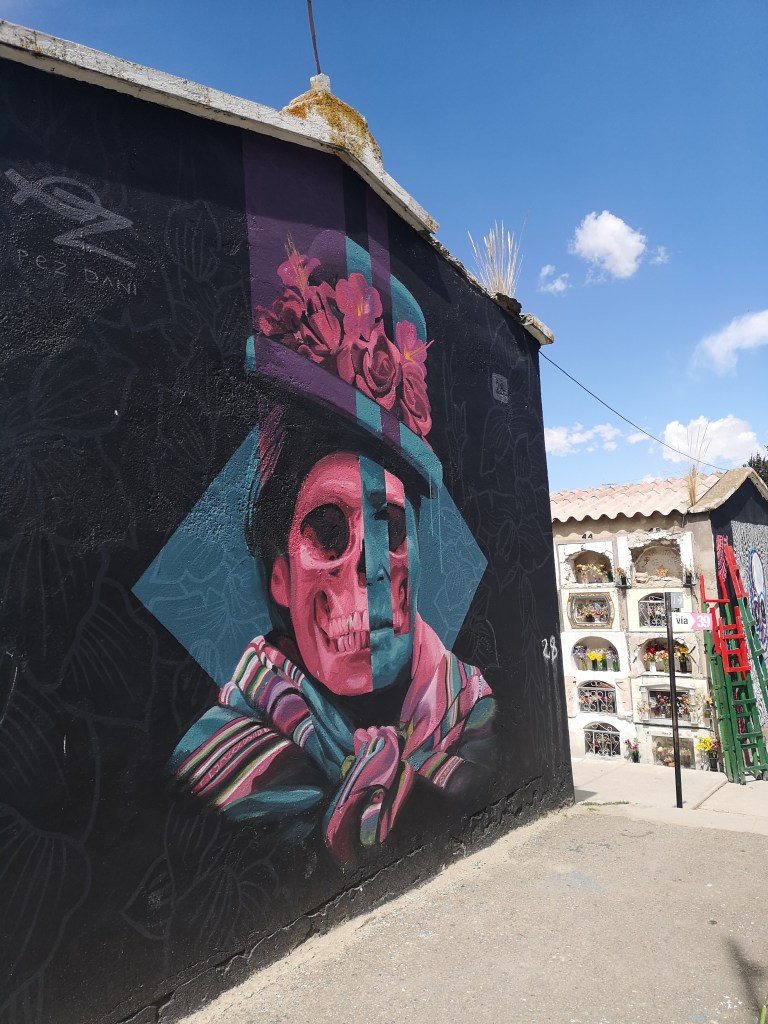
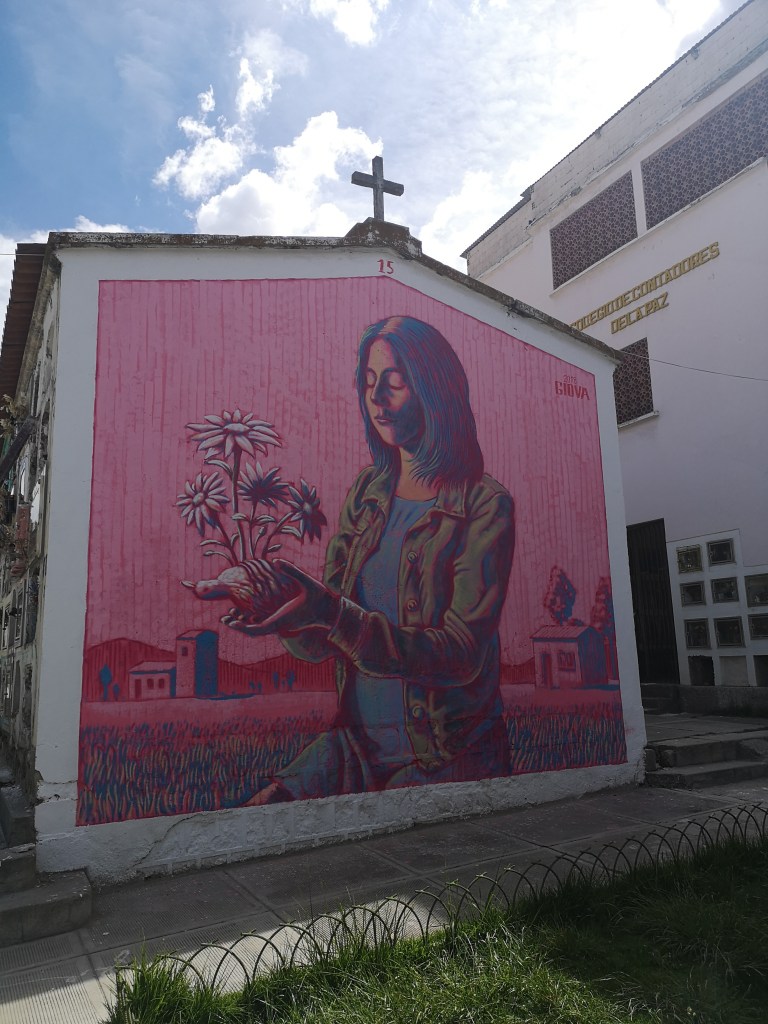
First stop the cemetery, as we know from Santiago these places are to hangout with the death and celebrate life. One of the most noteworthy things are the murals, which are realised by very talented artists with two underlying themes: Bolivia and death.
—
Dopo pranzo abbiamo deciso di fare un tour della città con la stessa organizzazione di ieri (redcap). In parte perché è bello sentire alcune spiegazioni sulla città e in parte perché le aree dove andremo non sono le più sicure / difficili da capire per uno straniero.
Prima di tutto andiamo al cimitero; come sappiamo da Santiago questi posti sono per stare in compagnia con i defunti e celebrare la vita. Una delle cose più degne di nota sono i murales, che sono realizzati da artisti di grande talento con due temi di fondo: la Bolivia e la morte.



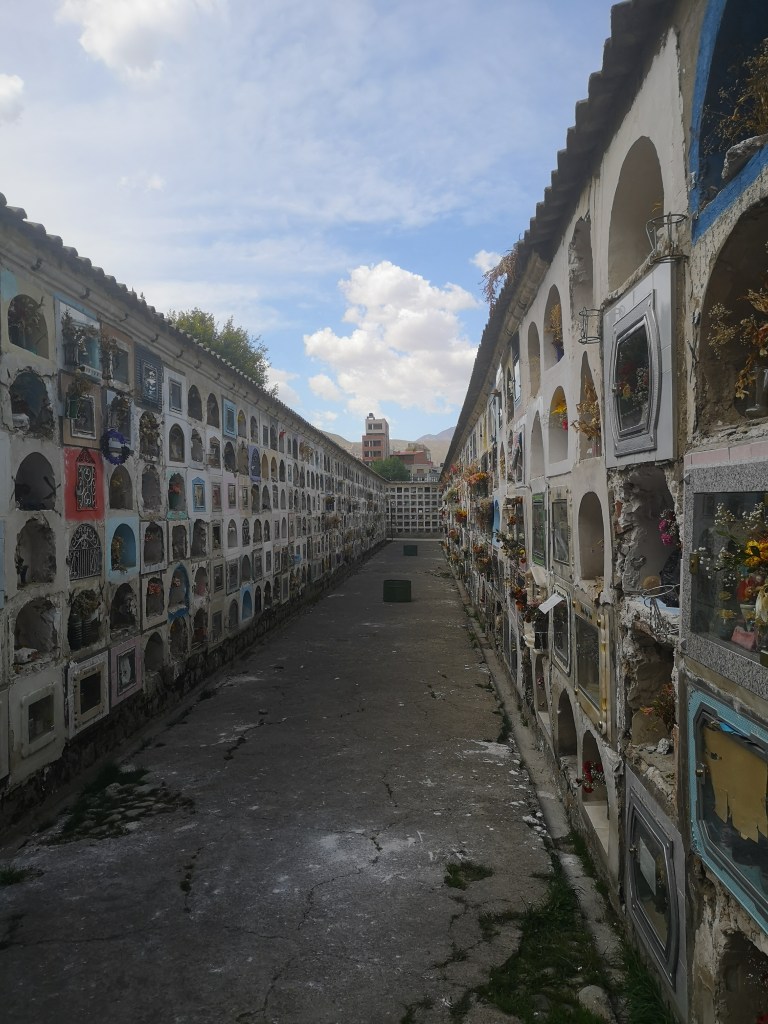
In this cemetery there are about 200.000 people buried, if you look how they are buried, you can imagine that they could fit:
—
In questo cimitero ci sono circa 200.000 persone sepolte, se si guarda come sono sepolti, ci si rende conto che ce ne possono stare davvero tanti:
One peculiar thing we learnt: in Bolivia it brings good luck to keep a human skull at home (Nanita). Not a skull from someone you know, but just a “randomly” picked one. You’ll keep it like a friend, offer food and drinks, cigarettes to it, dress it up, have a good talk with it once in a while. And once a year (on the octave of November) you bring your skulls to the cemetery to get it blessed (and of course to meet other skulls). It is interesting that it is the Catholic priests who bless the Nanita – this is a clear example of syncretism
Obviously this is a completely illegal activity but it is part of the Bolivian tradition.
—
Una cosa in particolare ci ha stupiti: in Bolivia porta fortuna a tenere un teschio umano a casa (Nanita). Non un teschio di qualcuno che conosci, uno scelto “a caso”. Lo devi trattare come un amico, gli devi offrire cibo e bevande, sigarette, lo devi vestire, gli parli una volta ogni tanto. E una volta all’anno (l’ottava di novembre) porti il teschio al cimitero per farlo benedire (e ovviamente per incontrare altri teschi). È interessante che siano i preti cattolici a benedire la Nanita – questo è un chiaro esempio di sincretismo.
Ovviamente questa è un’attività completamente illegale, ma fa parte della tradizione boliviana.

From the cemetery we go on to El Alto, where you can find 1) real shamans that can solve all your problems 2) the real potato market…. And probably one of the most unsafe places in La Paz and surroundings.
At about 4000 meters (500 meter higher then La Paz), the view is magnificent.
—
Dal cimitero andiamo a El Alto, dove puoi trovare 1) sciamani che possono risolvere tutti i tuoi problemi 2) il vero mercato delle patate …. Ed è probabilmente uno dei posti più insicuri di La Paz e dintorni.
A circa 4000 metri (500 metri più in alto di La Paz), la vista è magnifica.

We ended up in the place where the shamans work. They’ll take your offerings (which you will have bought at the witch market) and burn them in the fire in front of their place such that the god’s will smell what you have asked for. It does smell (pretty bad..) and there are 10’s of these little fires and they do burn you when walking on the sidewalk.
—
Finiamo nel quartiere degli sciamani. Loro prendono le tue offerte (che avrai comprato al mercato delle streghe) e le bruciano nel fuoco davanti alla loro postazione in modo tale che la divinità sentirà l’odore di ciò che hai chiesto. L’odore si sente eccome (e non è dei migliori) e ci sono 10 di questi fuocherelli a cui fare attenzione quando cammini sul marciapiede.
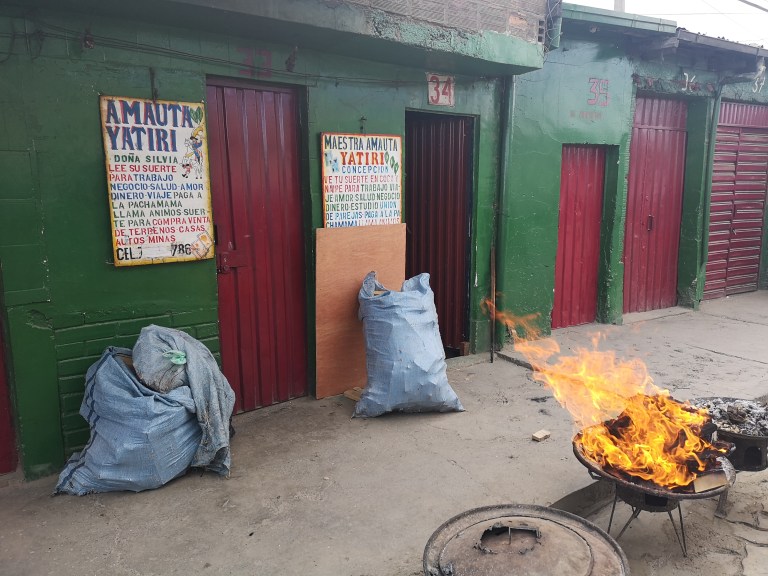
After leaving the shaman street we skipped by the #realpotatomarket with stacks and stacks of potatoes (you might think that my Dutch heart started beating faster.. think again 🙂 )
—
Dopo aver lasciato la strada degli sciamani, passiamo dal #realpotatomarket con pile e pile di patate (potreste pensare che il mio cuore olandese abbia iniziato a battere più veloce .. ripensateci :))

We finally took the purple line back to La Paz.
To conclude our visit to La Paz we decide to go to a typical Bolivian show at a Peña. As we are traveling in the low season we are almost the only spectators and hence invited to have a little dance (never mind the terrified look in my eyes 😉 )
—
Alla fine abbiamo preso la linea viola per ritornare a La Paz.
Per concludere la nostra visita a La Paz decidiamo di andare ad un tipico spettacolo boliviano in una Peña. Dato che stiamo viaggiando in bassa stagione, siamo quasi gli unici spettatori e quindi siamo invitati a ballare un po’ (non fate caso al mio sguardo terrorizzato ;))
Hope you are still here after this long post!
So about the title, were we really terrified? Looking from hindsight, I think we felt pretty ok, however La Paz is definitly one of the roughest cities we have visited in South America.
It was an amazing sight and we would not have wanted to miss the visit to the city.
If you feel inspired to go, make sure to prepare for a rough city visit and book a good hotel such that when you come home at night you come back to a bit less chaos.
—
Spero che tu sia ancora qui dopo questo lungo post!
Quindi, riguardo al titolo, siamo stati davvero terrorizzati? Con il senno di poi, penso che ci siamo sentiti abbastanza bene, tuttavia La Paz è sicuramente una delle città più difficili che abbiamo visitato in Sud America.
È stato una esperienza incredibile e non avremmo voluto perdere la visita alla città.
Se ti senti ispirato ad andare, assicurati di prepararti psicologicamente al caos e odori e prenota un buon hotel in modo tale che quando torni a casa di notte riesci a goderti un po’ di tranquillità.
 Maria & Serge